Category Health/Medical

Gardenia Plants may hold Chemical Key to Regenerating Diseased Human Nerves

Gardenia plants may hold chemical key to regenerating diseased human nerves
Gardenia flower from the gardens at Monticello. Credit: Wikimedia Commons, Queerbubbles

Gardenias are known for their rich, earthy fragrance, waxy petals and brilliant white color that contrasts with the deep emerald green of their leaves. The plant has long been prized by herbalists, seekers of food and fabric dyes, and even pharmaceutical companies.

Now, a collaborative team of scientists at several research centers in the United States has found that a compound known as genipin, derived from the gardenia plant called Cape jasmine, can prompt nerve regeneration. Neurons damaged and stunted by disease find new life in the lab when exposed to the plant-derived compound.

The chemical comes from the fruit of this extraordinarily versatile plant...

Read More
Fatty Muscles Raise the Risk of Serious Heart Disease Regardless of Overall Body Weight, study shows

Fatty muscles raise the risk of serious heart disease regardless of overall body weight
Researchers used CT scans to analyze each patient’s body composition, measuring the amounts and location of fat and muscle in a section of their torso. SAT = subcutaneous adipose tissue SM = skeletal muscle IMAT = intermuscular adipose tissue. Credit: Vivianty Taqueti / European Heart Journal

People with pockets of fat hidden inside their muscles are at a higher risk of dying or being hospitalized from a heartattack or heart failure, regardless of their body mass index, according to research published in the European Heart Journal.

This ‘intermuscular’ fat is highly prized in beef steaks for cooking. However, little is known about this type of body fat in humans, and its impact on health...

Read More

Immune Complex Shaves Stem Cells to Protect Against Cancer

extended data figure 18
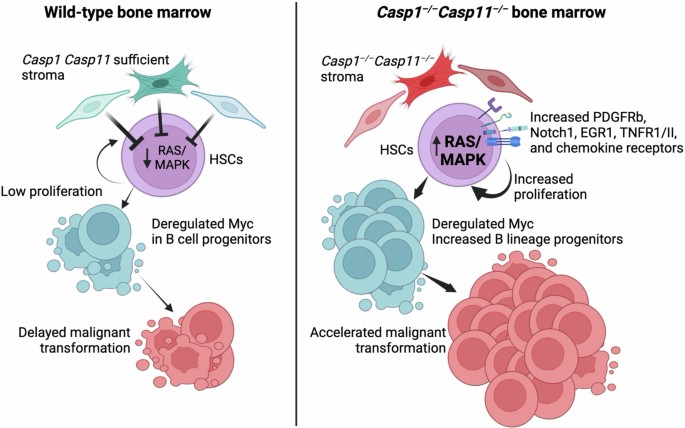
Proposed model – The stromal inflammasome maintains tissue equilibrium by restraining Ras activity to impede premalignant-to-malignant transition.

A group of immune proteins called the inflammasome can help prevent blood stem cells from becoming malignant by removing certain receptors from their surfaces and blocking cancer gene activity, according to a preclinical study by Weill Cornell Medicine investigators.

The study, published in Nature Immunology, may lead to therapies that target the earliest stages of cancer. The findings bolster the idea that the inflammasome has a dual role: It promotes inflammation associated with poor outcomes in late cancer stages, but early on, it can help prevent cells from becoming cancerous in the first place.

“What was striking was that the in...

Read More

Fiber may help Protect your Gut from Overgrowth of Harmful Bugs—new study

Our body isn’t just human—it’s home to trillions of microorganisms found in or on us. In fact, there are more microbes in our gut than there are stars in the Milky Way. These microbes are essential for human health, but scientists are still figuring out exactly what they do and how they help.

In a new study, published in Nature Microbiology, my colleagues and I explored how certain gut bacteria—a group known as Enterobacteriaceae—can protect us from harmful ones. These bacteria include species such as Escherichia coli (E coli). This is normally harmless in small amounts but can cause infections and other health problems if it grows too much.

We found that our gut environment—shaped by things like diet—plays a big role in keeping potentially harmful bacteria in check.

...Read More