Category Astronomy/Space

Cosmic Simulation Reveals How Black Holes Grow and Evolve

This still shows an accretion disk around a supermassive black hole.
This still from the simulation shows a supermassive black hole, or quasar, surrounded by a swirling disk of material called an accretion disk. Credit: Caltech/Phil Hopkins group

A team of astrophysicists led by Caltech has managed for the first time to simulate the journey of primordial gas dating from the early universe to the stage at which it becomes swept up in a disk of material fueling a single supermassive black hole. The new computer simulation upends ideas about such disks that astronomers have held since the 1970s and paves the way for new discoveries about how black holes and galaxies grow and evolve.

“Our new simulation marks the culmination of several years of work from two large collaborations started here at Caltech,” says Phil Hopkins, the Ira S...

Read More
This Desert Moss has the Potential to Grow on Mars

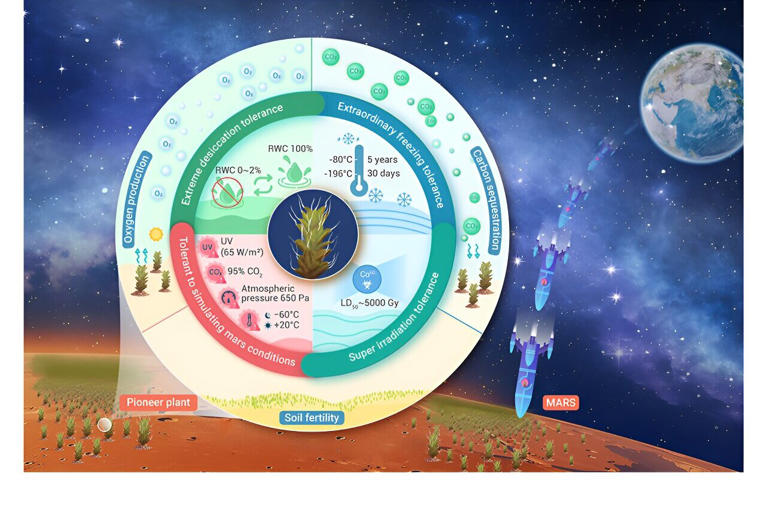
Graphical abstract. Credit: The Innovation (2024). DOI: 10.1016/j.xinn.2024.100657
Graphical abstract. Credit: The Innovation (2024). DOI: 10.1016/j.xinn.2024.100657© Provided by Phys.org

The desert moss Syntrichia caninervis is a promising candidate for Mars colonization thanks to its extreme ability to tolerate harsh conditions lethal to most life forms. The moss is well known for its ability to tolerate drought conditions, but researchers report June 30 in the journal The Innovation that it can also survive freezing temperatures as low as −196°C, high levels of gamma radiation, and simulated Martian conditions involving these three stressors combined. In all cases, prior dehydration seemed to help the plants cope.

“Our study shows that the environmental resilience of S...

Read More

Scientists Clarify Origins of Lunar Metallic Iron

Scientists clarify origins of lunar metallic iron
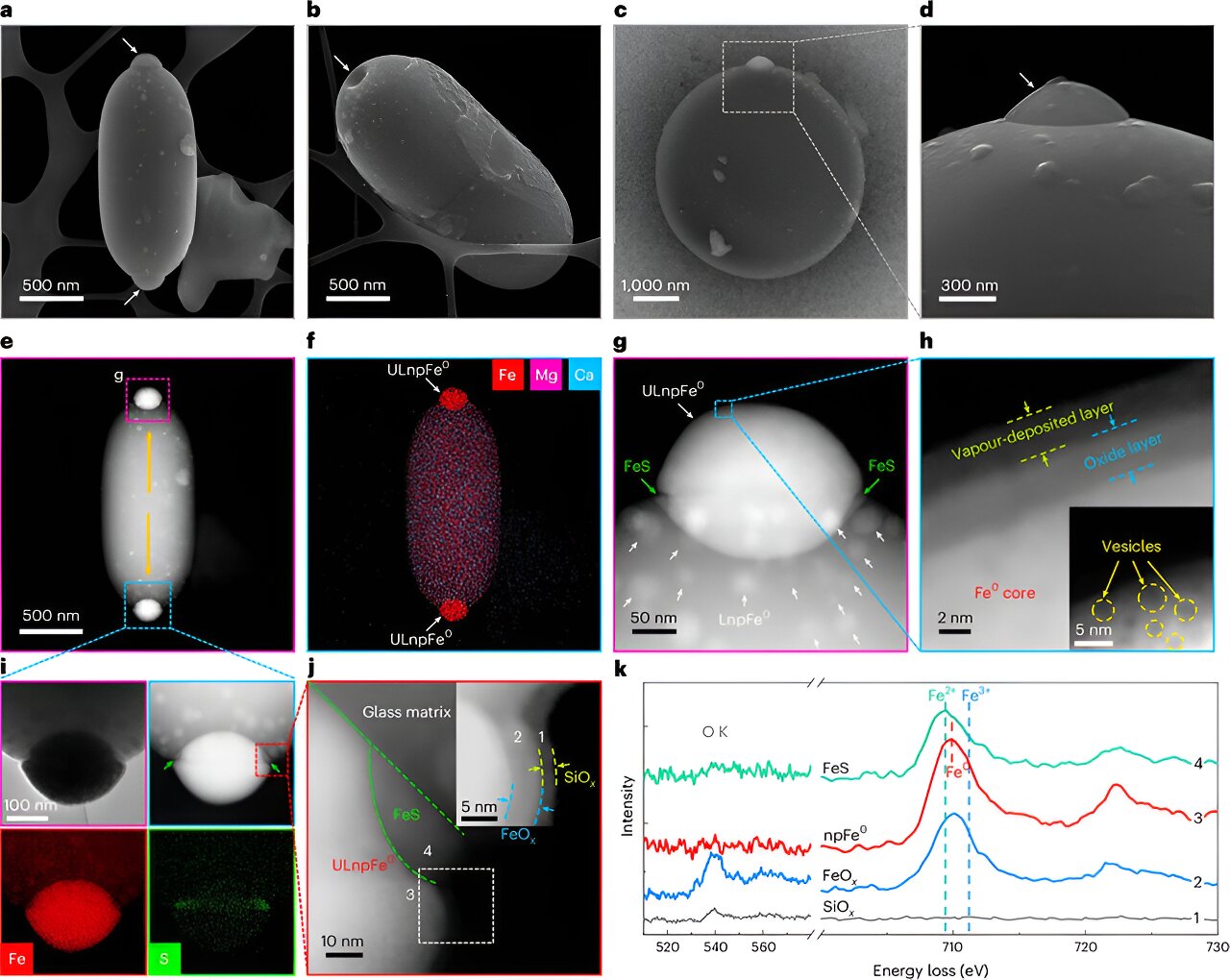
Characterizations of ULnpFe0 on extremities of impact glass beads. Credit: Institute of Physics

“We discovered that the glass beads in the Chang’e-5 lunar soil can preserve iron particles of different sizes, from about 1 nanometer to 1 micrometer,” said Prof. Bai.

“It is generally difficult to distinguish npFe0 of different origins observed together in single samples. Here we used the rotation feature of the impact glass beads to clearly distinguish npFe0 formed before and after the solidification of the host glass beads.”

In this study, the scientists found numerous discrete large npFe0, tens of nanometers in size, which tended to concentrate towards the extremities of the glass beads. This concentration effect can cause ultralarge npFe0 to protrude from the extremities.

Suc...

Read More

Tiny Bright Objects discovered at Dawn of Universe baffle scientists

Circles of light on a black background
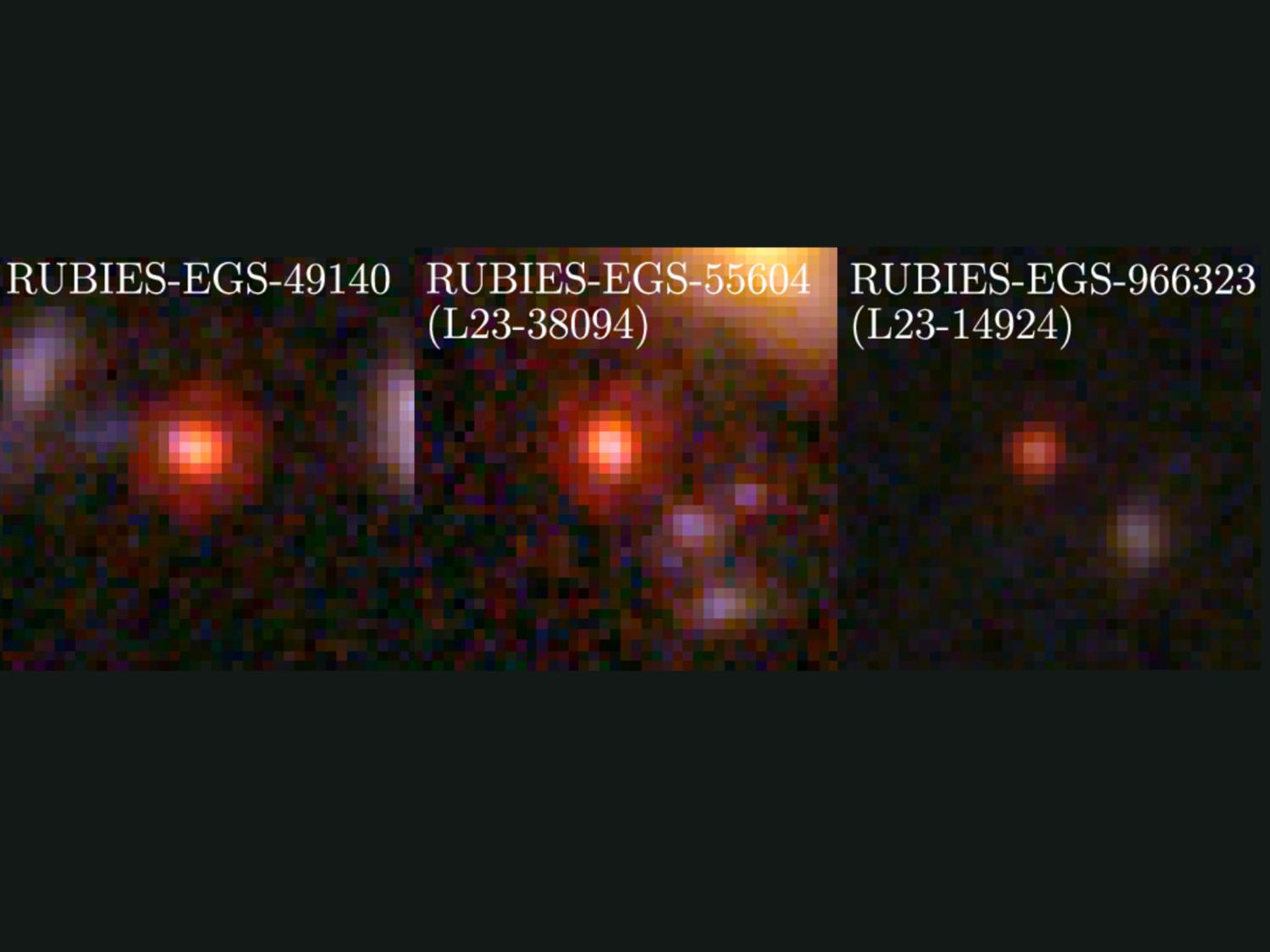
Researchers investigated three mysterious objects in the early universe. Shown here are their color images, composited from three NIRCam filter bands onboard the James Webb Space Telescope. They are remarkably compact at red wavelengths (earning them the term “little red dots”) with some evidence for spatial structure at blue wavelengths. Credit: Provided by researchers / Penn State. All Rights Reserved.

A recent discovery by NASA’s James Webb Space Telescope (JWST) confirmed that luminous, very red objects previously detected in the early universe upend conventional thinking about the origins and evolution of galaxies and their supermassive black holes.

An international team, led by Penn State researchers, using the NIRSpec instrument aboard JWST as part of the RUBIES survey...

Read More