

Supermassive black holes pose unanswered questions for astronomers around the world, not least “How do they grow so big?” Now, an international team of astronomers, including researchers from Chalmers University...
Read More


Supermassive black holes pose unanswered questions for astronomers around the world, not least “How do they grow so big?” Now, an international team of astronomers, including researchers from Chalmers University...
Read More
June 21, 2024,
 Astronomy/Space
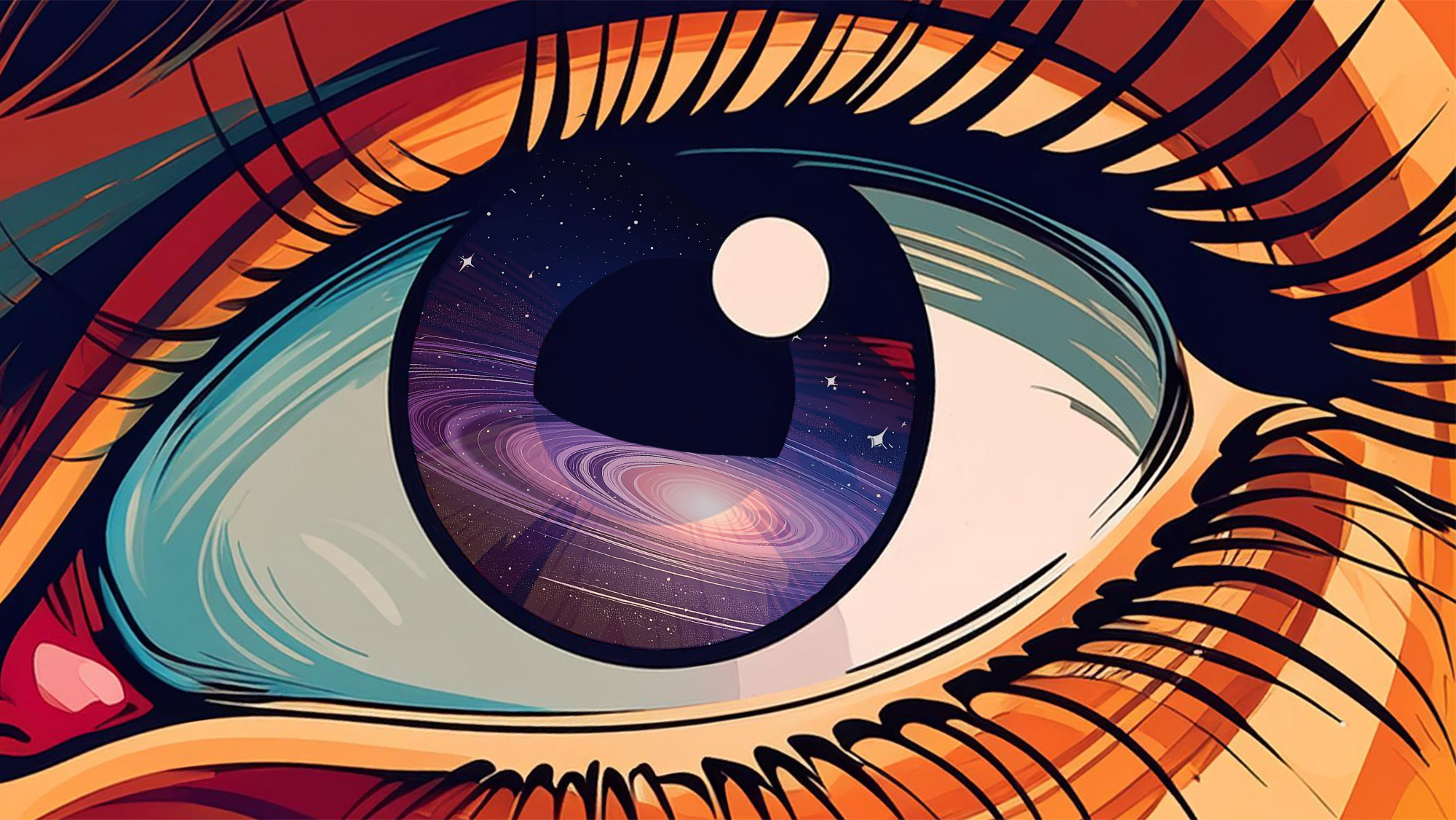
As space travel becomes more common, it is important to consider the impacts of space flight and altered gravity on the human body. Led by Dr. Ana Diaz Artiles, researchers at Texas A&M University are studying some of those impacts, specifically effects on the eye.
Gravitational changes experienced by astronauts during space travel can cause fluids within the body to shift. This can cause changes to the cardiovascular system, including vessels in and around the eyes.
As the commercialization of space flight becomes more common and individual space travel increases, astronauts will not be the only ones experiencing these changes...
Read More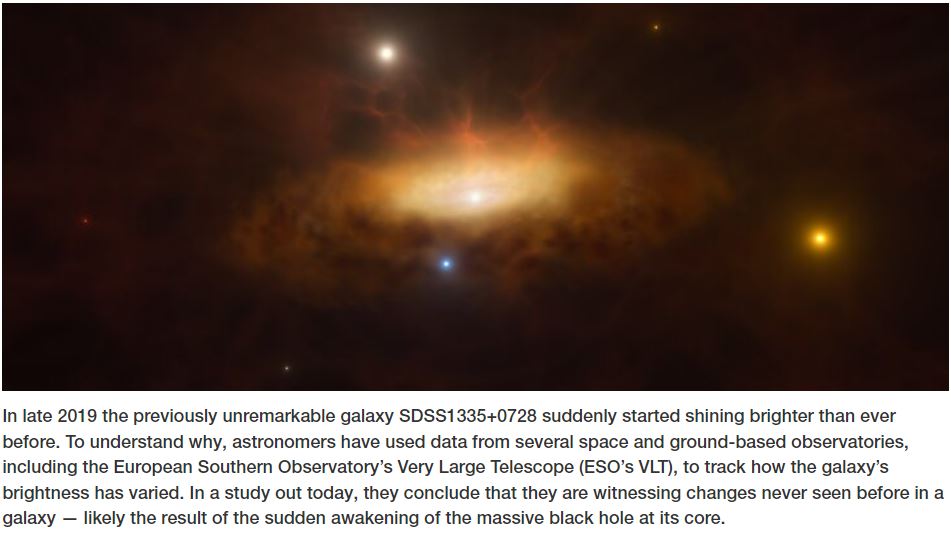
In late 2019 the previously unremarkable galaxy SDSS1335+0728 suddenly started shining brighter than ever before. To understand why, astronomers have used data from several space and ground-based observatories, including the European Southern Observatory’s Very Large Telescope (ESO’s VLT), to track how the galaxy’s @brightness has varied. In a study out today, they conclude that they are witnessing changes never seen before in a galaxy – likely the result of the sudden awakening of the massive black hole at its core.
“Imagine you’ve been observing a distant galaxy for years, and it always seemed calm and inactive,” says Paula Sánchez Sáez, an astronomer at ESO in Germany and lead author of the study accepted for publication in Astronomy & Astrophysics...
Read More
June 19, 2024,
Astronomy/Space
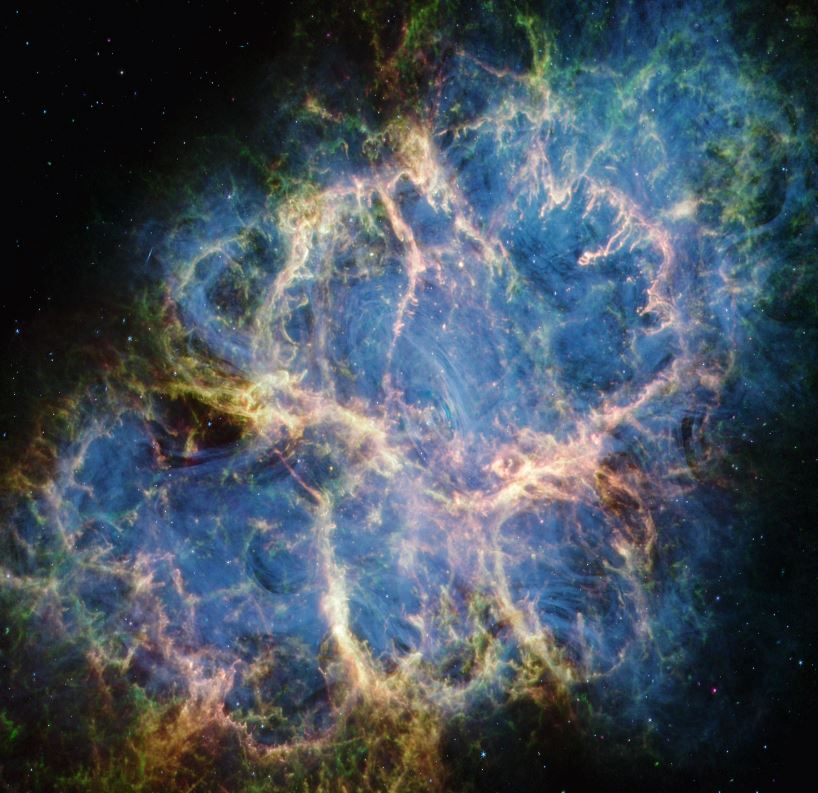
A team of scientists used NASA’s James Webb Space Telescope to parse the composition of the Crab Nebula, a supernova remnant located 6,500 light-years away in the constellation Taurus...
Read More

Recent Comments