Category Astronomy/Space

Swarm Satellites Help Aurora Chasers Discover Steve’s Long-Lost Twin

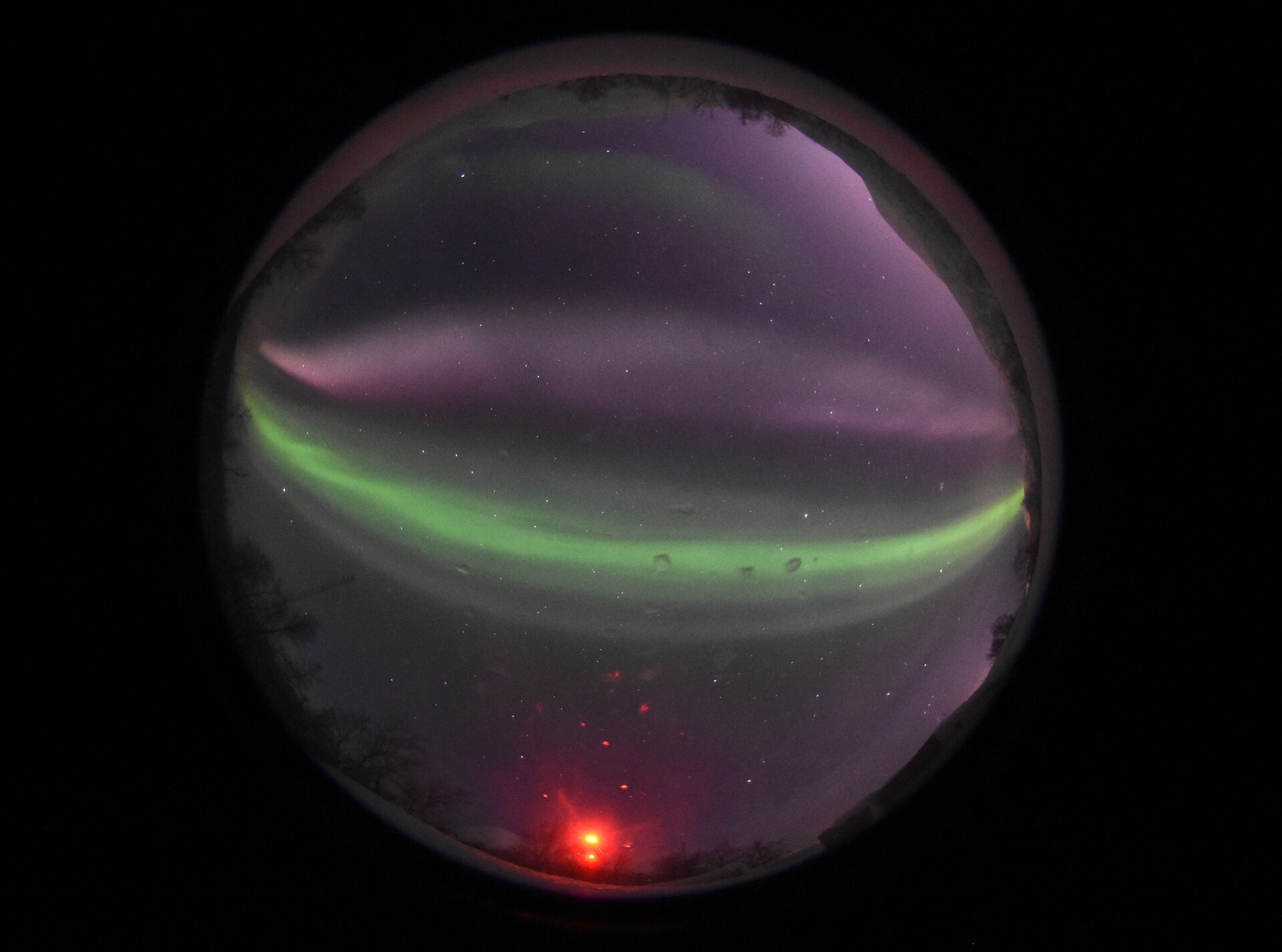
Steve’s twin captured by an all-sky digital camera

Ever since aurora chasers discovered Steve, a mysterious ribbon of purple light in the night sky, scientists have wondered whether it might have a secret twin. Now, thanks to a photographer’s keen eye, and data from ESA’s Swarm satellites, we may have found it.

Steve was a sensation when scientists stumbled across it a few years ago, thanks to the eagle eyes and excellent photography of the Alberta Aurora Chasers Facebook group.

But its mauve hue and fleeting appearance meant it couldn’t be a feature of the aurora borealis, commonly known as the northern lights, which comes in shades of green, blue and red and can last for hours. So, what could it be?

Fortunately, ESA’s trio of magnetic-field monitoring Swarm satellites were...

Read More
TOI-1685 b is a Hot and Rocky Super-Earth Exoplanet, Observations find

TOI-1685 b is a hot and rocky super-Earth exoplanet, observations find
Best fit SED for TOI-1685 from VOSA. Colored points are photometric magnitudes from the Gaia, 2Mass, and WISE surveys, and magnitudes synthesized from spectrophotometrically calibrated Gaia DR3 Bp/Rp spectra into the photometric system of the OAJ JPAS and JPLUS surveys. Gray line depicts the model flux measurements. Credit: arXiv (2024). DOI: 10.48550/arxiv.2405.14895

An international team of astronomers has performed follow-up observations of a nearby alien world known as TOI-1685 b. Results of the observations, published May 21 on the pre-print server arXiv, indicate that TOI-1685 b is a hot and rocky alien world with an Earth-like density.

The so-called “super-Earths” are planets more massive than Earth but not exceeding the mass of Neptune...

Read More

Dark Matter could make our Galaxy’s Innermost Stars Immortal

Dark matter could make our galaxy's innermost stars immortal
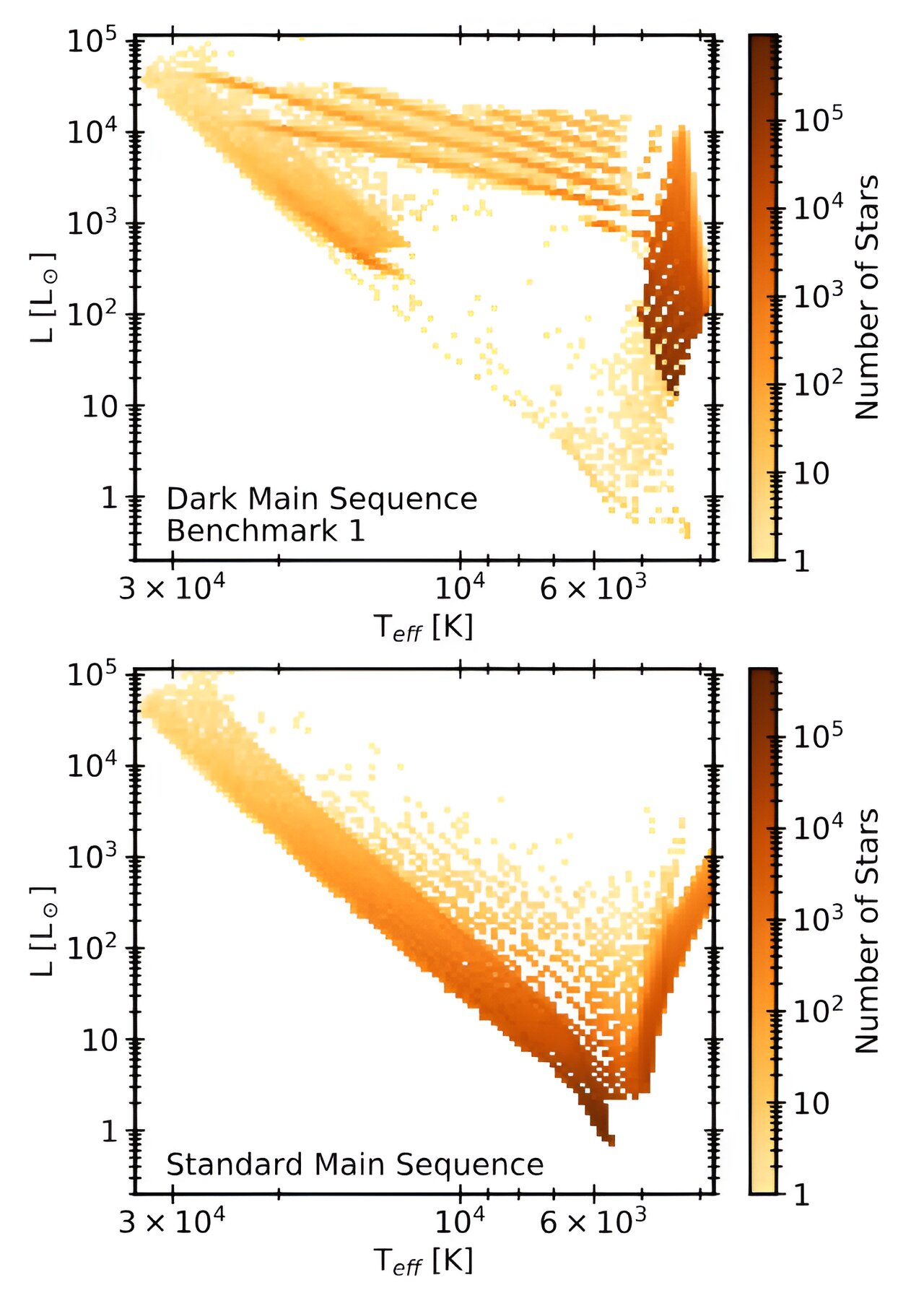
The new population of dark main sequence of stars (top) on the Hertzsprung-Russell diagram found by this paper compared to the standard main sequence (bottom) for stellar evolution. Credit: arXiv (2024). DOI: 10.48550/arxiv.2405.12267

Stars near the center of our galaxy are acting kind of weird. Dark matter may be the explanation. A team of scientific detectives (so to speak) have discovered a potential new class of stars that could exist within a light-year of the Milky Way’s center that could be operating according to an unusual mechanism: dark matter annihilation. This process would produce an outward pressure on the stars other than hydrogen fusion, keeping them from gravitationally collapsing—and making them essentially immortal, their youth being refreshed constantly...

Read More

The Universe’s Biggest Explosions made Elements we are Composed of, but there’s Another Mystery Source out there

The universe's biggest explosions made some of the elements we are composed of. But there's another mystery source out there
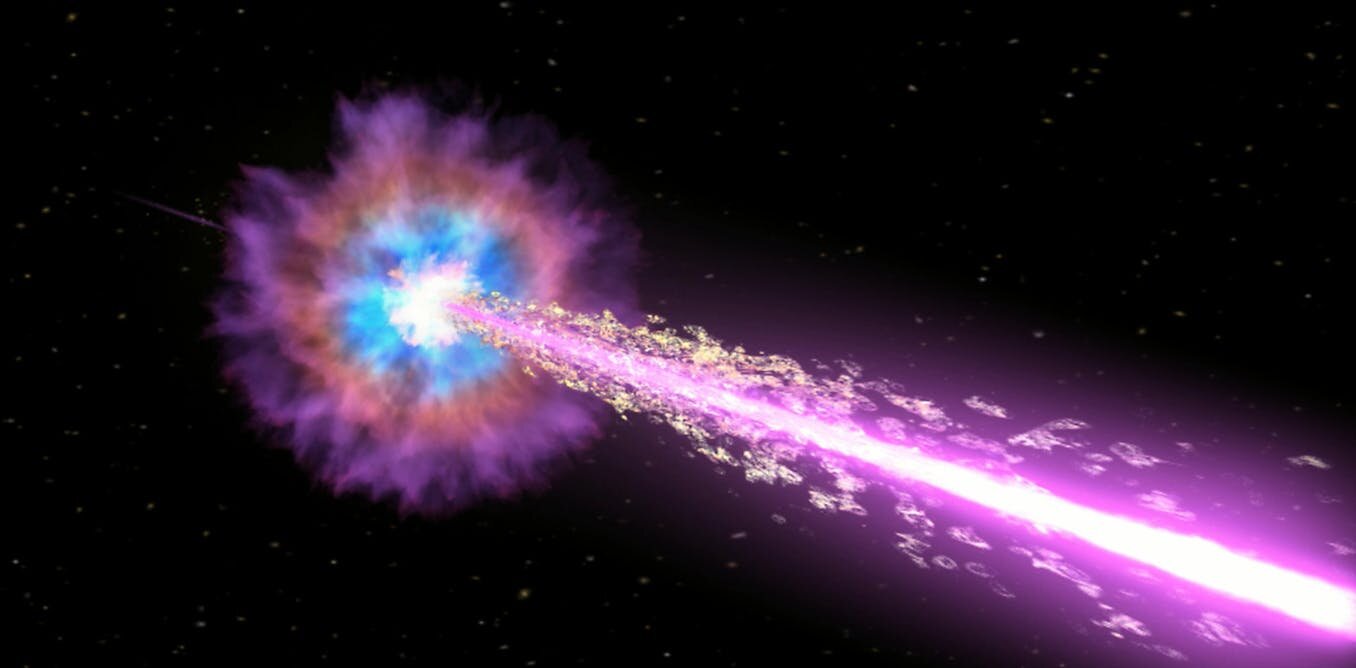
Credit: NASA/Swift/Cruz deWilde

After its “birth” in the Big Bang, the universe consisted mainly of hydrogen and a few helium atoms. These are the lightest elements in the periodic table. More-or-less all elements heavier than helium were produced in the 13.8 billion years between the Big Bang and the present day.

Stars have produced many of these heavier elements through the process of nuclear fusion. However, this only makes elements as heavy as iron. The creation of any heavier elements would consume energy instead of releasing it.

In order to explain the presence of these heavier elements today, it’s necessary to find phenomena that can produce them. One type of event that fits the bill is a gamma-ray burst (GRB)—the most powerful class of explosion in the universe...

Read More