
Category Astronomy/Space

Hungry, Hungry White Dwarfs: Solving the Puzzle of Stellar Metal Pollution

Planetesimal orbits around a white dwarf. Initially, every planetesimal has a circular, prograde orbit. The kick forms an eccentric debris disk which with prograde (blue) and retrograde orbits (orange).
Image Credit
Steven Burrows/Madigan group

Dead stars known as white dwarfs, have a mass like the sun while being similar in size to Earth. They are common in our galaxy, as 97% of stars are white dwarfs. As stars reach the end of their lives, their cores collapse into the dense ball of a white dwarf, making our galaxy seem like an ethereal graveyard.

Despite their prevalence, the chemical makeup of these stellar remnants has been a conundrum for astronomers for years...

Read More
Fluidic Telescope (FLUTE): Enabling the Next Generation of Large Space Observatories

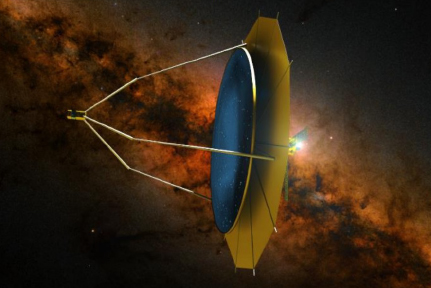
Artist rendition of the Fluidic Telescope
Artist’s depiction of the Fluidic Telescope (FLUTE)
Edward Balaban

The future of space-based UV/optical/IR astronomy requires ever larger telescopes. The highest priority astrophysics targets, including Earth-like exoplanets, first generation stars, and early galaxies, are all extremely faint, which presents an ongoing challenge for current missions and is the opportunity space for next generation telescopes: larger telescopes are the primary way to address this issue.

With mission costs depending strongly on aperture diameter, scaling current space telescope technologies to aperture sizes beyond 10 m does not appear economically viable. Without a breakthrough in scalable technologies for large telescopes, future advances in astrophysics may slow down or even completely stall...

Read More

NASA’s Mars Sample Return Mission is in trouble—but it’s a Vital Step to Sending Humans to the Red Planet

NASA's Mars Sample Return mission is in trouble—but it's a vital step to sending humans to the red planet
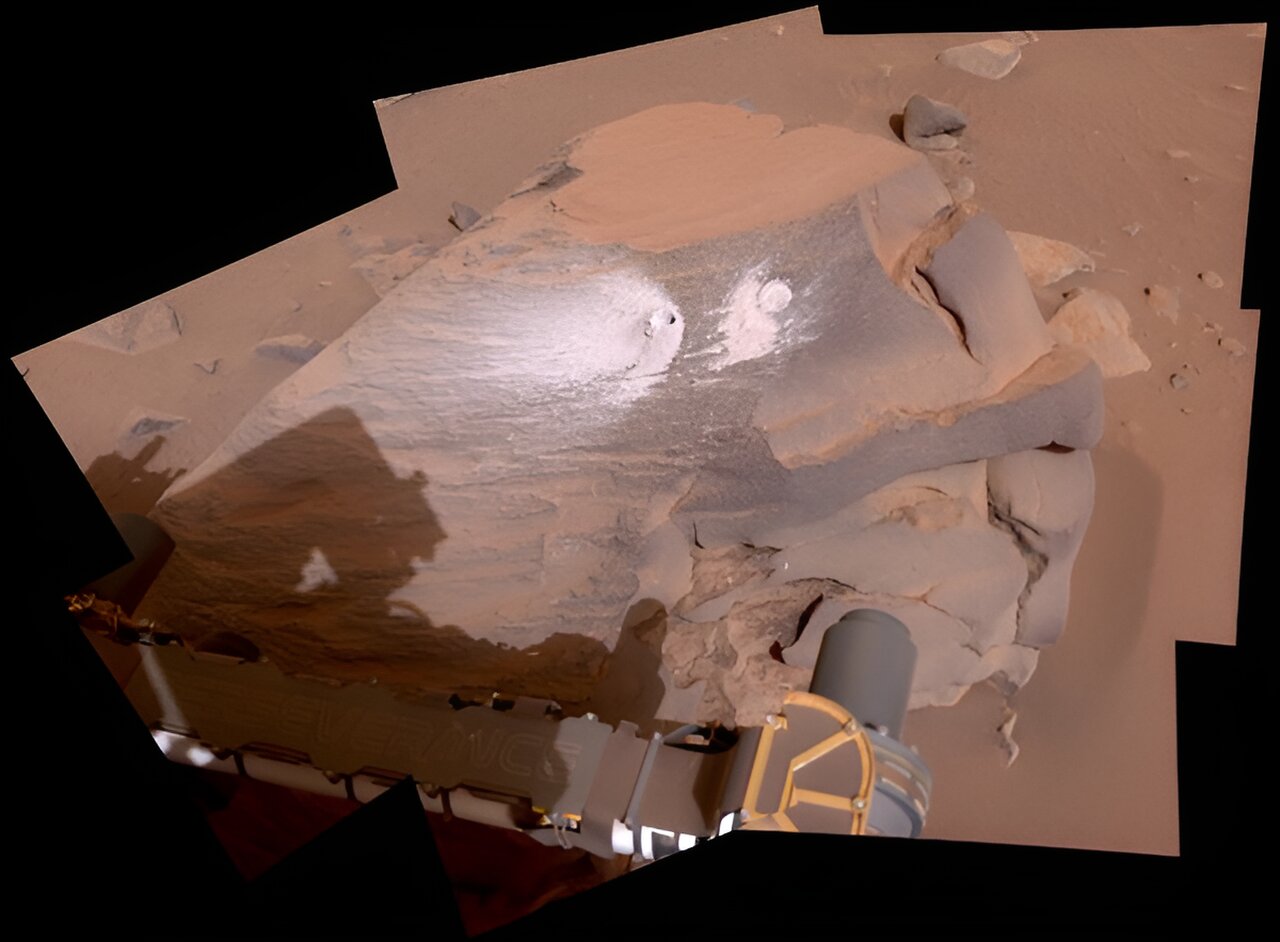
Perseverance has been collecting cores from scientifically interesting rocks for their eventual return to Earth. Credit: NASA/JPL-Caltech/ASU/MSSS

NASA recently asked the scientific community to help come up with innovative ideas for ways to carry out its Mars Sample Return (MSR) mission. This was in response to a report by an independent board that deemed that its US$11 billion (£8.7 billion) price tag was too expensive and its 2040 timeline too far in the future.

In brief, the ambitious plan was to collect rock samples cached inside containers by NASA’s Perseverance rover and deliver them to laboratories on Earth. Perseverance has been exploring Mars’ Jezero Crater, thought to have once hosted an ancient lake, since 2021...

Read More

AI Speech Analysis may aid in Assessing and Preventing Potential Suicides, says researcher

Credit: Pixabay/CC0 Public Domain

Speech is critical to detecting suicidal ideation and a key to understanding the mental and emotional state of people experiencing it. Suicide hotline counselors are trained to quickly analyze speech variation to better help callers through a crisis.

But just as no system is perfect, there is room for error in interpreting a caller’s speech. In order to assist hotline counselors to properly assess a caller’s condition, Concordia Ph.D. student Alaa Nfissi has developed a model for speech emotion recognition (SER) using artificial intelligence tools. The model analyzes and codes waveform modulations in callers’ voices. This model, he says, can lead to improved responder performance in real-life suicide monitoring.

The research is published as part ...

Read More