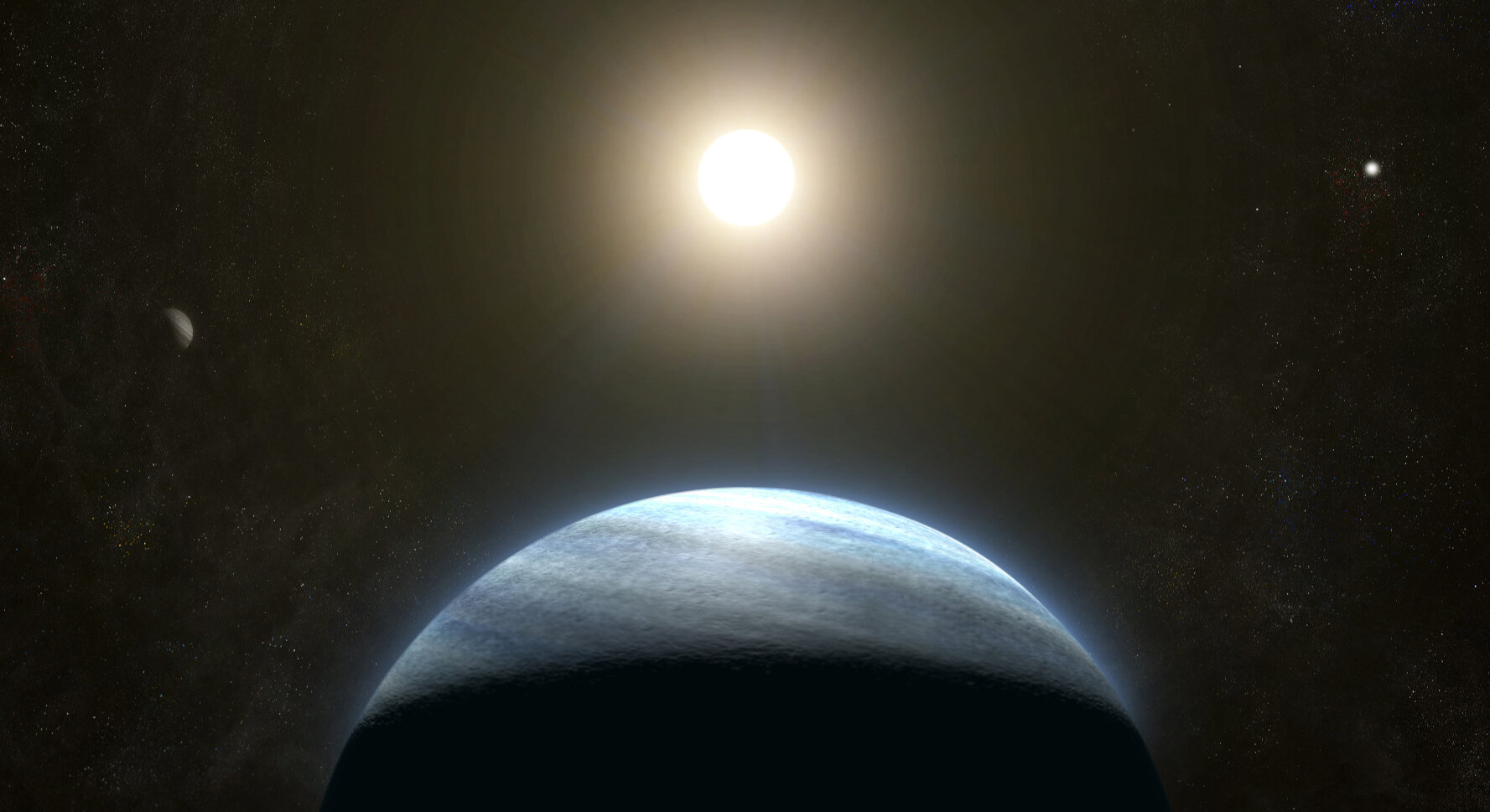
An artist’s interpretation of TOI 4633 c, a Neptune-like exoplanet found orbiting the habitable zone of a sunlike star. The system contains a second star (right) and may also host another exoplanet (left). Credit: Ed Bell for the Simons Foundation
A team of astronomers and citizen scientists has discovered a planet in the habitable zone of an unusual star system, including two stars and potentially another exoplanet.
The planet hunters spotted the Neptune-like planet as it crossed in front of its host star, temporarily dimming the star’s light in a way akin to a solar eclipse on Earth...
The NASA/ESA/CSA James Webb Space Telescope has captured the sharpest infrared images to date of one of the most distinctive objects in our skies, the Horsehead Nebula. These observations show a part of the iconic nebula in a whole new light, capturing its complexity with unprecedented spatial resolution.
Webb’s new images show part of the sky in the constellation Orion (The Hunter), in the western side of the Orion B molecular cloud. Rising from turbulent waves of dust and gas is the Horsehead Nebula, otherwise known as Barnard 33, which resides roughly 1,300 light-years away.
The nebula formed from a collapsing interstellar cloud of material, and glows because it is illuminated by a nearby hot star...
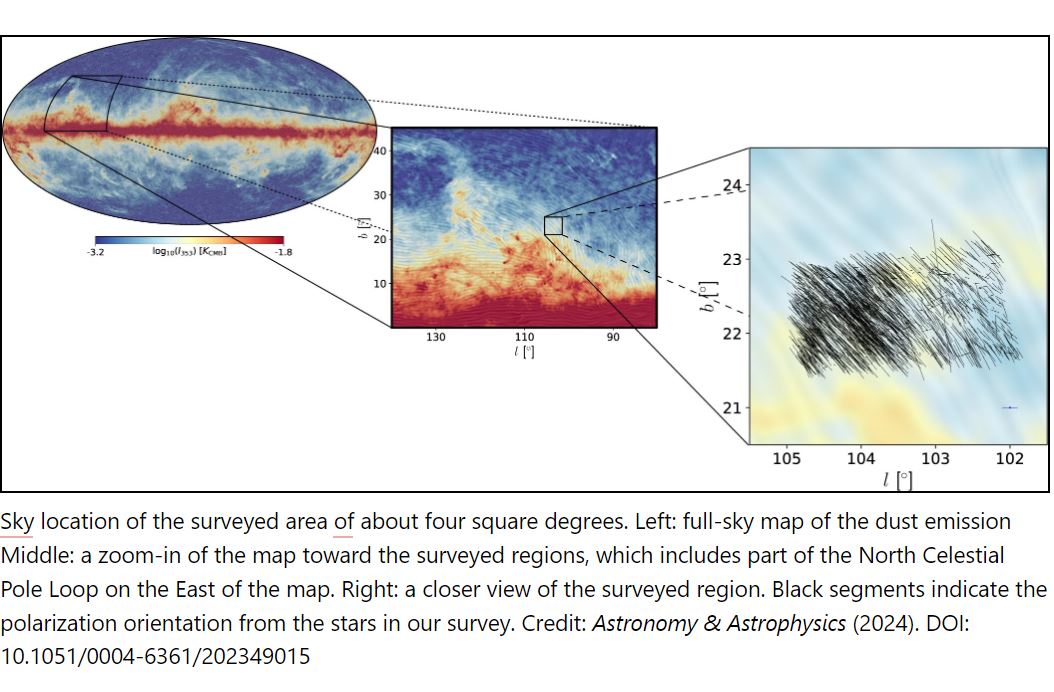
We are all very familiar with the concept of the Earth’s magnetic field. It turns out that most objects in space have magnetic fields but it’s quite tricky to measure them. Astronomers have developed an ingenious way to measure the magnetic field of the Milky Way using polarized light from interstellar dust grains that align themselves to the magnetic field lines. A new survey has begun this mapping process and has mapped an area that covers the equivalent of 15 times the full moon.
Many people will remember experiments in school with iron filings and bar magnets to unveil their magnetic field. It’s not quite so easy to capture the magnetic field of the Milky Way though. The new method to measure the field relies upon the small dust grains which permeate space between the stars.
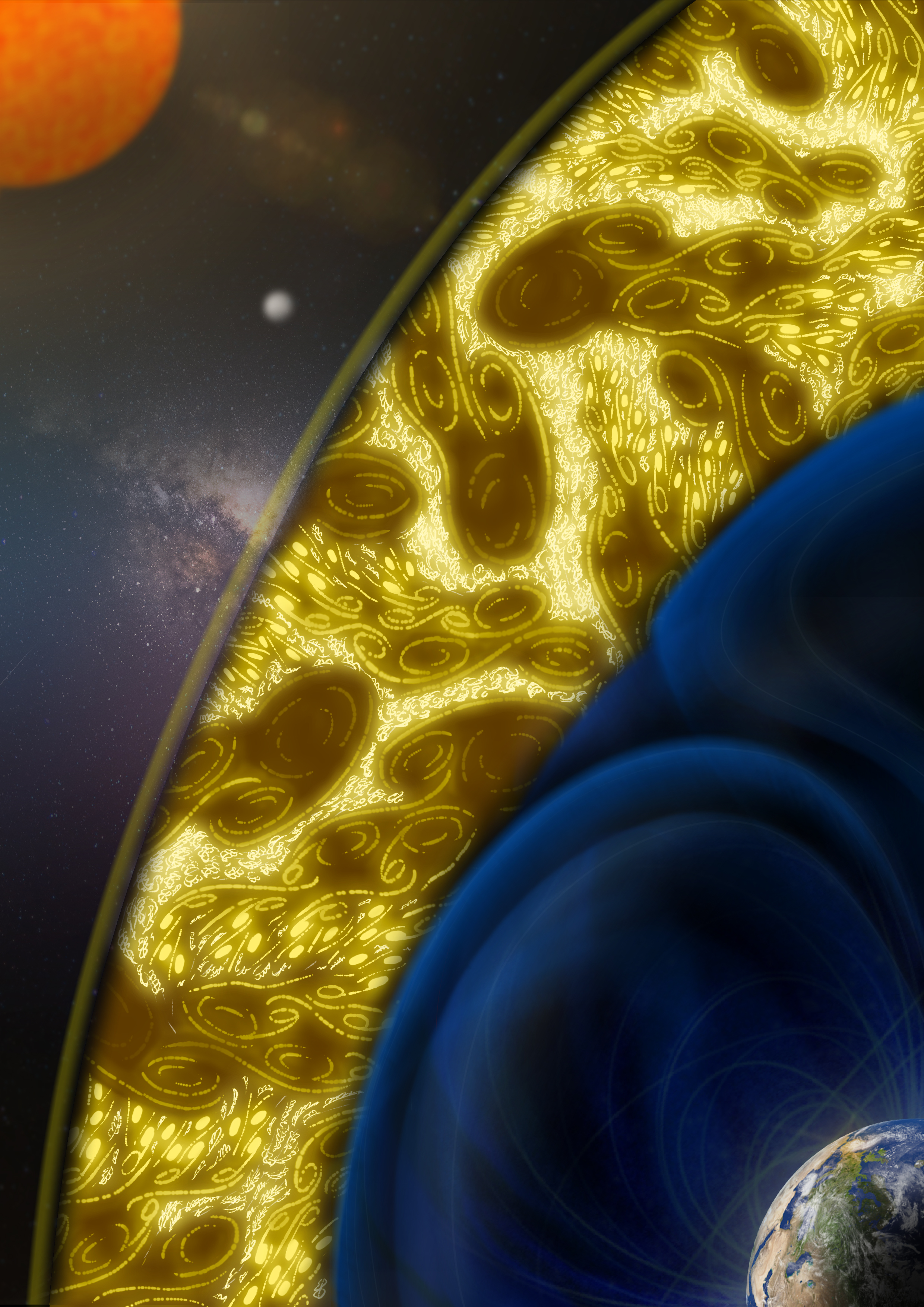
Astrophysicists from the University of Potsdam have made a significant step toward solving the last puzzle in magnetohydrodynamic turbulence theory by observing the weak to strong transition in the space plasma turbulence surrounding Earth with newly developed multi-spacecraft analysis methods. Their pioneering discovery was published today in the journal Nature Astronomy.
Turbulence is ubiquitous in nature. It exists everywhere, from our daily lives to the distant universe, while being labelled as “the last great unsolved problem of classical physics” by Richard Feynman.







Recent Comments