Category Astronomy/Space

Astrophysicists Solve Mystery of Heart-Shaped Feature on the Surface of Pluto

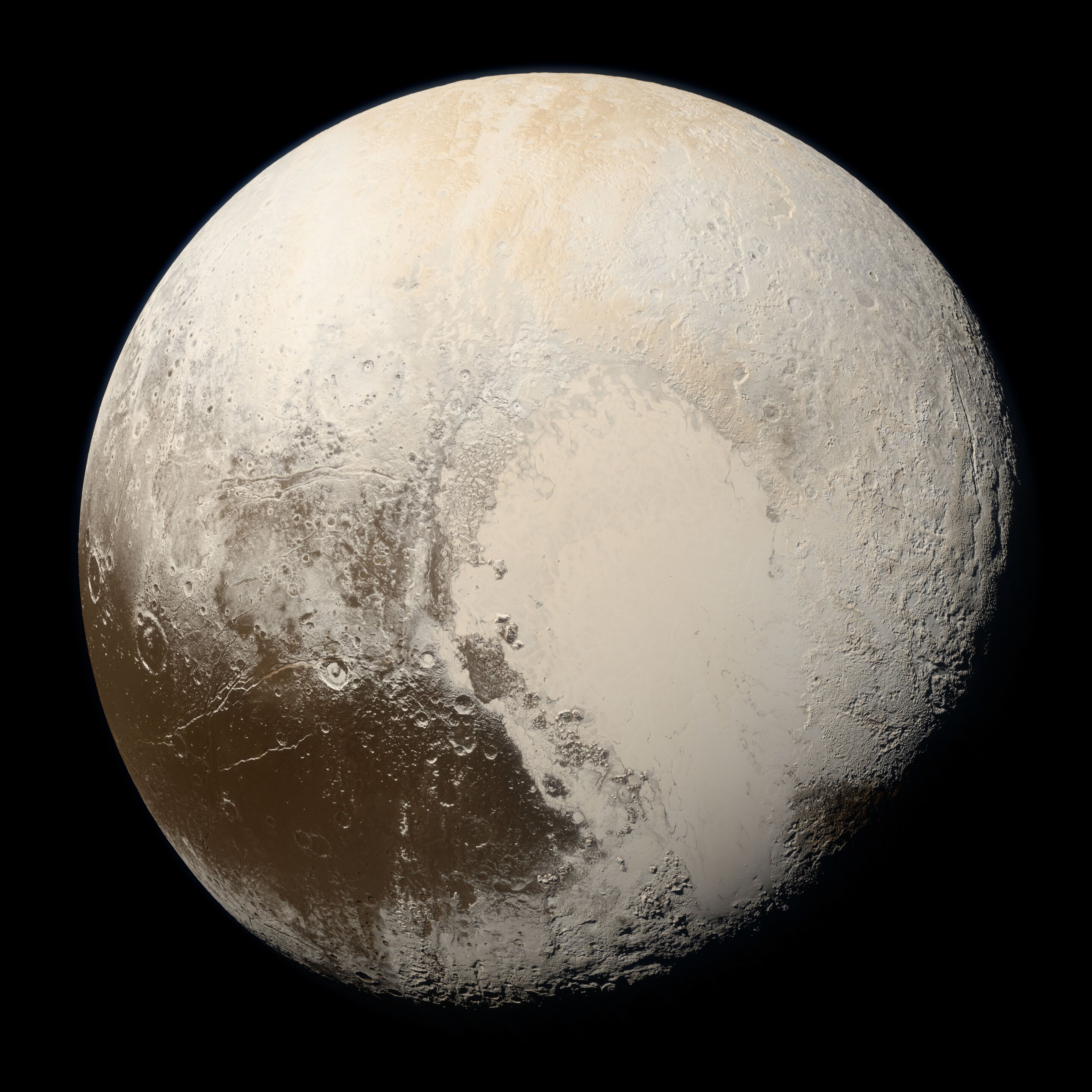
How Pluto got its heart
Credit: NASA/Johns Hopkins University Applied Physics Laboratory/Southwest Research Institute/Alex Parker

The mystery of how Pluto got a giant heart-shaped feature on its surface has finally been solved by an international team of astrophysicists led by the University of Bern and members of the National Center of Competence in Research (NCCR) PlanetS. The team is the first to successfully reproduce the unusual shape with numerical simulations, attributing it to a giant and slow oblique-angle impact.

Ever since the cameras of NASA’s New Horizons mission discovered a large heart-shaped structure on the surface of the dwarf planet Pluto in 2015, this “heart” has puzzled scientists because of its unique shape, geological composition, and elevation...

Read More
The Moon Turned Itself Inside Out, Scientists Confirm

Small Bang
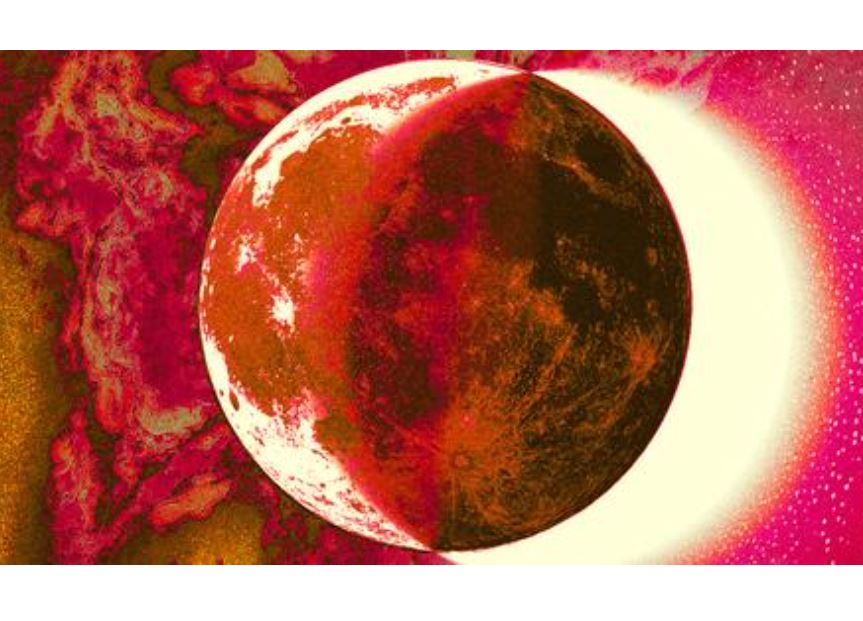
Scientists seem to have figured out why the Moon is made up of such weird and heavy rocks: way back in the day, it turned itself inside out.

For decades now, scientists have pretty much agreed that the Moon formed from debris that flew off the young Earth when another planet smashed into it about 4.5 billion years. That cosmic wreckage “coalesced, cooled and solidified” to form the Moon as we know it today, researchers from the University of Arizona’s Lunar and Planetary Laboratory wrote in a press release — but what happened next is something of a “choose-your-own adventure,” as the scientists describe it.

In a new paper published in the journal Nature Geoscience, the LPL researchers found that the surprisingly high concentration of titanium found in Moon rocks, suc...

Read More

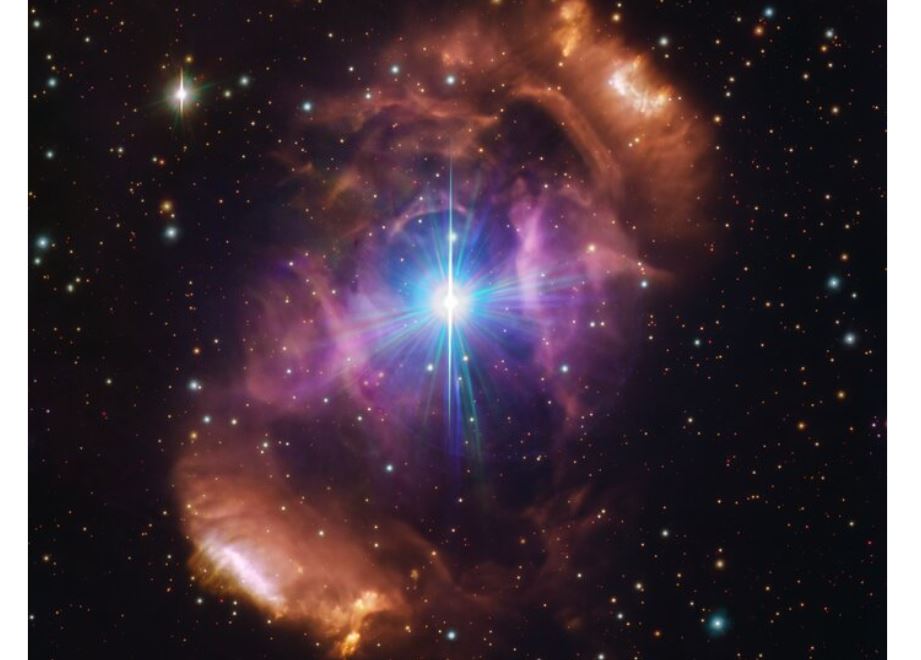
Beautiful Nebula, Violent History: Clash of Stars Solves Stellar Mystery

When astronomers looked at a stellar pair at the heart of a stunning cloud of gas and dust, they were in for a surprise. Star pairs are typically very similar, like twins, but in HD 148937, one star appears younger and, unlike the other, is magnetic.

New data from the European Southern Observatory (ESO) suggest there were originally three stars in the system, until two of them clashed and merged. This violent event created the surrounding cloud and forever altered the system’s fate.

“When doing background reading, I was struck by how special this system seemed,” says Abigail Frost, an astronomer at ESO in Chile and lead author of the study, “A magnetic massive star has experienced a stellar merger,” published in Science.

The system, HD 148937, is located about 3800 light-year...

Read More

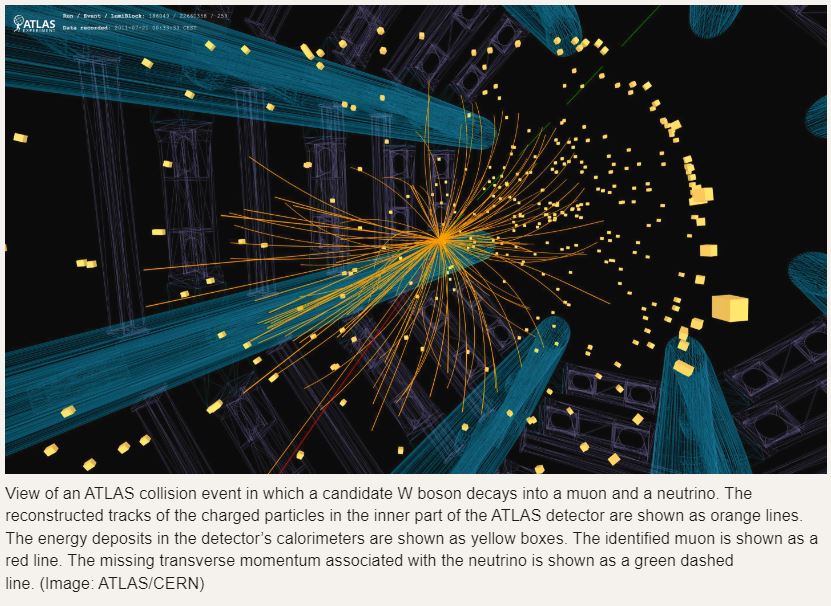
ATLAS provides First Measurement of the W-Boson Width at the LHC

The discovery of the Higgs boson in 2012 slotted in the final missing piece of the Standard Model puzzle. Yet, it left lingering questions. What lies beyond this framework? Where are the new phenomena that would solve the universe’s remaining mysteries, such as the nature of dark matter and the origin of matter-antimatter asymmetry?

One parameter that may hold clues about new physics phenomena is the “width” of the W boson, the electrically charged carrier of the weak force. A particle’s width is directly related to its lifetime and describes how it decays to other particles. If the W boson decays in unexpected ways, such as into yet-to-be-discovered new particles, these will influence the measured width.

As the Standard Model precisely predicts its value based on the strength o...

Read More