Category Astronomy/Space

Study Shedding New Light on Earth’s Global Carbon Cycle could Help Assess Liveability of Other Planets

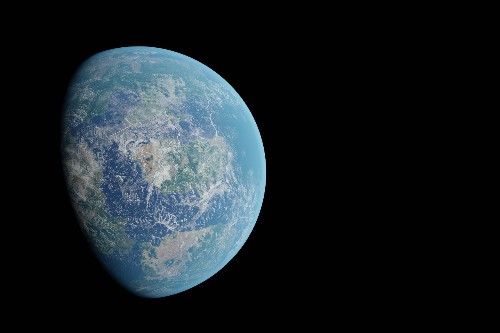
Research has uncovered important new insights into the evolution of oxygen, carbon, and other vital elements over the entire history of Earth – and it could help assess which other planets can develop life, ranging from plants to animals and humans.

The study, published today in Nature Geoscience and led by a researcher at the University of Bristol, reveals for the first time how the build up of carbon-rich rocks has accelerated oxygen production and its release into the atmosphere.

Until now the exact nature of how the atmosphere became oxygen-rich has long eluded scientists and generated conflicting explanations.

As carbon dioxide is steadily emitted by volcanoes, it ends up entering the ocean and forming rocks like limestone.

As global stocks of these rocks build up t...

Read More
CSIRO Telescope detects unprecedented Behaviour from Nearby Magnetar

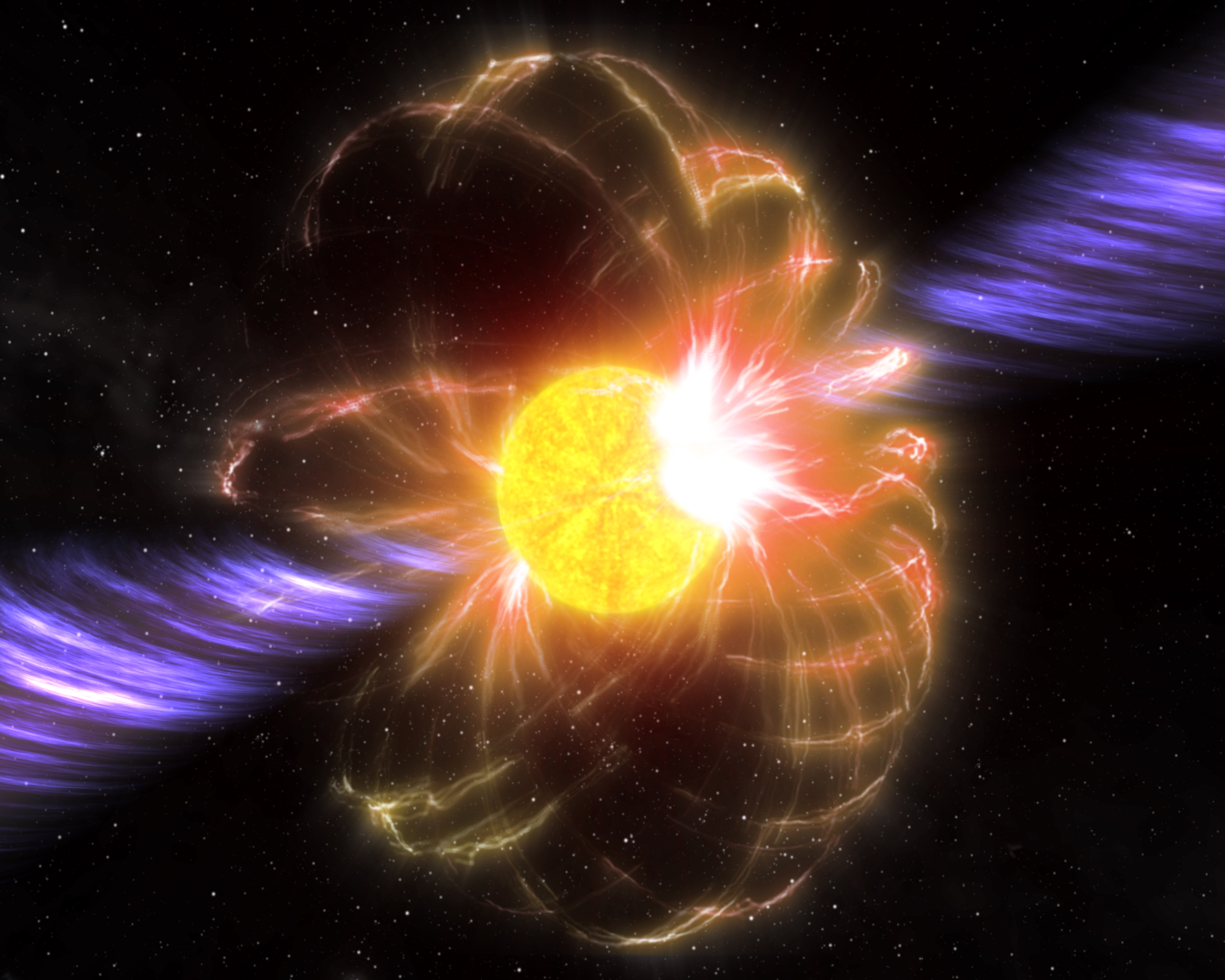
Artist’s impression of a magnetar with magnetic field and powerful jets. ©  CSIRO

Researchers using Murriyang, CSIRO’s Parkes radio telescope, have detected unusual radio pulses from a previously dormant star with a powerful magnetic field.

New results published today in Nature Astronomy describe radio signals from magnetar XTE J1810-197 behaving in complex ways.

Magnetars are a type of neutron star and the strongest magnets in the Universe. At roughly 8,000 light years away, this magnetar is also the closest known to Earth.

Most are known to emit polarised light, though the light this magnetar is emitting is circularly polarised, where the light appears to spiral as it moves through space.

Dr Marcus Lower, a postdoctoral fellow at Australia’s national science agency...

Read More

Researchers Enable Detection of Remarkable Gravitational-Wave Signal

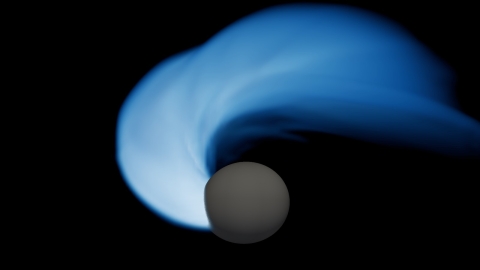
coalescence and merger of a lower mass-gap black hole with a neutron star
The coalescence and merger of a lower mass-gap black hole (dark grey surface) with a neutron star with colours ranging from dark blue (60 grams per cubic centimetre) to white (600 kilograms per cubic centimetre) and highlight the strong deformations of the low-density material of the neutron star. Credit: I. Markin (Potsdam University), T. Dietrich (Potsdam University and Max Planck Institute for Gravitational Physics), H. Pfeiffer, A. Buonanno (Max Planck Institute for Gravitational Physics).

Researchers from the University of Portsmouth’s Institute of Cosmology and Gravitation (ICG) have helped to detect a remarkable gravitational-wave signal, which could hold the key to solving a cosmic mystery.

The discovery is from the latest set of results announced by the LIGO-Virgo-KAGRA co...

Read More

Inexplicable Flying Fox found in Hydra Galaxy Cluster

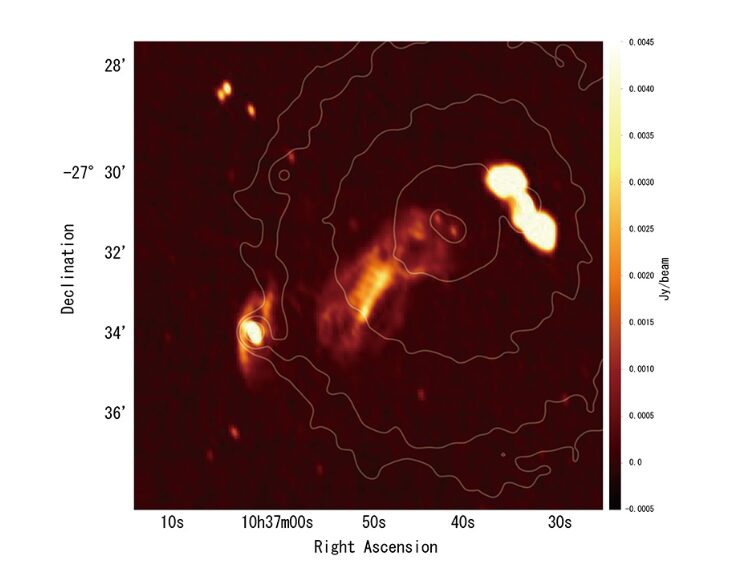
GMRT radio image of the central region of the Hydra Cluster. The “head” of the Flying Fox discovered this time points to the south-west (lower right). The Flying Fox has a “wingspan” of 220,000 light years. The white contours in the background show the X-ray surface brightness as observed by ESA’s XMM-Newton satellite.(Credit: Kohei Kurahara)

High sensitivity radio observations have discovered a cloud of magnetized plasma in the Hydra galaxy cluster. The odd location and shape of this plasma defy all conventional explanations. Dubbed the Flying Fox based on its silhouette, this plasma will remain a mystery until additional observations can provide more insight.

A team led by Kohei Kurahara at the National Astronomical Observatory of Japan analyzed observations from the Gia...

Read More