
Category Astronomy/Space

The Universe’s Accelerated Expansion Might be Slowing Down

First results from DESI make the most precise measurement of our expanding universe

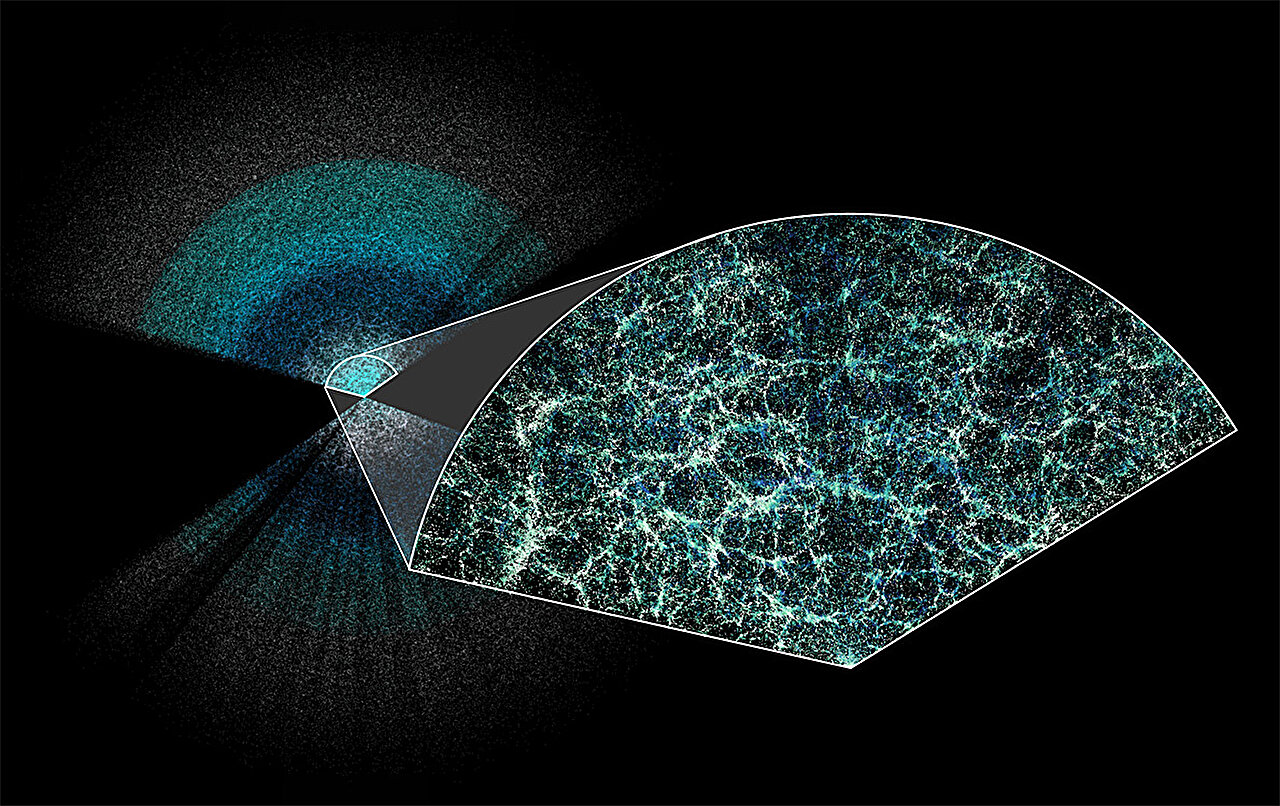
The universe is still expanding at an accelerating rate, but it may have slowed down recently compared to a few billion years ago, early results from the most precise measurement of its evolution yet suggested Thursday.

While the preliminary findings are far from confirmed, if they hold up it would further deepen the mystery of dark energy—and likely mean there is something important missing in our understanding of the cosmos.

These signals of our universe’s changing speeds were spotted by the Dark Energy Spectroscopic Instrument (DESI), which is perched atop a telescope at the Kitt Peak National Observatory in the US state of Arizona.

Each of the instrument’s 5,000 fiber-optic robots can observe a galaxy for 20 minutes, allowing astronomers to chart what they have called t...

Read More
New Research Traces the Fates of Stars Living Near the Milky Way’s Central Black Hole

Stellar collisions produce strange, zombie-like survivors
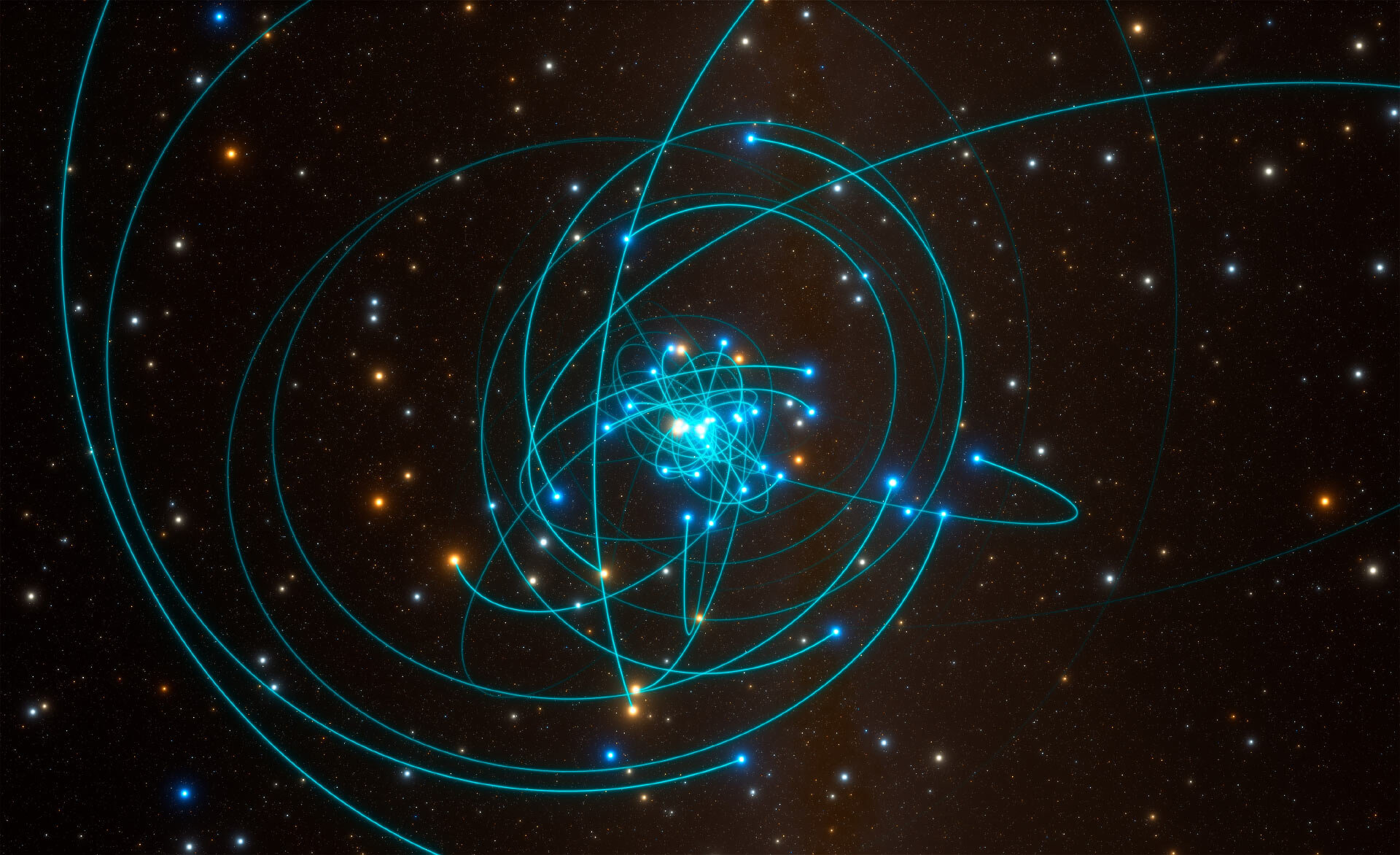
This illustration shows the orbits of stars very close to Sagittarius A*, a supermassive black hole at the heart of the Milky Way. Credit: ESO / L. Calçada / Spaceengine.org

Despite their ancient ages, some stars orbiting the Milky Way’s central supermassive black hole appear deceptively youthful. But unlike humans, who might appear rejuvenated from a fresh round of collagen injections, these stars look young for a much darker reason.

They ate their neighbors.

This is just one of the more peculiar findings from new Northwestern University research. Using a new model, astrophysicists traced the violent journeys of 1,000 simulated stars orbiting our galaxy’s central supermassive black hole, Sagittarius A* (Sgr A*).

So densely packed with stars, the region commonly experiences b...

Read More

First Tidally Locked Super-Earth Exoplanet Confirmed

First tidally locked exoplanet super-Earth confirmed
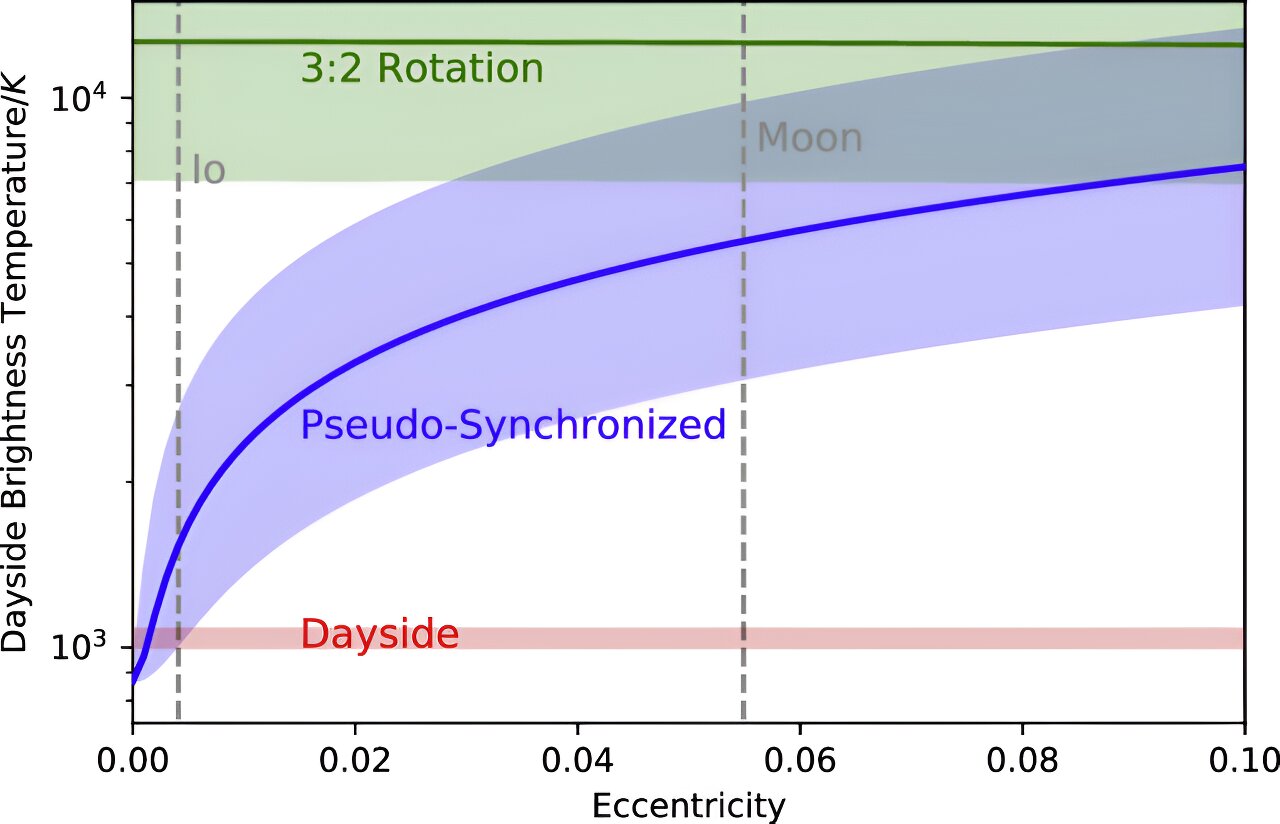
Observed dayside brightness temperature of LHS 3844b (red; 1σ range), vs. the planet’s theoretical dayside equilibrium temperature for two different rotation states (solid curves). The blue curve assumes pseudo-synchronous rotation, the green curve assumes Mercury-like 3:2 rotation. Shaded blue and green regions indicate the effect of increasing or decreasing LHS 3844b’s tidal dissipation efficiency by 1 order of magnitude. Credit: The Astrophysical Journal (2024). DOI: 10.3847/1538-4357/ad2077

An international team of astronomers and astrophysicists has confirmed the first known observance of a tidally locked super-Earth exoplanet...

Read More

Study Reports that Age is the Driving Force in Changing how Stars Move within Galaxies

Galaxies get more chaotic as they age
A comparison of a young (top) and old (bottom) galaxy observed as part of the SAMI Galaxy Survey. Panels on the left are regular optical images from the Subaru Telescope. In the middle are rotational velocity maps (blue coming towards us, red going away from us) from SAMI. On the right are maps measuring random velocities (redder colors for greater random velocity). Both galaxies have the same total mass. The top galaxy has an average age of 2 billion years, high rotation and low random motion. The bottom galaxy has an average age of 12.5 billion years, slower rotation and much larger random motion. Credit: Subaru credit: Image from the Hyper Suprime-Cam Subaru Strategic Program

Galaxies start life with their stars rotating in an orderly pattern but in some the motion of stars is more ...

Read More
