Category Astronomy/Space

Astronomers Confirm a New ‘Trojan’ Asteroid that Shares an Orbit with Mars

The Mars trojan family keeps growing
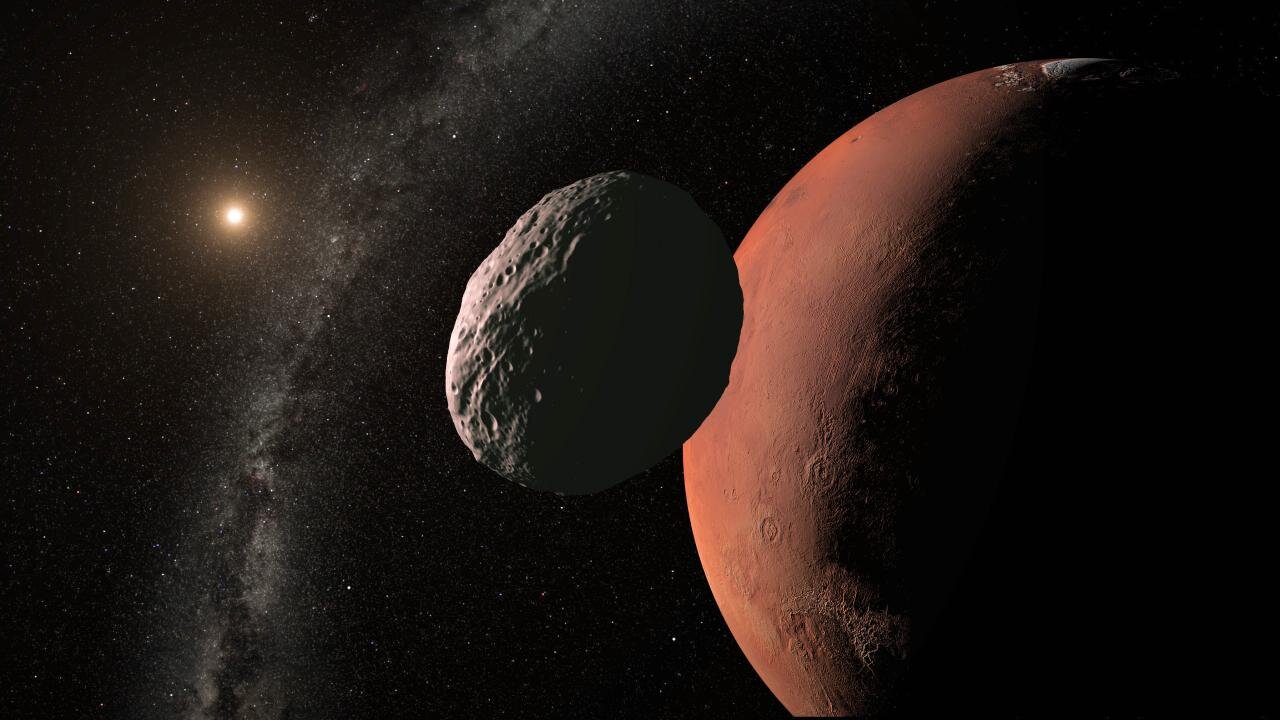
An artist’s impression of an asteroid near Mars. Credit: Gabriel Pérez Díaz (SMM, IAC)

Using observations made with the Gran Telescopio Canarias (GTC) a study led from the Instituto de Astrofísica de Canarias (IAC) and the Universidad Complutense de Madrid (UCM) has confirmed that the asteroid 2023 FW14, discovered last year, is accompanying the red planet in its journey round the sun, ahead of Mars and in the same orbit.

With this new member, the group of Trojans that accompany Mars has increased in number to 17. But it shows differences in its orbit and chemical composition which may indicate that it is a captured asteroid, of a primitive type. The results are published in Astronomy & Astrophysics.

A team from the Instituto de Astrofísica de Canarias (IAC) and the Universida...

Read More
Life’s Building Blocks are Surprisingly Stable in Venus-Like Conditions: Study

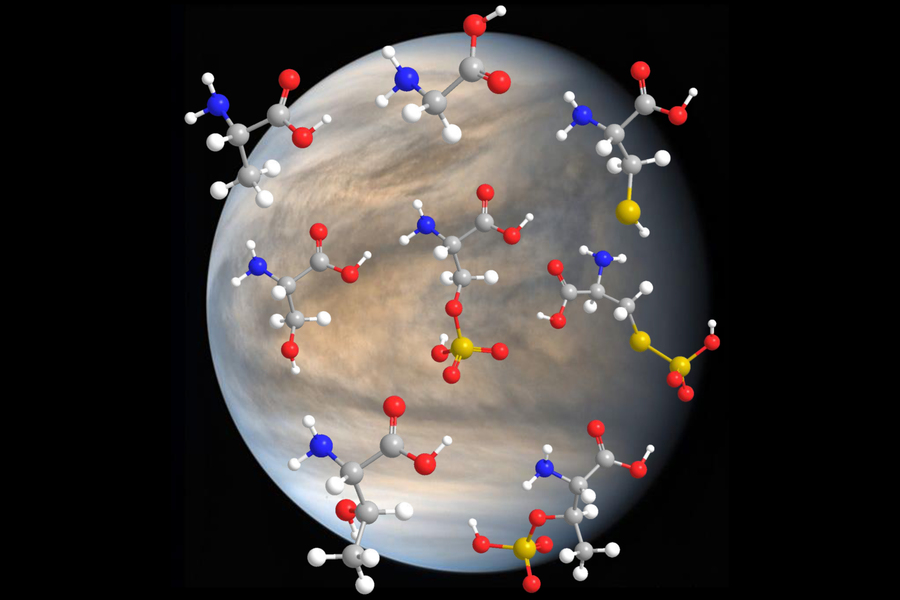
Venus in space with multi-colored amino acid molecules in its atmosphere
Caption:MIT researchers have found that amino acids — major building blocks for life on Earth — are stable in highly concentrated sulfuric acid. Their results support the idea that these same molecules may be stable in Venus’ highly sulfuric clouds.
Credits:Credit: JAXA/J. J. Petkowski

If there is life in the solar system beyond Earth, it might be found in the clouds of Venus. In contrast to the planet’s blisteringly inhospitable surface, Venus’ cloud layer, which extends from 30 to 40 miles above the surface, hosts milder temperatures that could support some extreme forms of life.

If it’s out there, scientists have assumed that any Venusian cloud inhabitant would look very different from life forms on Earth...

Read More

Astrophysicist Explains Science Behind Once-in-a-Lifetime Nova Outburst that will Light up the Sky this Year

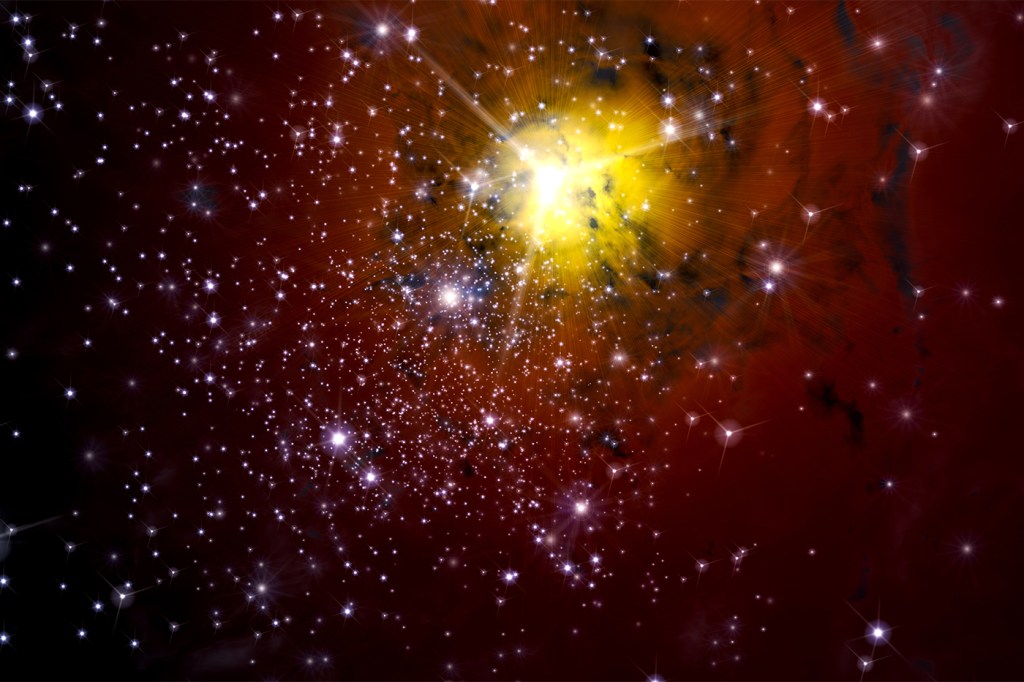
Illustration of a star-field.
The nova explosion that will be visible this year occurs every 80 years and will create a new pinprick of light in the Milky Way. Getty Images

The total solar eclipse isn’t the only reason to keep your eyes to the sky this year. For the first time in 80 years, a star system 3,000 light years away will be visible to the naked eye thanks to a once-in-a-lifetime nova outburst.

NASA announced that the nova, which will create a “new” star in the night sky, will light up the night sky some time between now and September and be as bright as the North Star. One of only five recurring novae in our galaxy, it will be visible for a week before it fades back down.

Jonathan Blazek, an assistant professor of physics at Northeastern University, says this is an exciting moment for amateur astron...

Read More

Astrophysicist’s Research could provide a Hint in the Search for Dark Matter

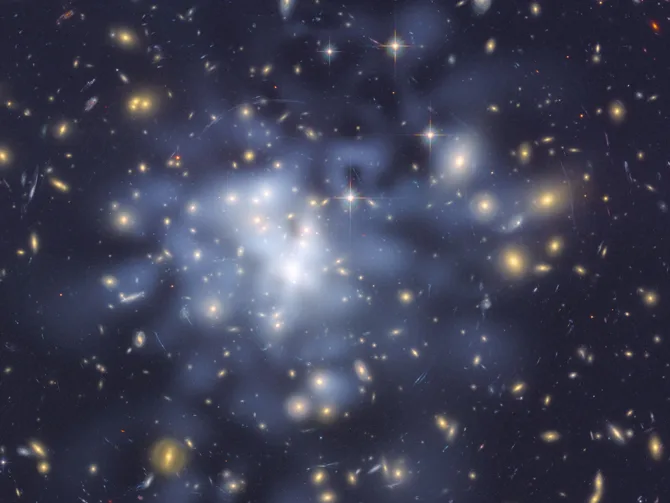
A photo with a bunch of white and yellow lights in the sky
Photo credit: NASA, ESA, and D. Coe (NASA JPL/Caltech and STScI)

Dark matter is one of science’s greatest mysteries. It doesn’t absorb, reflect or emit light, so we can’t see it. But its presence is implied by the gravitational effects it appears to have on galaxies.

Although dark matter makes up about 85% of the cosmos, scientists know very little about its fundamental nature.

Theories abound, and research by Clemson University postdoctoral fellow Alex McDaniel provides some of the most stringent constraints on the nature of dark matter yet. His research also reveals a small hint of a signal that if real, could be confirmed sometime in the next decade or so.

The work is published in the journal Physical Review D.

“With data collection and new discoveries in the future, thi...

Read More