Category Astronomy/Space

Scientists Propose New Theory that explains Sand Ripples on Mars and on Earth

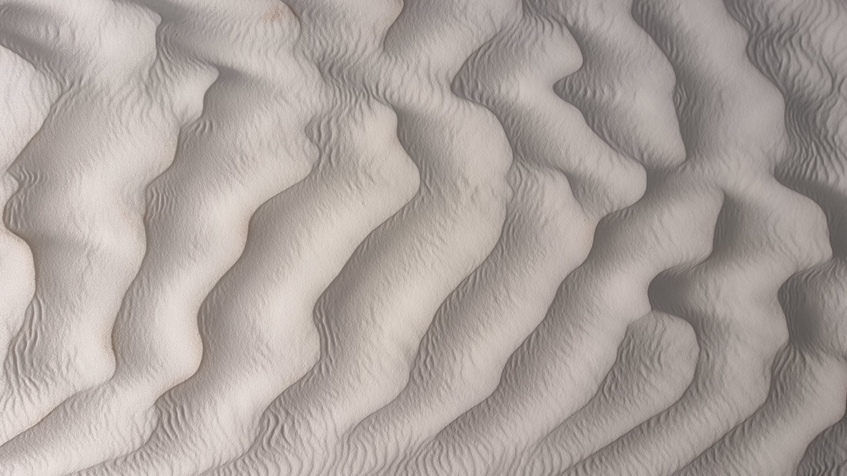
Photo caption: Waves received in the wind tunnel of Ben Gurion University of the Negev with glass balls with a diameter of 90 microns. Two scales of waves can be seen in the image.
Small waves with a wavelength of centimeters and large waves with a wavelength of about 10 centimeters resemble waves due to the flow of water. The existence of two scales of waves on Mars was discovered by the Mars Curiosity Rover.| Photo: Hezi Yizhaq

Sand ripples are fascinating. They are symmetrical, yet wind — which causes them — is very much not. Furthermore, they can be found on Mars and on Earth. They would be even more fascinating if the same effect found on Mars could be found here on Earth as well. What if one unified theory could explain their formation on two different planets of our solar system?

Read More
Finding New Physics in Debris from Colliding Neutron Stars

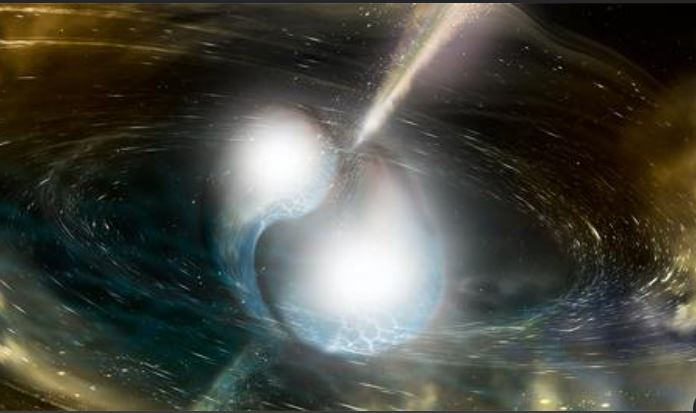
Artist’s illustration of two merging neutron stars. (Image: National Science Foundation/LIGO/Sonoma State University/A. Simonnet)

Neutron star mergers are a treasure trove for new physics signals, with implications for determining the true nature of dark matter, according to research from Washington University in St. Louis.

On Aug. 17, 2017, the Laser Interferometer Gravitational-wave Observatory (LIGO), in the United States, and Virgo, a detector in Italy, detected gravitational waves from the collision of two neutron stars. For the first time, this astronomical event was not only heard in gravitational waves but also seen in light by dozens of telescopes on the ground and in space.

Physicist Bhupal Dev in Arts & Sciences used observations from this neutron star merger — an ev...

Read More

Discovery Tests Theory on Cooling of White Dwarf Stars

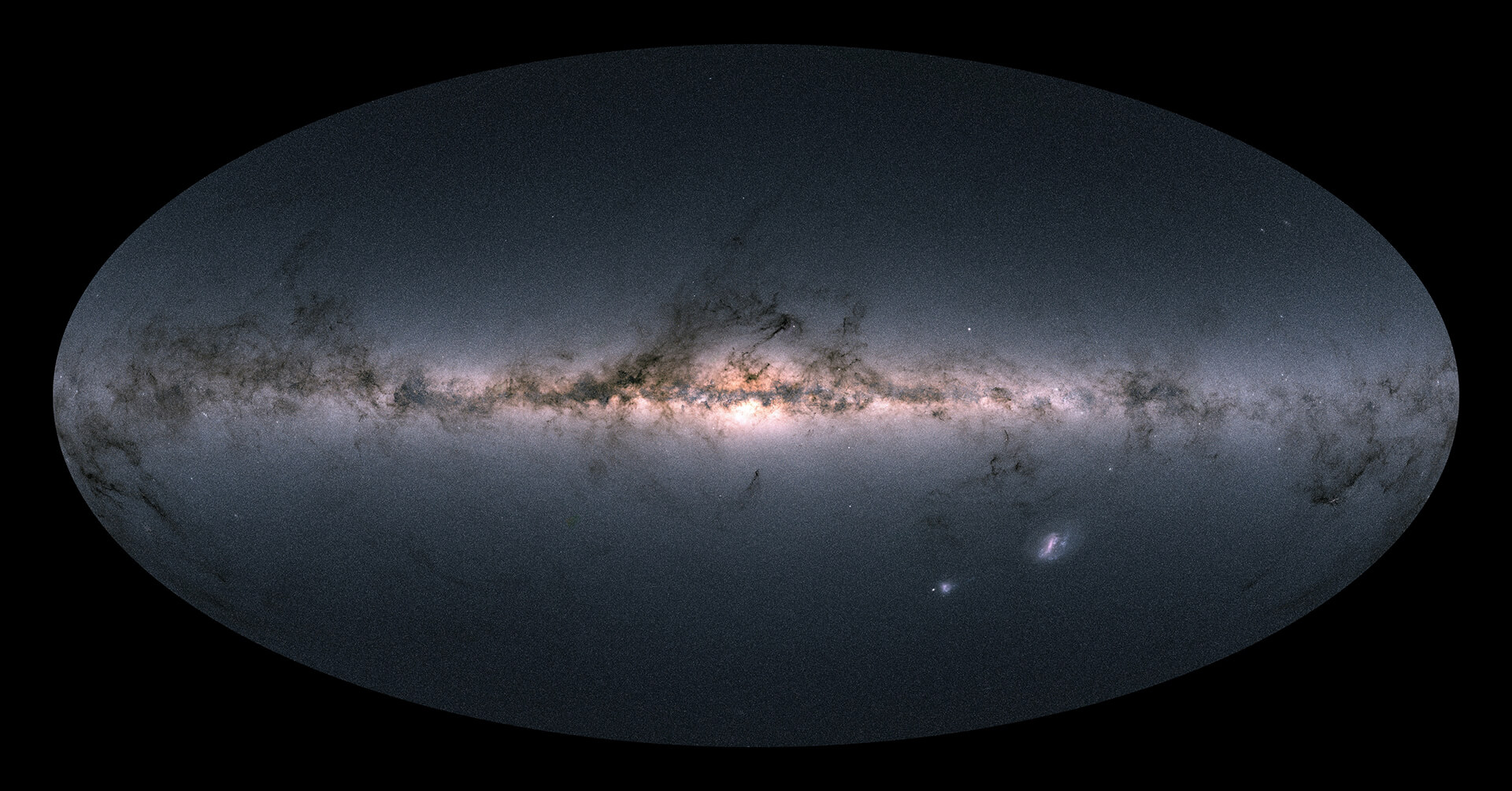
The stars of the Milky Way galaxy.
All sky view of the Milky Way taken by the European Space Agency’s Gaia space observatory. Credit: ESA/Gaia/DPAC, CC BY SA 3.0 IGO

Open any astronomy textbook to the section on white dwarf stars and you’ll likely learn that they are “dead stars” that continuously cool down over time. New research published in Nature is challenging this theory, with the University of Victoria (UVic) and its partners using data from the European Space Agency’s Gaia satellite to reveal why a population of white dwarf stars stopped cooling for more than eight billion years.

“We discovered the classical picture of all white dwarfs being dead stars is incomplete,” says Simon Blouin, co-principal investigator and Canadian Institute of Theoretical Astrophysics National Fellow at UVic.

“For these white dw...

Read More

Groundbreaking Survey reveals Secrets of Planet Birth around Dozens of Stars

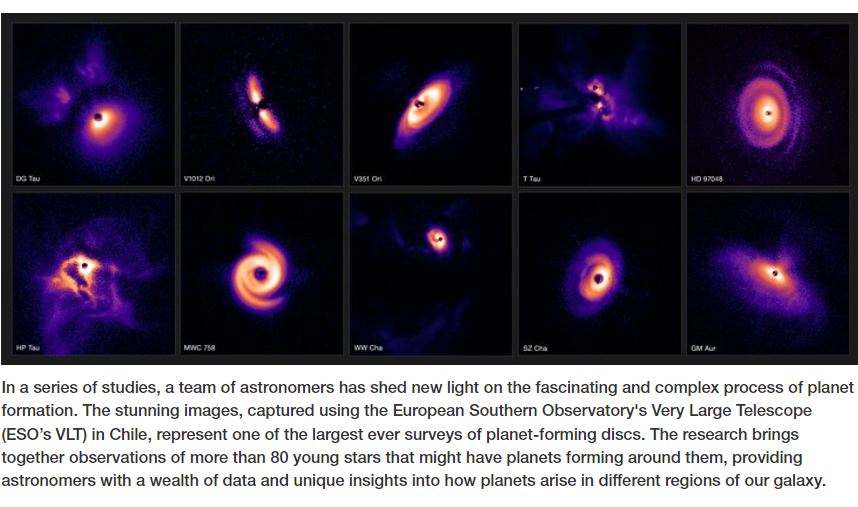
A team of astronomers has shed new light on the fascinating and complex process of planet formation. The research brings together observations of more than 80 young stars that might have planets forming around them, providing astronomers with a wealth of data and unique insights into how planets arise in different regions of our galaxy.

In a series of studies, a team of astronomers has shed new light on the fascinating and complex process of planet formation. The stunning images, captured using the European Southern Observatory’s Very Large Telescope (ESO’s VLT) in Chile, represent one of the largest ever surveys of planet-forming discs...

Read More