
Category Astronomy/Space

Records of Cometary Dust Hitting the Asteroid Ryugu

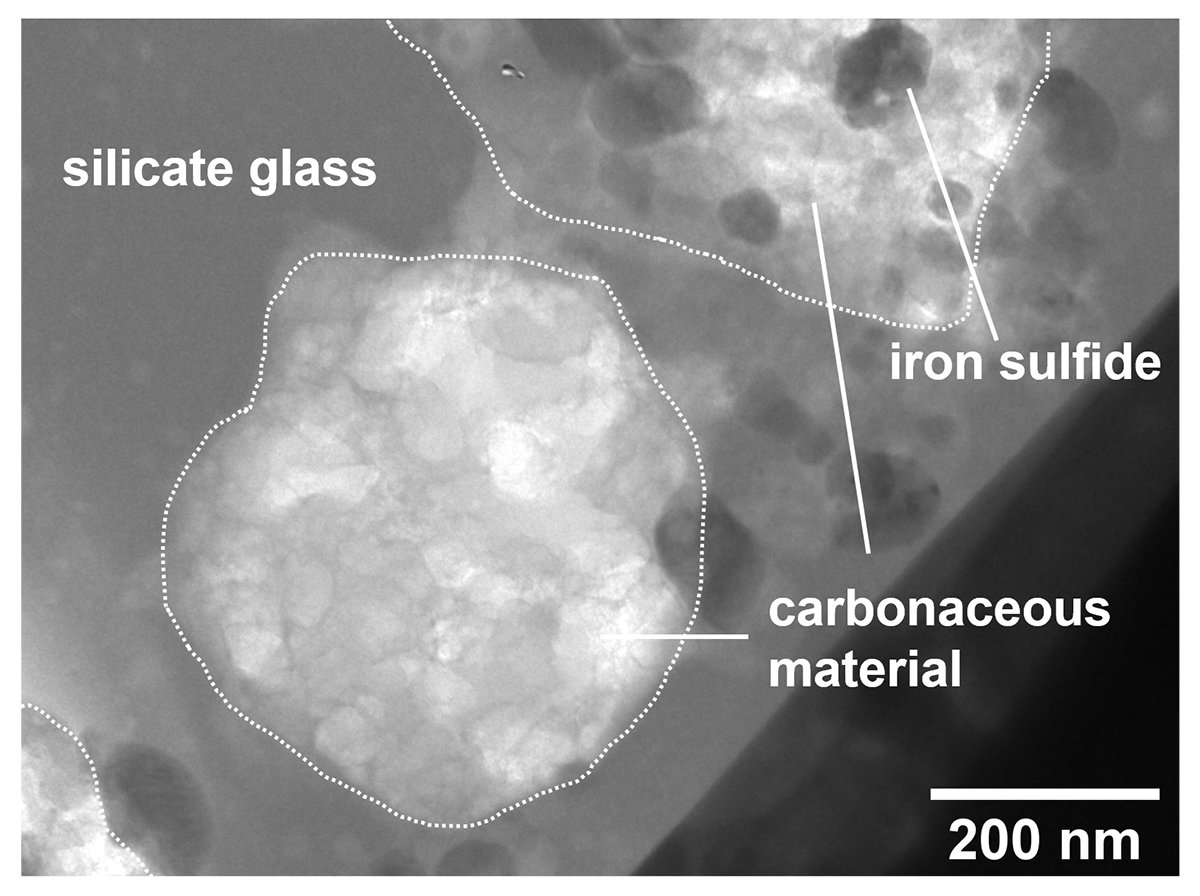
A carbonaceous material found in the melt splash. The carbonaceous material shows spongy texture and contains small iron sulfide inclusions. This is similar to the primitive organic matters found in cometary dust. ©Megumi Matsumoto et al.

The Hayabusa2 mission that collected samples from the asteroid Ryugu has provided a treasure trove of insights into our solar system. After analyzing samples further, a team of researchers have unearthed evidence that cometary organic matter was transported from space to the near-Earth region.

Ryugu is a near-Earth asteroid that gained significant attention when the Japanese Hayabusa2 mission collected samples and returned them to Earth...

Read More
New research sheds light on a Phenomenon known as ‘False Vacuum Decay’

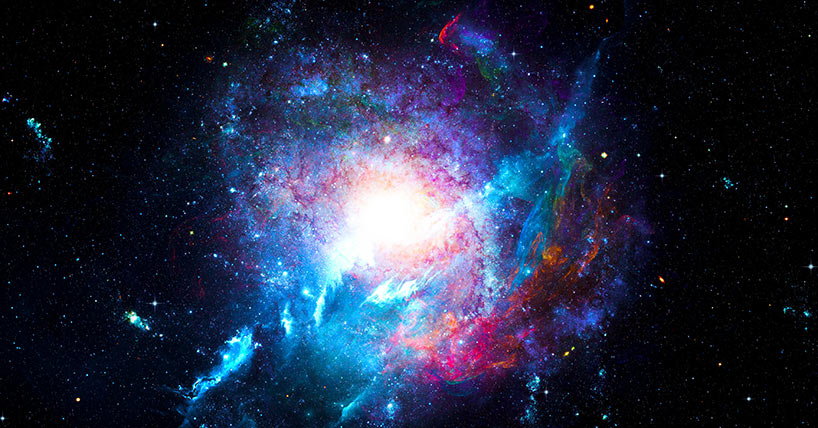
Image of the Universe
Vacuum decay is thought to play a central role in the creation of space, time and matter in the Big Bang, but until now there has been no experimental test
 
Professor Ian Moss

An experiment conducted in Italy, with theory support from Newcastle University, has produced the first experimental evidence of vacuum decay.

In quantum field theory, when a not-so-stable state transforms into the true stable state, it’s called “false vacuum decay.” This happens through the creation of small localised bubbles.

While existing theoretical work can predict how often this bubble formation occurs, there hasn’t been much experimental evidence.

Now, an international research team involving Newcastle University scientists has for the first observed these bubbles forming in carefully controlled a...

Read More

Salad in Space? New Research says it’s Not a Healthy Choice

Salad in space? New study says it's not a healthy choice
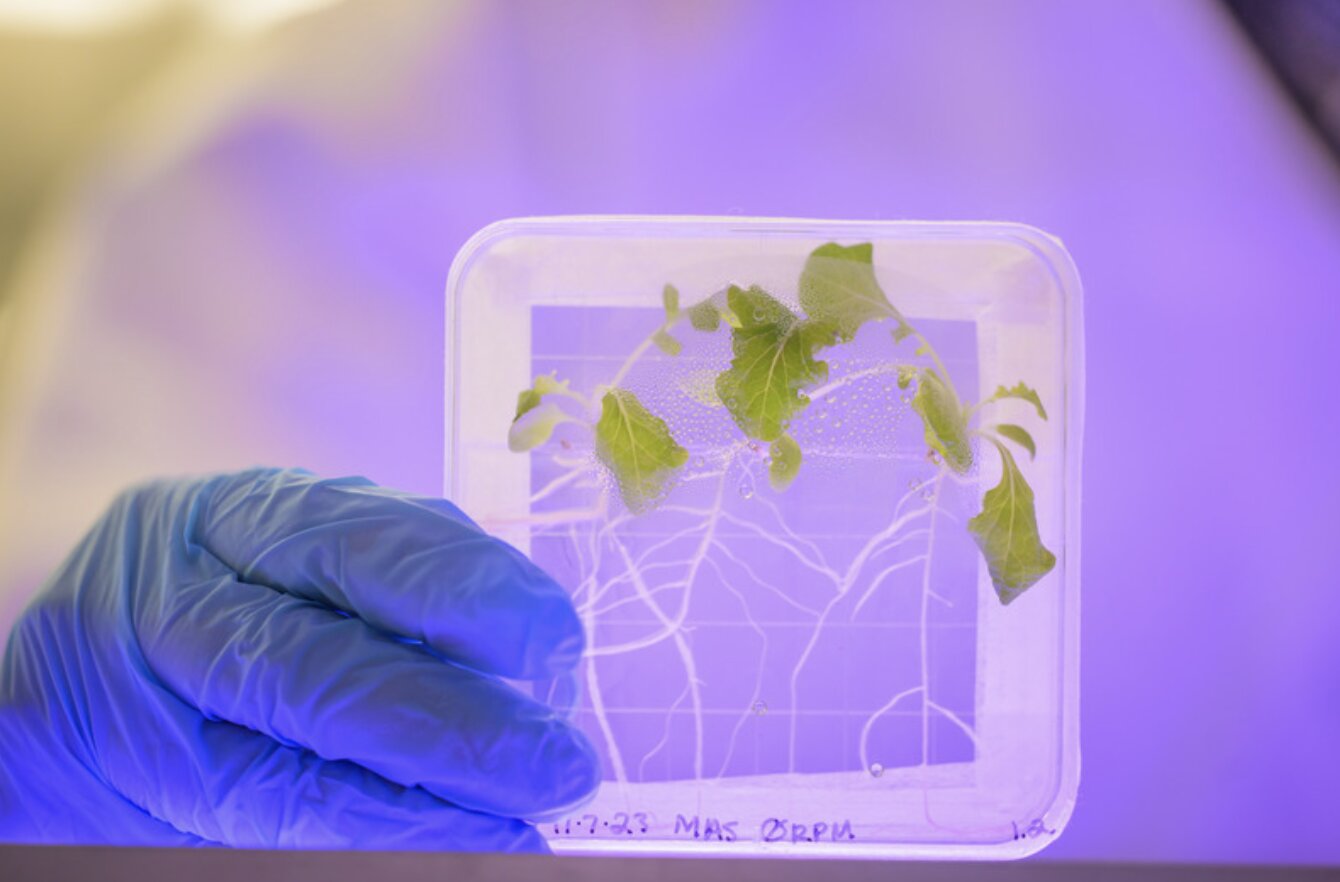
Researchers at the University of Delaware are looking at how plants grown in space are more prone to infections of Salmonella compared to plants not grown in space or grown under gravity simulations. Credit: Evan Krape / University of Delaware

Salad in space? New research says it’s not a healthy choice. It’s been more than three years since the National Aeronautics and Space Administration made space-grown lettuce an item on the menu for astronauts aboard the International Space Station. Alongside their space diet staples of flour tortillas and powdered coffee, astronauts can munch on a salad, grown from control chambers aboard the ISS that account for the ideal temperature, amount of water and light that plants need to mature.

But there is a problem...

Read More

Lightest Black Hole or Heaviest Neutron Star? MeerKAT Uncovers a Mysterious Object in Milky Way

An artist’s impression of the system assuming that the massive companion star is a black hole. The brightest background star is its orbital companion, the radio pulsar PSR J0514-4002E. The two stars are separated by 8 million km and circle each other every 7 days.
Credit: Daniëlle Futselaar (artsource.nl)

An international team of astronomers have found a new and unknown object in the Milky Way that is heavier than the heaviest neutron stars known and yet simultaneously lighter than the lightest black holes known.

Using the MeerKAT Radio Telescope, astronomers from a number of institutions including The University of Manchester and the Max Planck Institute for Radio Astronomy in Germany found an object in orbit around a rapidly spinning millisecond pulsar located around 40,000 ligh...

Read More
