Category Astronomy/Space

Fermi Gamma-ray Space Telescope detects Surprise Gamma-Ray feature Beyond our Galaxy

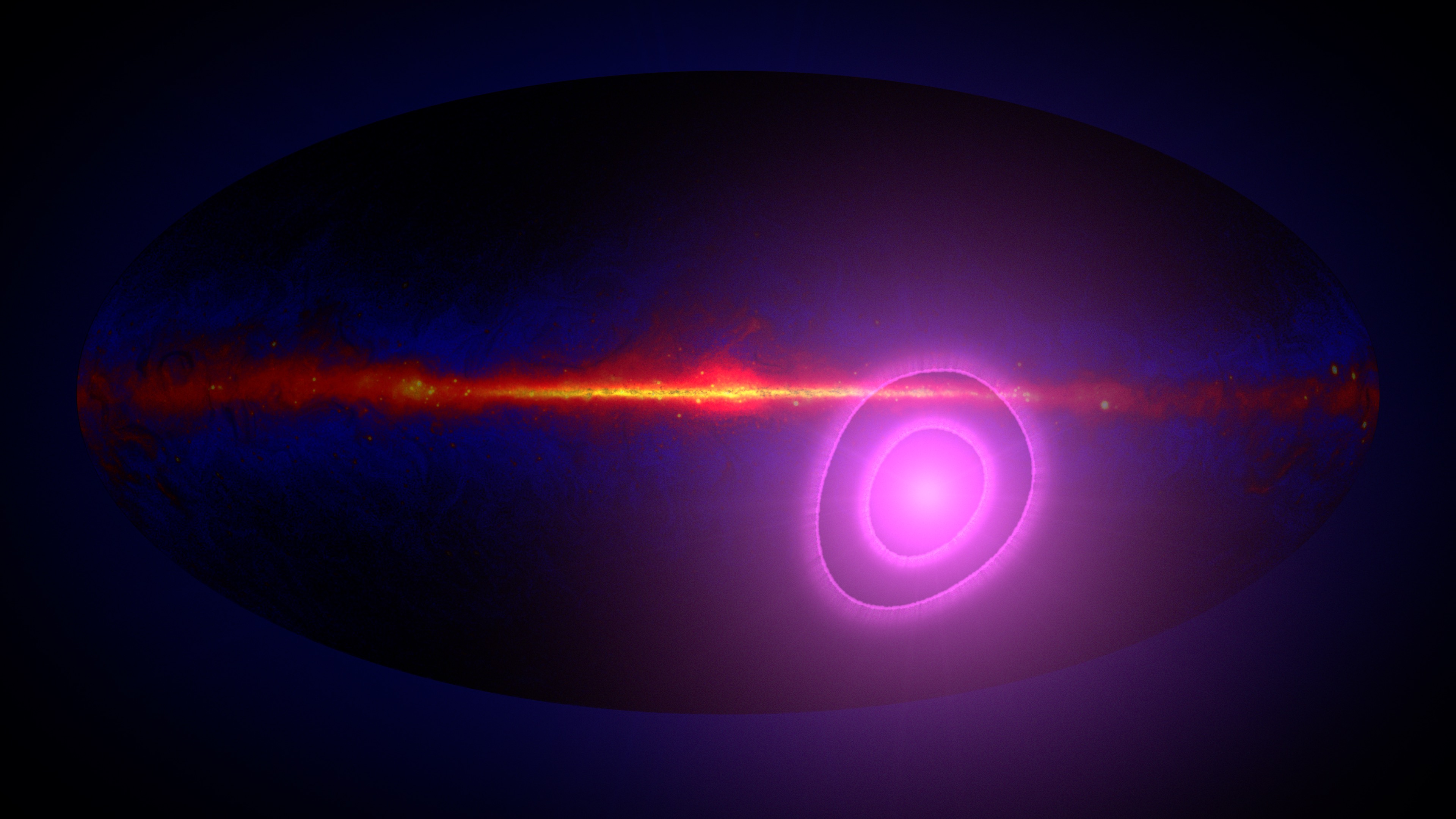
Artist's concept of gamma ray sky with dipole marked in magenta
This artist’s concept shows the entire sky in gamma rays with magenta circles illustrating the uncertainty in the direction from which more high-energy gamma rays than average seem to be arriving. In this view, the plane of our galaxy runs across the middle of the map. The circles enclose regions with a 68% (inner) and a 95% chance of containing the origin of these gamma rays.
NASA’s Goddard Space Flight Center

Astronomers analyzing 13 years of data from NASA’s Fermi Gamma-ray Space Telescope have found an unexpected and as yet unexplained feature outside of our galaxy.

“It is a completely serendipitous discovery,” said Alexander Kashlinsky, a cosmologist at the University of Maryland and NASA’s Goddard Space Flight Center in Greenbelt, who presented the research at the 243rd mee...

Read More
Unlocking the Secrets of a ‘Hot Saturn’ and its Spotted Star

Led by researchers from Université de Montréal’s Trottier Institute for Research on Exoplanets (iREx), a team of astronomers has harnessed the power of the revolutionary James Webb Space Webb Telescope (JWST) to study the “hot Saturn” exoplanet HAT-P-18 b.

Their findings, published last month in the journal Monthly Notices of the Royal Astronomical Society, paint a complete picture of the HAT-P-18 b’s atmosphere while exploring the great challenge of distinguishing its atmospheric signals from the activity of its star.

HAT-P-18 b is located over 500 light-years away with a mass similar to Saturn’s but a size closer to that the larger planet Jupiter. As a result, the exoplanet has a “puffed-up” atmosphere that is especially ideal for analysis.

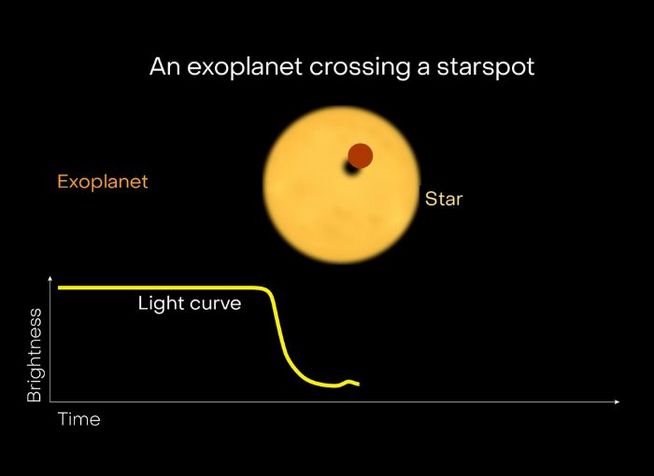
Passing over a spotted star

Read More

Nube, the Almost Invisible Galaxy that Challenges the Dark Matter Model

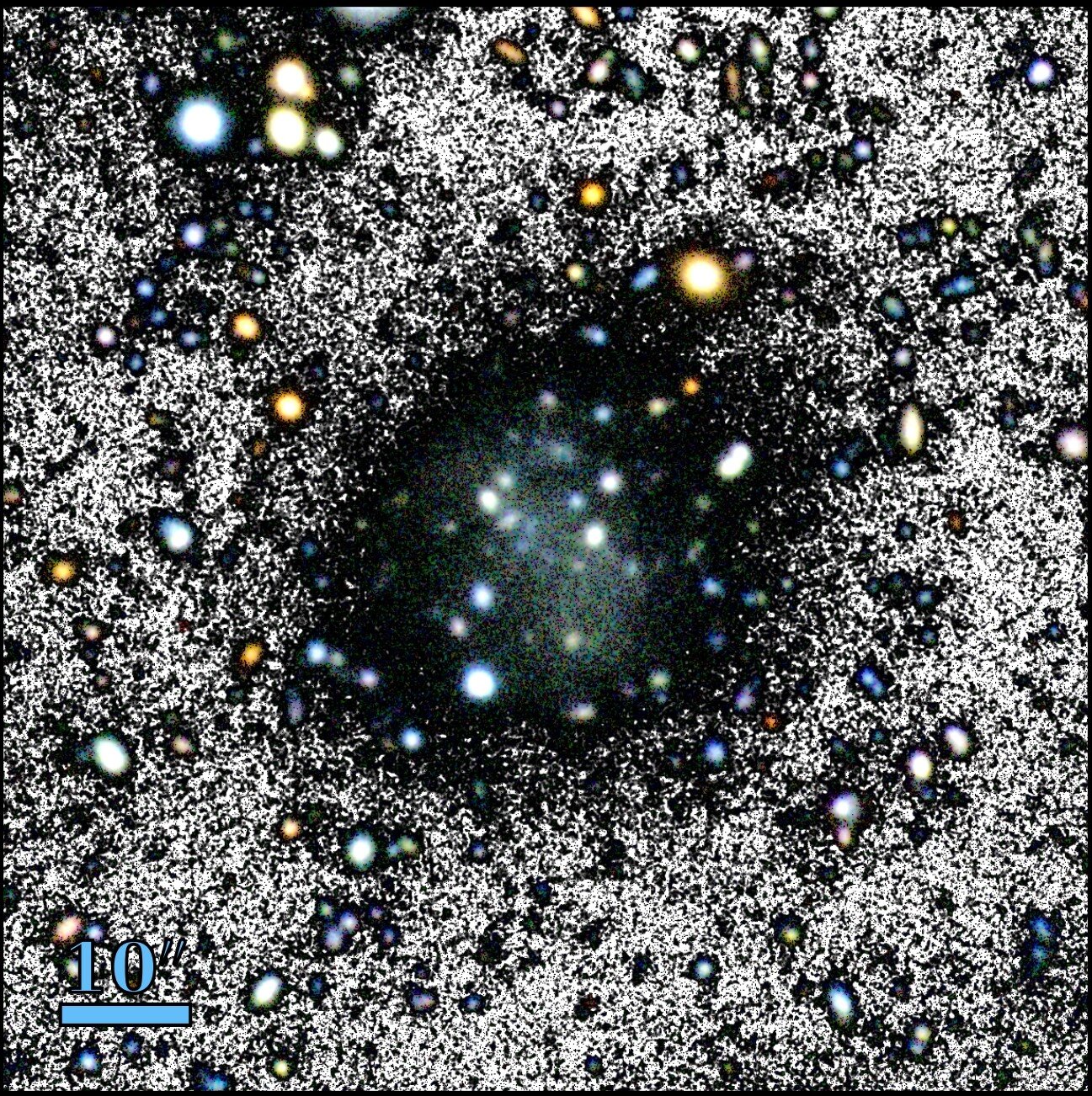
Nube, the almost invisible galaxy that challenges the dark matter model
The Nube galaxy. The figure is a composition of a color image and a black and white image, to pick out the background. Credit: GTC/Mireia Montes

Nube is an almost invisible dwarf galaxy discovered by an international research team led by the Instituto de Astrofísica de Canarias (IAC) in collaboration with the University of La Laguna (ULL) and other institutions.

The name was suggested by the 5-year-old daughter of one of the researchers in the group and is due to the diffuse appearance of the object. Its surface brightness is so faint that it had passed unnoticed in the various previous surveys of this part of the sky due to the object’s diffuse appearance as if it were some kind of ghost...

Read More

Centaurs Gain Comet-like Characteristics through Close Encounters with Jupiter, Saturn

Objects that look like asteroids can still become active for numerous reasons. These objects are known as Centaurs and can have spots of activity and generate tails.
Credit: Pamela L Gay/PSI.

A rapid reshaping of orbits resulting from a close encounter with Jupiter or Saturn can lead Centaurs to exhibit comet-like activity, according to a Planetary Science Institute Senior Scientist Eva Lilly paper.

Centaurs are small bodies similar to asteroids in size but to comets in composition that revolve around the sun in the outer solar system, mainly between the orbits of Jupiter and Neptune.

“We have found some answers to the long-standing mystery of why some Centaurs became active like comets while the rest appear like regular quiet asteroids. Nobody knew why they behaved this way...

Read More