Category Astronomy/Space

Scientists Flip around Gravitational-Wave Data Analysis: Have LIGO and Virgo Detected a Merger of Dark-Matter Stars?

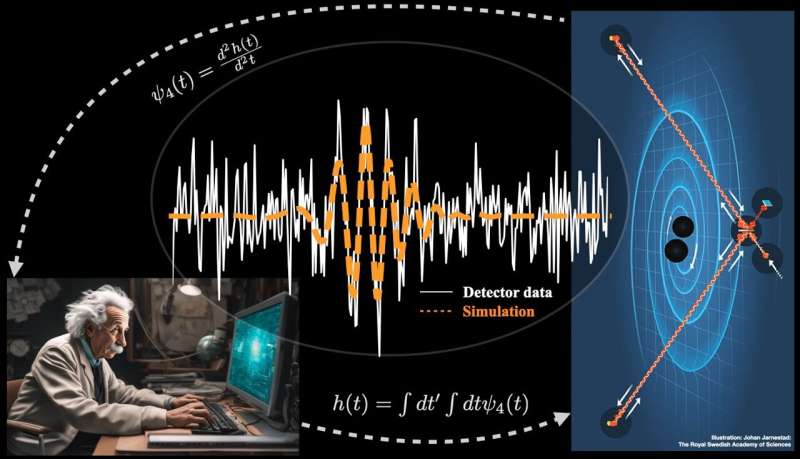
Scientists flip around gravitational-wave data analysis. Have LIGO and Virgo detected a merger of Dark-matter stars?

Gravitational waves are ripples in the fabric of spacetime that travel at the speed of light. These are produced in some of the most violent events in the universe, such as black-hole mergers, supernovae, or the Big Bang itself. Since their first detection in 2015, and after three observing runs, the Advanced LIGO and Virgo detectors have detected around 100 such waves.

Thanks to these observations, we are starting to unveil the black-hole population of our universe, study gravity in its most extreme regime and even determine the formation of elements like gold or platinum during the merger of neutron stars.

The LIGO and Virgo detectors are nothing but the most precise rulers ever built by humankind, able to measure the subtle squeezing and stretching of spacetime produced by gr...

Read More
Space Oddity: Uncovering the Origin of the Universe’s Rare Radio Circles

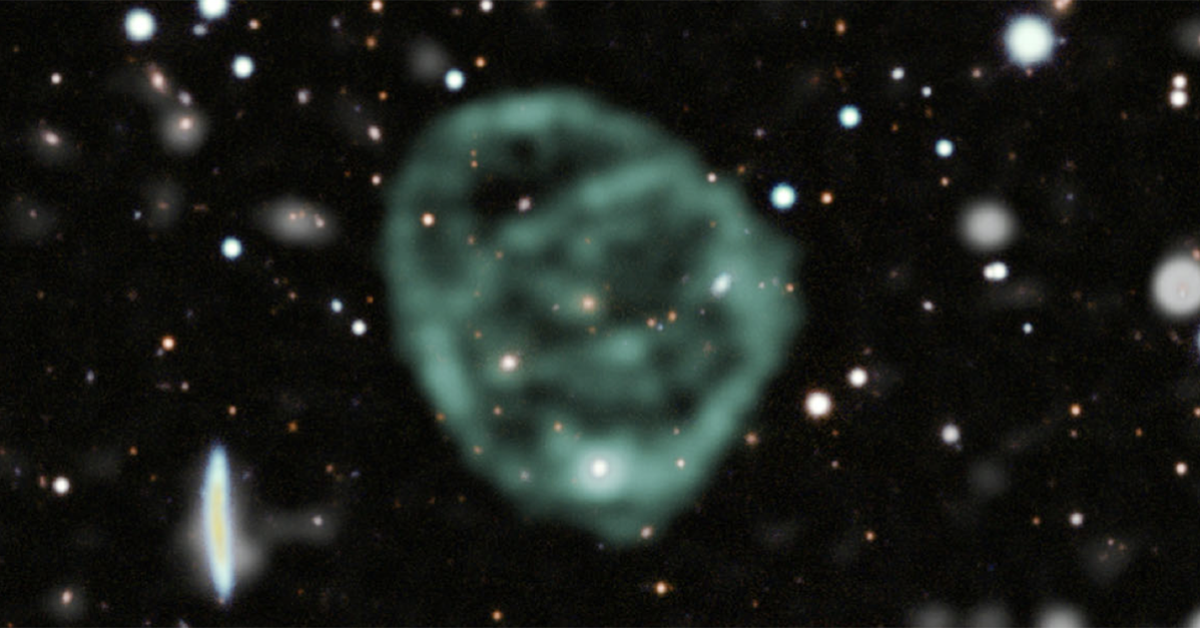
Faint blue circles of light against a starry space background.
Odd radio circles, like ORC 1 pictured above, are large enough to contain galaxies in their centers and reach hundreds of thousands of light years across. (cr: Jayanne English / University of Manitoba)

Outflowing galactic winds from exploding stars may explain the enormous rings. Astronomers believe they may have found the origin of the universe’s giant odd radio circles: they are shells formed by outflowing galactic winds, possibly from massive exploding stars known as supernovae.

t’s not every day astronomers say, “What is that?” After all, most observed astronomical phenomena are known: stars, planets, black holes and galaxies...

Read More

Mysterious Missing Component in the Clouds of Venus Revealed

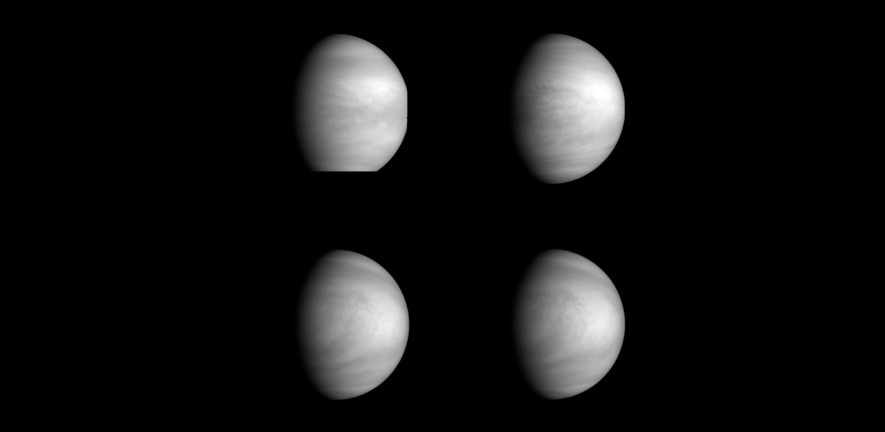
four views of Venu's High Clouds
Submitted by Vanessa Bismuth on Fri, 05/01/2024 – 12:22

Researchers may have identified the missing component in the chemistry of the Venusian clouds that would explain their color and splotchiness in the UV range, solving a long-standing mystery.

What are the clouds of Venus made of? Scientists know it’s mainly made of sulfuric acid droplets, with some water, chlorine, and iron. Their concentrations vary with height in the thick and hostile Venusian atmosphere. But until now they have been unable to identify the missing component that would explain the clouds’ patches and streaks, only visible in the UV range.

In a new study published in Science Advances, researchers from the University of Cambridge synthesised iron-bearing sulfate minerals that are stable under the harsh chem...

Read More

Magnetic Fields in the Cosmos: Dark Matter could help us Discover their Origin

Magnetic fields in the Cosmos: dark matter could help us discover their origin
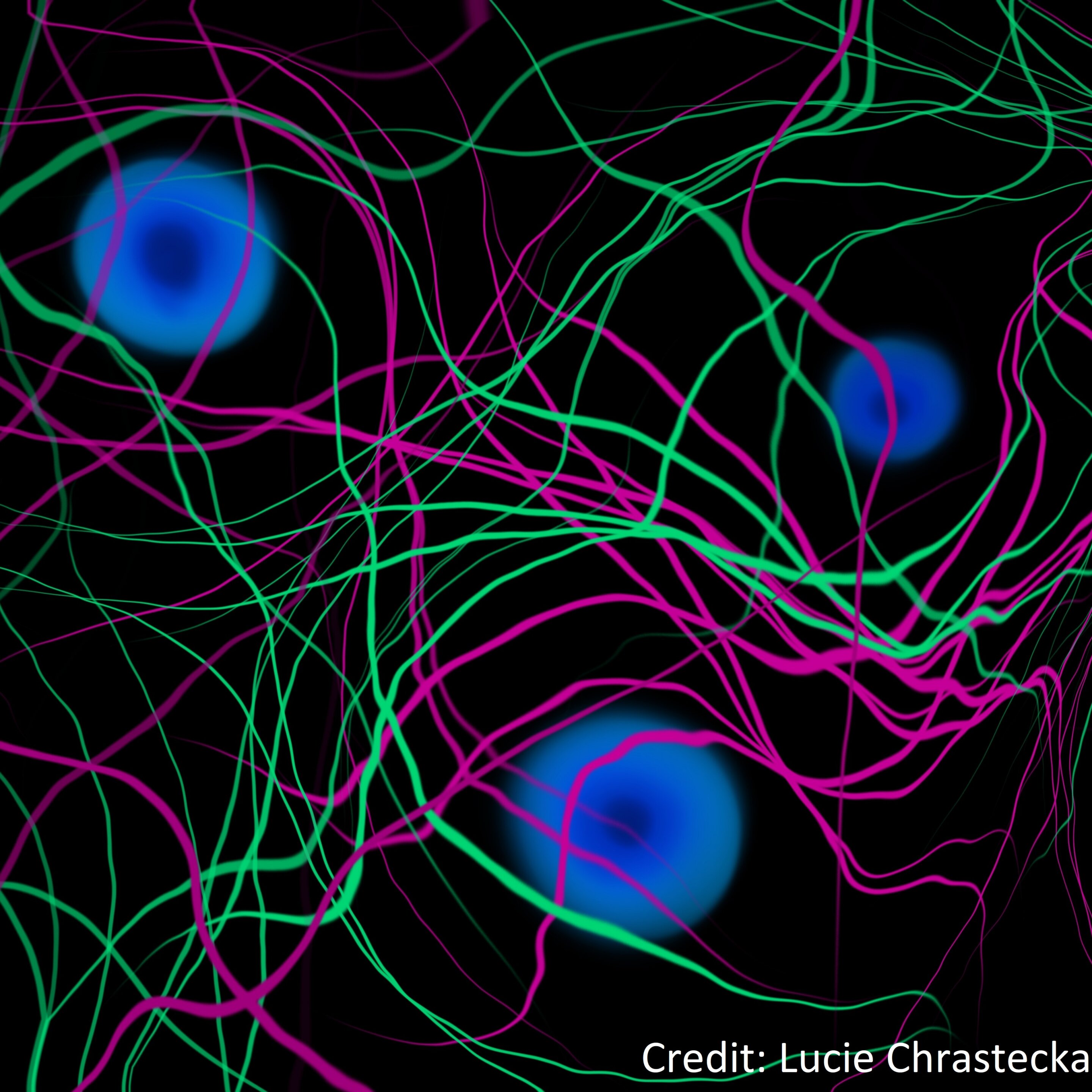
In the study, researchers showed that if magnetic fields are indeed primordial then it could cause an increase in dark matter density perturbations on small scales. The ultimate effect of this process would be the formation of mini-halos of dark matter, which, if detected, would hint towards a primordial nature of magnetic fields. Credit: Lucie Chrastecka

The mini-halos of dark matter scattered throughout the Cosmos could function as highly sensitive probes of primordial magnetic fields. This is what emerges from a theoretical study conducted by SISSA and published in Physical Review Letters. Present on immense scales, magnetic fields are found everywhere in the Universe. However, their origin are still subjects of debate among scholars...

Read More