Category Astronomy/Space

Investigating the Contribution of Gamma-Ray Blazar Flares to Neutrino Flux

Fermi spots a record flare from blazar.
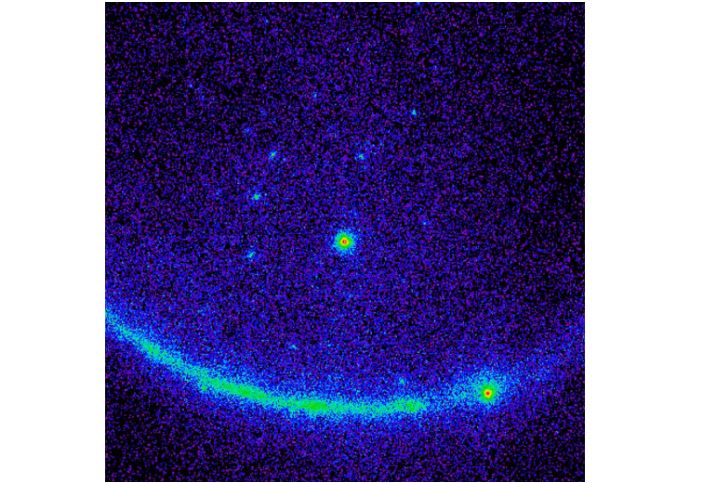
Caption: A new study suggests that high-energy neutrinos of blazars might be produced mainly during the gamma-ray flare phase.
Credit: NASA Goddard Space Flight Center from flickr (https://www.flickr.com/photos/24662369@N07/19578977022)
License type: CC BY 2.0

Gamma-ray flares from blazars can be accompanied by high-energy neutrino emission. To better understand this phenomenon, an international research team has statistically analyzed 145 bright blazars. They constructed weekly binned light curves and utilized a Bayesian algorithm, finding that their sample was dominated by blazars with low flare duty cycles and energy fractions. The study suggests that high-energy neutrinos of blazars might be produced mainly during the flare phase.

Blazars ...

Read More
Unveiling Mercury’s Geological Mysteries: Salt Glaciers, Primordial Atmosphere, and the New Frontiers of Astrobiology

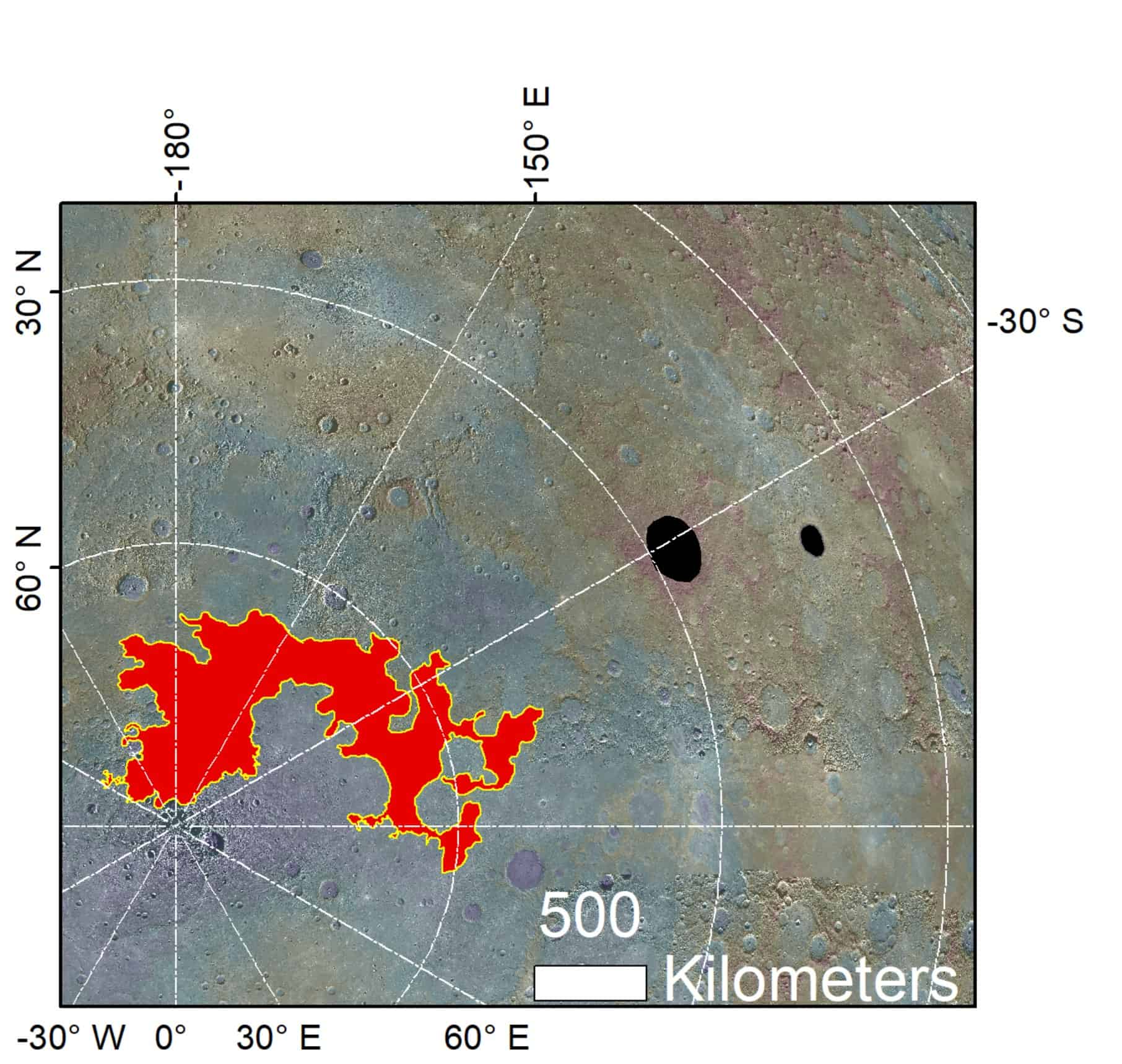
A view of Mercury’s north polar chaotic terrain (Borealis Chaos) and the Raditladi and Eminescu craters where evidence of possible glaciers has been identified.
Credit: NASA.

Scientists from the Planetary Science Institute have uncovered evidence of potential salt glaciers on Mercury, opening a new frontier in astrobiology by revealing a volatile environment that might echo habitability conditions found in Earth’s extreme locales.

“Our finding complements other recent research showing that Pluto has nitrogen glaciers, implying that the glaciation phenomenon extends from the hottest to the coldest confines within our solar system...

Read More

James Webb Space Telescope detects Water Vapor, Sulfur Dioxide and Sand Clouds in the Atmosphere of a nearby Exoplanet

A transmission spectrum of the warm Neptune exoplanet WASP-107b, captured by the Low Resolution Spectrometer (LRS) of the Mid InfraRed Instrument (MIRI) on board JWST, reveals evidence for water vapour, sulfur dioxide, and silicate (sand) clouds in the planet’s atmosphere.

European astronomers, co-led by researchers from the Institute of Astronomy, KU Leuven, used recent observations made with the James Webb Space Telescope to study the atmosphere of the nearby exoplanet WASP-107b. Peering deep into the fluffy atmosphere of WASP-107b they discovered not only water vapour and sulfur dioxide, but even silicate sand clouds. These particles reside within a dynamic atmosphere that exhibits vigorous transport of material.

Astronomers worldwide are harnessing the advanced capabilities of...

Read More

‘Bouncing’ Comets could deliver Building Blocks for Life to Exoplanets

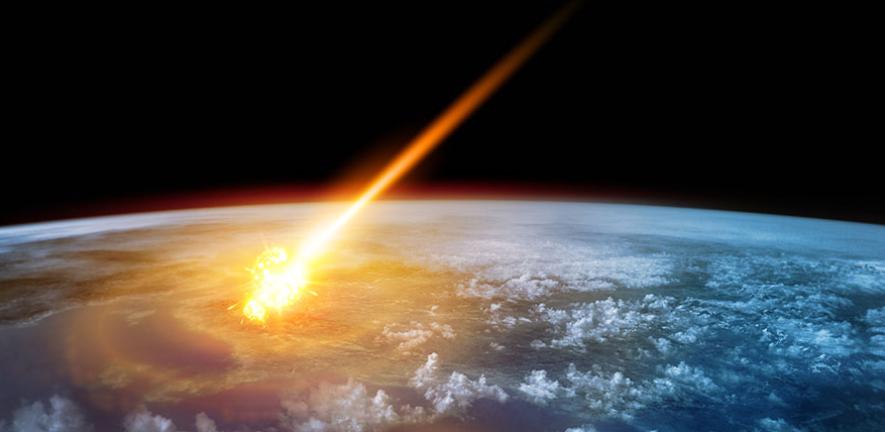
Artist's impression of a meteor hitting Earth

How did the molecular building blocks for life end up on Earth? One long-standing theory is that they could have been delivered by comets. Now, researchers from the University of Cambridge have shown how comets could deposit similar building blocks to other planets in the galaxy.

In order to deliver organic material, comets need to be travelling relatively slowly – at speeds below 15 kilometres per second. At higher speeds, the essential molecules would not survive – the speed and temperature of impact would cause them to break apart.

The most likely place where comets can travel at the right speed are ‘peas in a pod’ systems, where a group of planets orbit closely together...

Read More