
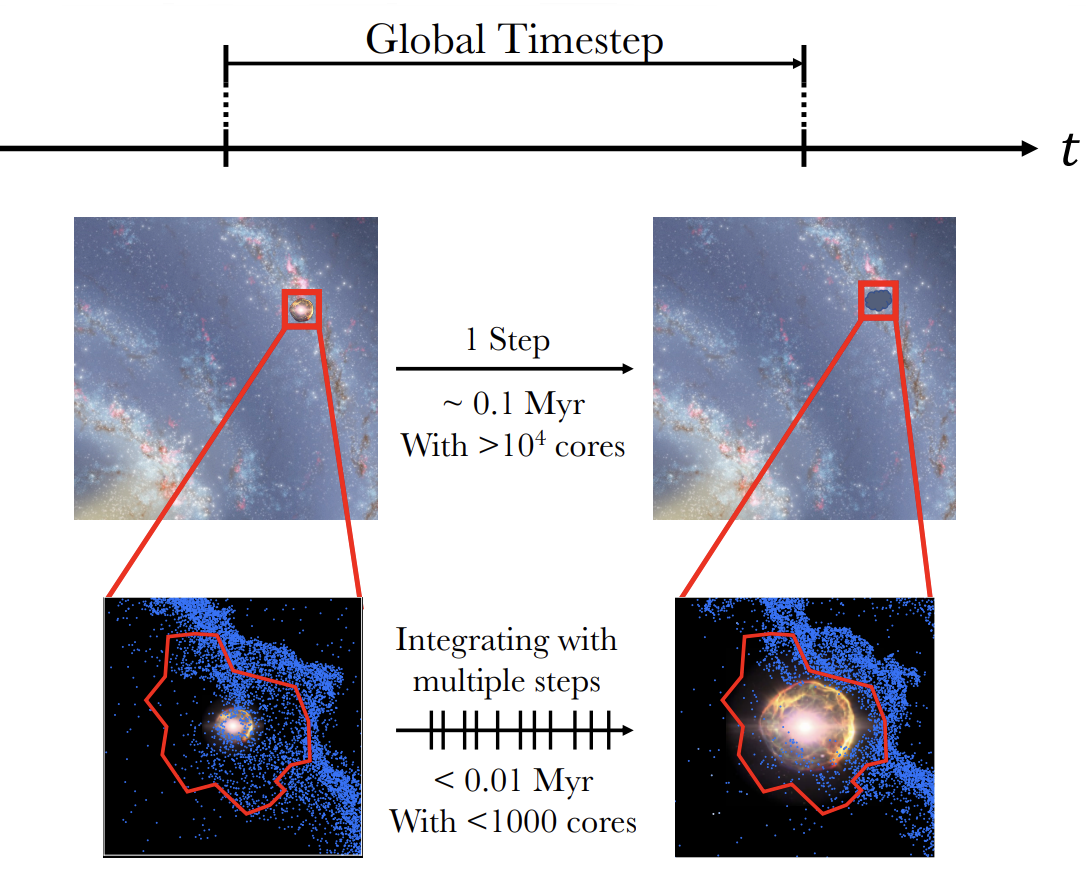
A new way to simulate supernovae may help shed light on our cosmic origins. Supernovae, exploding stars, play a critical role in the formation and evolution of galaxies...
Read More


November 1, 2023,
 Astronomy/Space, Physics
A new way to simulate supernovae may help shed light on our cosmic origins. Supernovae, exploding stars, play a critical role in the formation and evolution of galaxies...
Read More
November 1, 2023,
Astronomy/Space
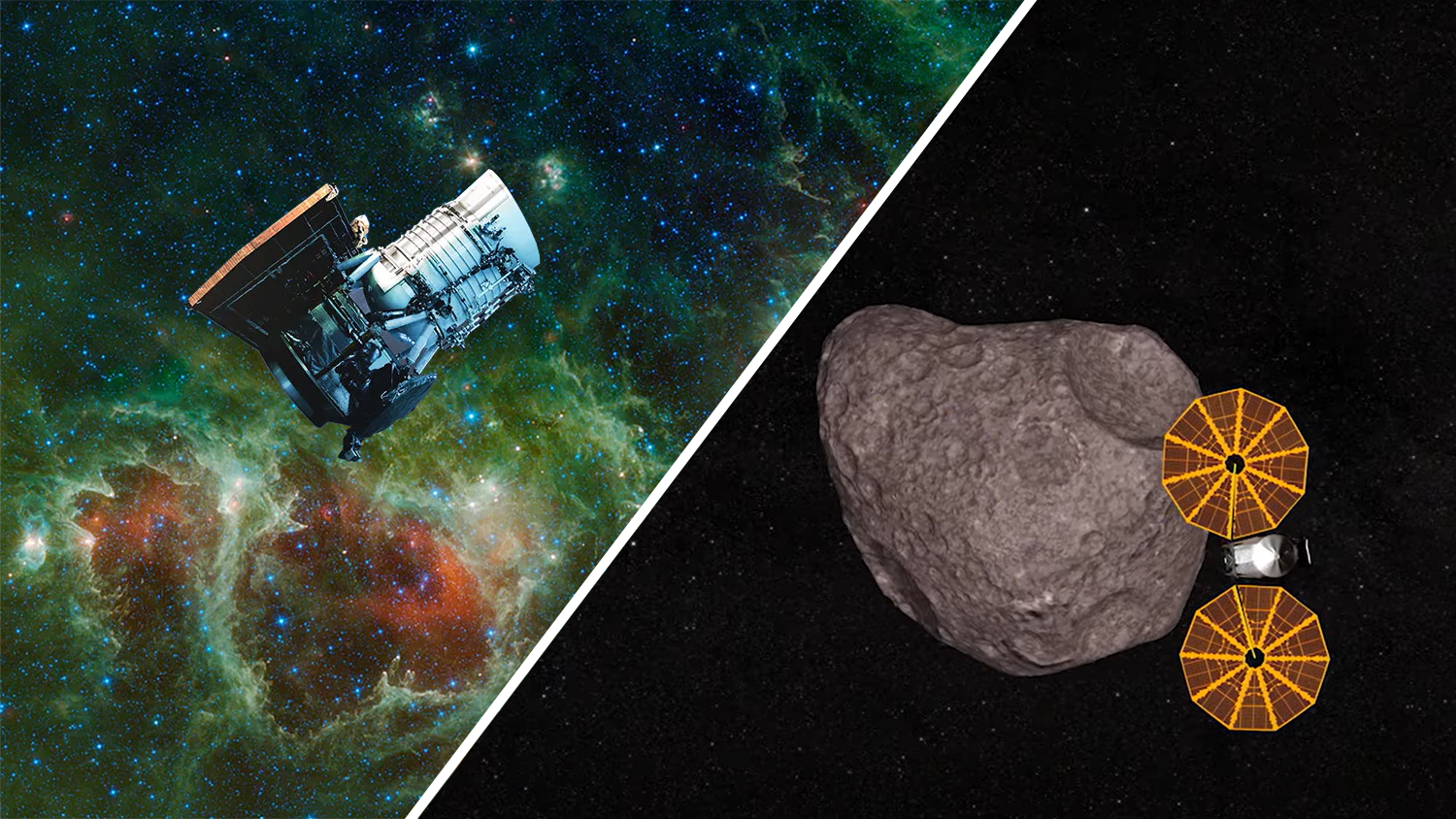
NASA’s Lucy mission will soon have its first asteroid encounter as the spacecraft travels through deep space en route to Jupiter’s orbit. But before the spacecraft passes 265 miles (425 kilometers) from the surface of the small asteroid Dinkinesh, researchers have used 13-year-old infrared data from NASA’s Wide-field Infrared Survey Explorer (WISE) to support the mission’s flyby...
Read More
October 29, 2023,
Astronomy/Space
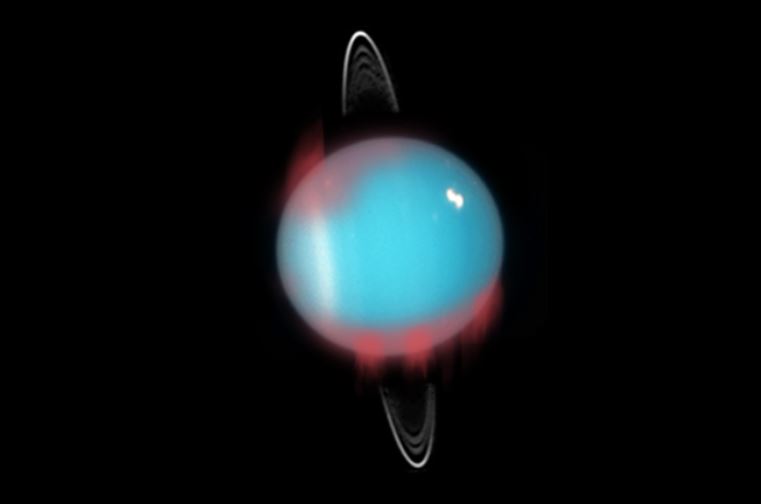
Astronomers confirm the existence of an infrared (IR) aurora on Uranus. This could help astronomers identify exoplanets that might support life, a large number of which are icy worlds.
The discovery could shed light on the mysteries behind the magnetic fields of the planets of our solar system, and even on whether distant worlds might support life.
The team of scientists, supported by the Science and Technology Facilities Council (STFC), have obtained the first measurements of the infrared (IR) aurora at Uranus since investigations began in 1992. While the ultraviolet (UV) aurorae of Uranus has been observed since 1986, no confirmation of the IR aurora had been observed until now...
Read More
October 27, 2023,
Astronomy/Space
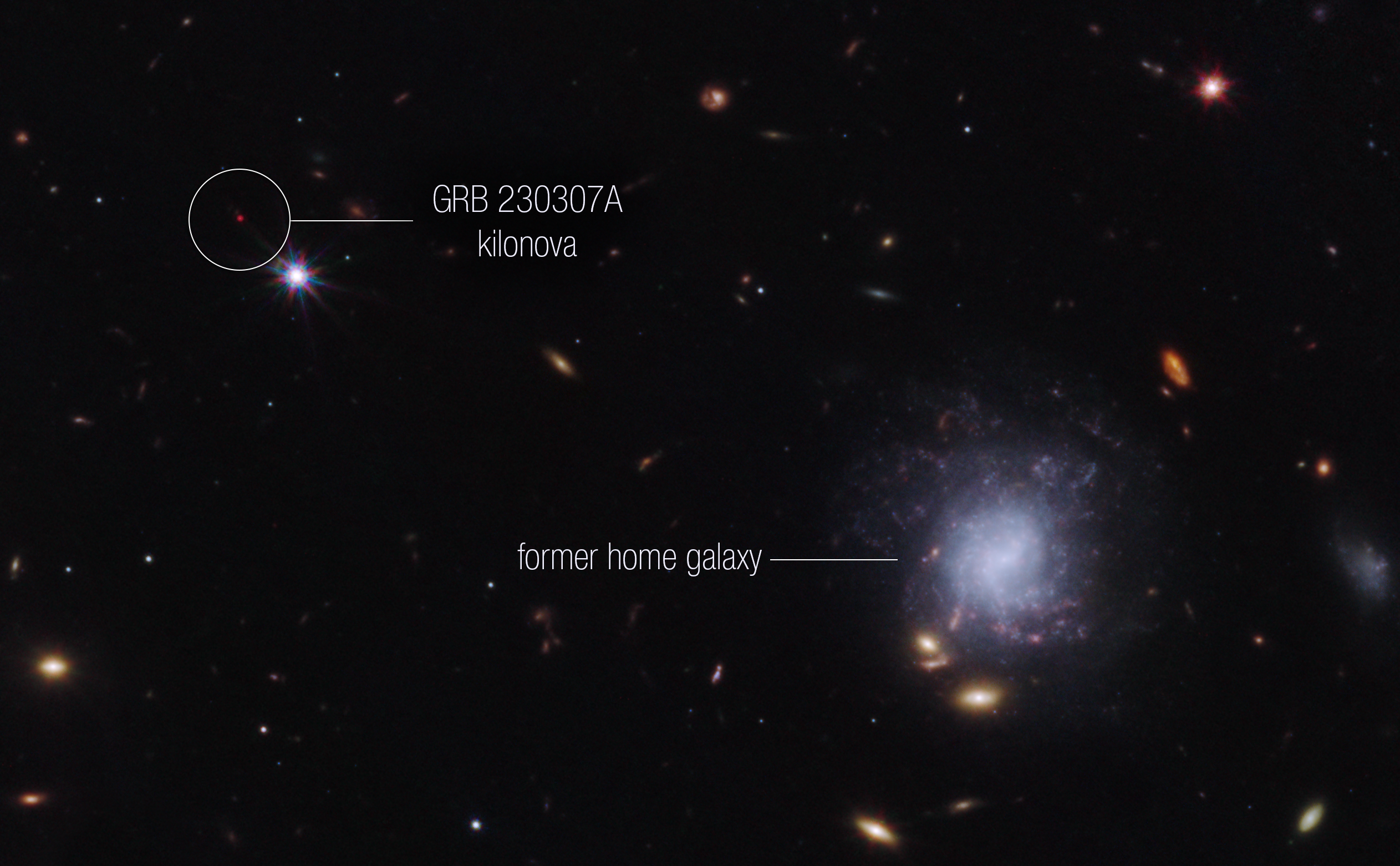
Scientists have observed the creation of rare chemical elements in the second-brightest gamma-ray burst ever seen — casting new light on how heavy elements are made.
Researchers examined the exceptionally bright gamma-ray burst GRB 230307A, which was caused by a neutron star merger. The explosion was observed using an array of ground and space-based telescopes, including NASA’s James Webb Space Telescope, Fermi Gamma-ray Space Telescope, and Neil Gehrels Swift Observatory.
Publishing their findings today in Nature(25 Oct), the international research team which included experts from the Univ...
Read More

Recent Comments