
Category Astronomy/Space

‘Starquakes’ could Explain Mystery Signals

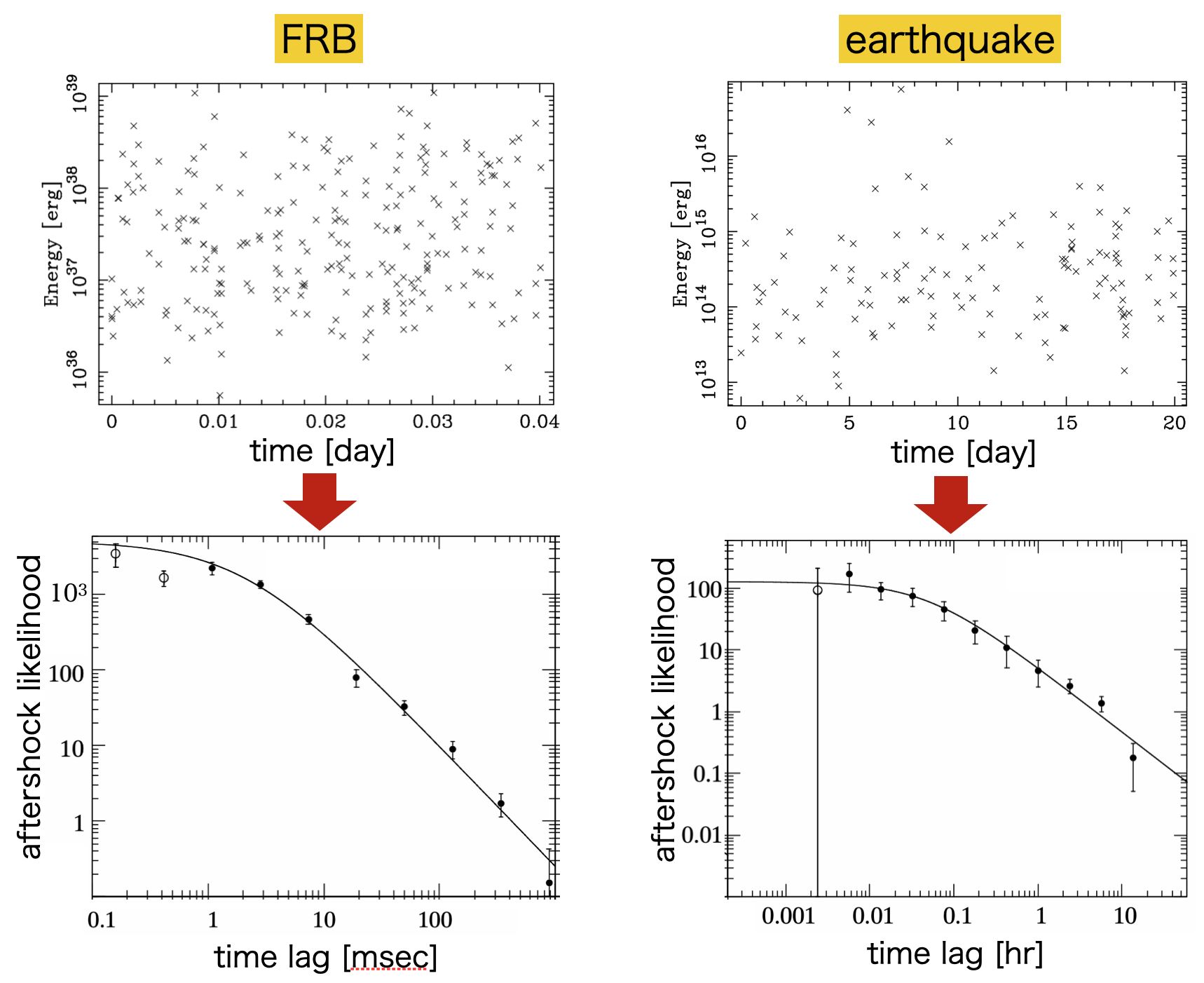
Two scatter charts and two line graphs
Comparing FRBs and earthquakes. The researchers analyzed the time and energy distribution of FRB and earthquake events, and by plotting the aftershock likelihood as a function of time lag, they found that the two are very similar. ©2023 T. Totani & Y. Tsuzuki

Fast radio bursts from distant neutron stars resemble earthquakes rather than solar flares. Fast radio bursts, or FRBs, are an astronomical mystery, with their exact cause and origins still unconfirmed. These intense bursts of radio energy are invisible to the human eye, but show up brightly on radio telescopes. Previous studies have noted broad similarities between the energy distribution of repeat FRBs, and that of earthquakes and solar flares...

Read More
Finding Explanation for Milky Way’s Warp Astronomers’ results Bolster Hypothesis of How Galaxy Evolved

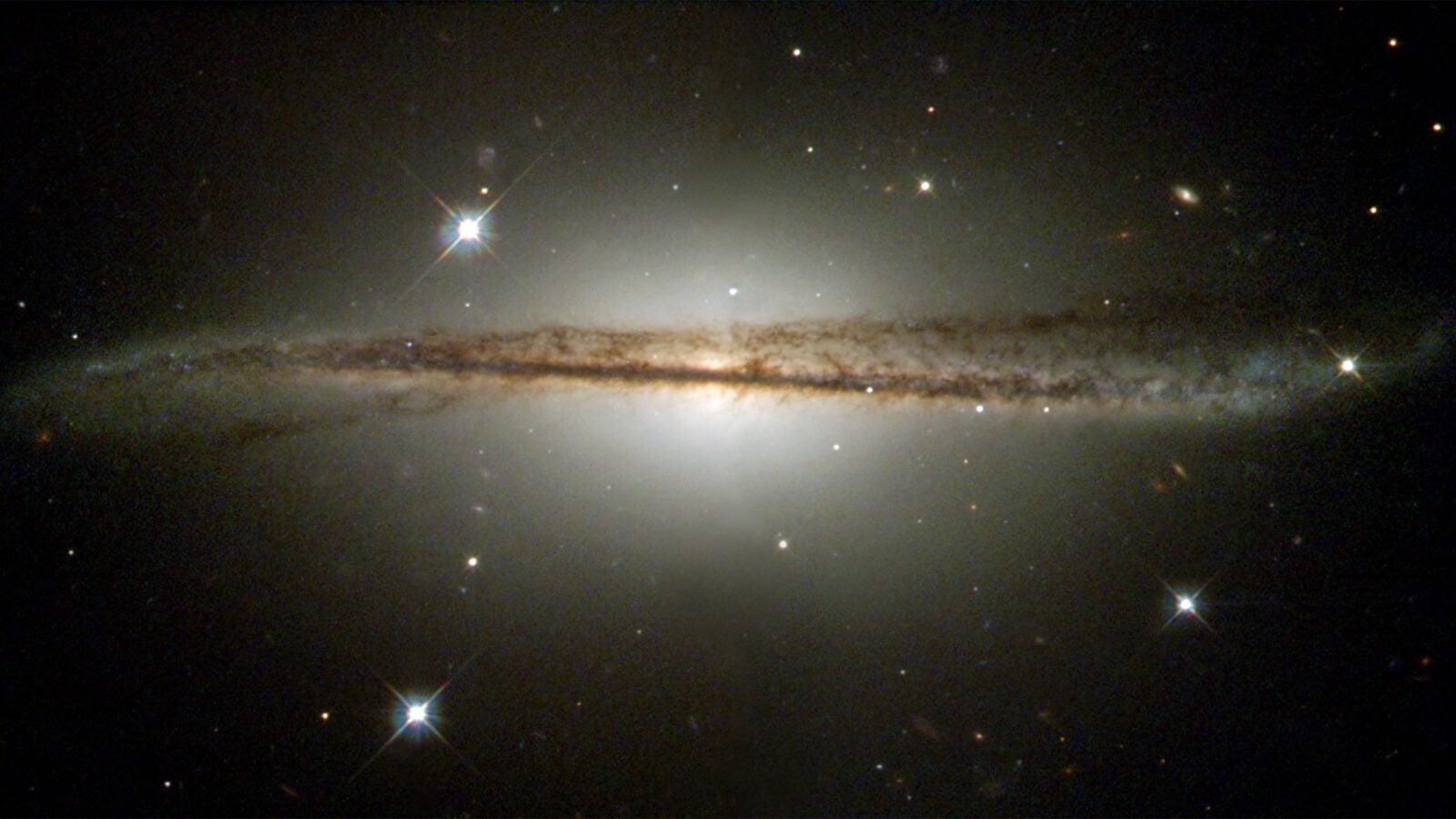
The Milky Way’s galactic disk is warped and flared, similar to Galaxy ESO pictured here. Credit: NASA/Space Telescope Science Institute
The Milky Way’s galactic disk is warped and flared, similar to Galaxy ESO pictured here. 
Credit: NASA/Space Telescope Science Institute

The Milky Way is often depicted as a flat, spinning disk of dust, gas, and stars. But if you could zoom out and take an edge-on photo, it actually has a distinctive warp — as if you tried to twist and bend a vinyl LP.

Though scientists have long known through observational data that the Milky Way is warped and its edges are flared like a skirt, no one could explain why.

Now, Harvard astronomers at the Center for Astrophysics | Harvard and Smithsonian (CfA) have performed the first calculations that fully explain this phenomenon, with compelling evidence pointing to the Milky Way’s envelopment in an off-kilter halo of dark matter...

Read More

Stellar Fountain of Youth with Turbulent Formation History in the Center of our Galaxy

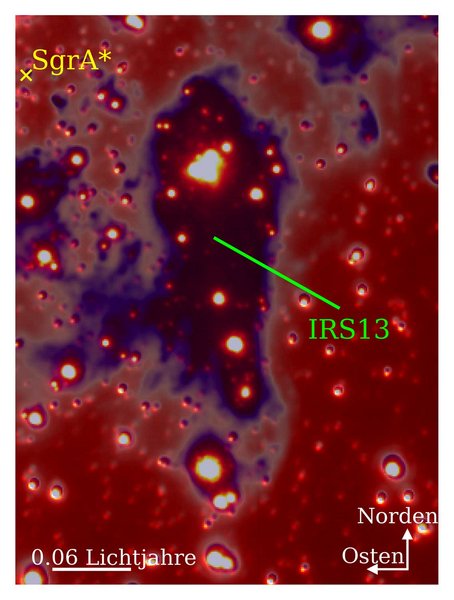
A multiwavelength view of the area of the supermassive black hole Sgr A* (yellow X). The stars are red, the dust blue. Many of the young stars in the cluster IRS13 are covered by dust or blinded by the bright stars. Credits: Florian Peißker / University of Cologne

An unexpectedly high number of young stars has been identified in the direct vicinity of a supermassive black hole and water ice has been detected at the center of our galaxy.

An international team led by Dr Florian Peißker at the University of Cologne’s Institute of Astrophysics has analysed in detail a young star cluster in the immediate vicinity of the super massive black hole Sagittarius A* (Sgr A*) in the centre of our galaxy and showed that it is significantly younger than expected...

Read More

Hubble finds Bizarre Explosion in Unexpected Place

A very rare, strange burst of extraordinarily bright light in the universe just got even stranger—thanks to the eagle-eye of the NASA/ESA Hubble Space Telescope. The phenomenon, called a Luminous Fast Blue Optical Transient (LFBOT), flashed onto the scene where it wasn't expected to be found, far away from any host galaxy. Only Hubble could pinpoint its location. The Hubble results suggest astronomers know even less about these objects than previously thought by ruling out some possible theories.Read More
