Category Astronomy/Space

Plot Thickens in Hunt for Ninth Planet

Plot thickens in hunt for ninth planet
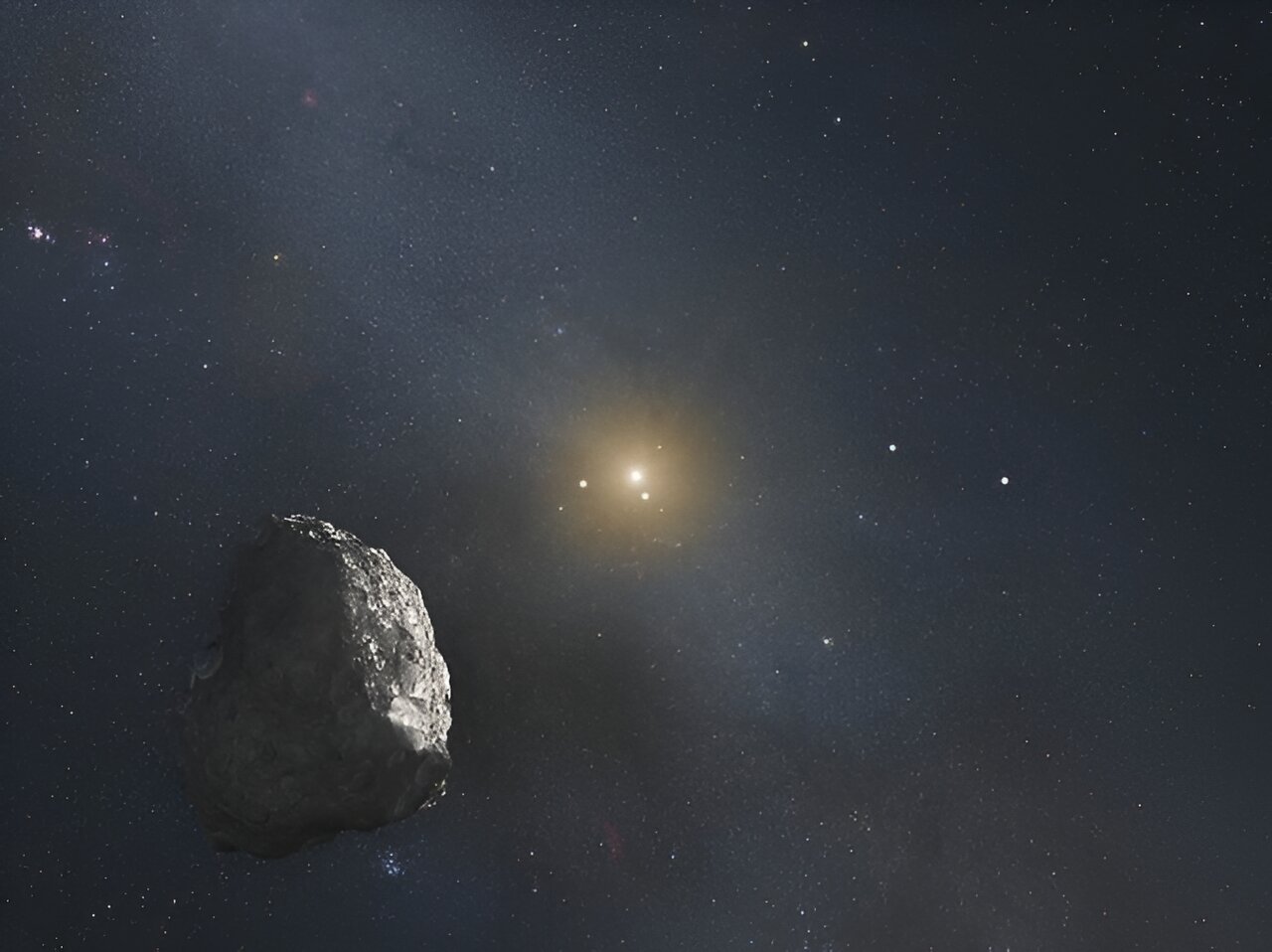
An artist’s impression of a Kuiper Belt object (KBO), located on the outer rim of our solar system at a staggering distance of 4 billion miles from the sun. Credit: NASA

Outer reaches of solar system could harbor another planet–or evidence modifying laws of gravity. A pair of theoretical physicists are reporting that the same observations inspiring the hunt for a ninth planet might instead be evidence within the solar system of a modified law of gravity originally developed to understand the rotation of galaxies.

Researchers Harsh Mathur, a professor of physics at Case Western Reserve University, and Katherine Brown, an associate professor of physics at Hamilton College, made the assertion after studying the effect the Milky Way galaxy would have on objects in the outer solar syst...

Read More

Astronomers watched a Massive Star Disappear. JWST might have some answers

Illustration of how a failed supernova can become a black hole. Credit: NASA/ESA/P. Jeffries (STScI)

In 2009 a giant star 25 times more massive than the sun simply vanished. OK, it wasn’t quite that simple. It underwent a period of brightening, increasing in luminosity to a million suns, just as if it was ready to explode into a supernova. But then it faded rather than exploding. And when astronomers tried to see the star using the Large Binocular Telescope (LBT), Hubble and the Spitzer space telescope, they couldn’t see anything.

The star, known as N6946-BH1, is now considered a failed supernova. The BH1 in its name is due to the fact that astronomers think the star collapsed to become a black hole rather than triggering a supernova. But that has been conjecture...

Read More

Large Mound Structures on Kuiper Belt Object Arrokoth may have Common Origin

Courtesy of SwRI The large mound structures that dominate one of the lobes of the Kuiper belt object Arrokoth are similar enough to suggest a common origin, according to a new study led by Southwest Research Institute (SwRI) Planetary Scientist and Associate Vice President Dr. Alan Stern.

These ‘Building blocks’ of this Kuiper belt object may point to key details of streaming instability model of planetesimal formation. A new study led by Southwest Research Institute (SwRI) Planetary Scientist and Associate Vice President Dr. Alan Stern posits that the large, approximately 5-kilometer-long mounds that dominate the appearance of the larger lobe of the pristine Kuiper Belt object Arrokoth are similar enough to suggest a common origin...

Read More

Bursts of Star Formation explain Mysterious Brightness at Cosmic Dawn

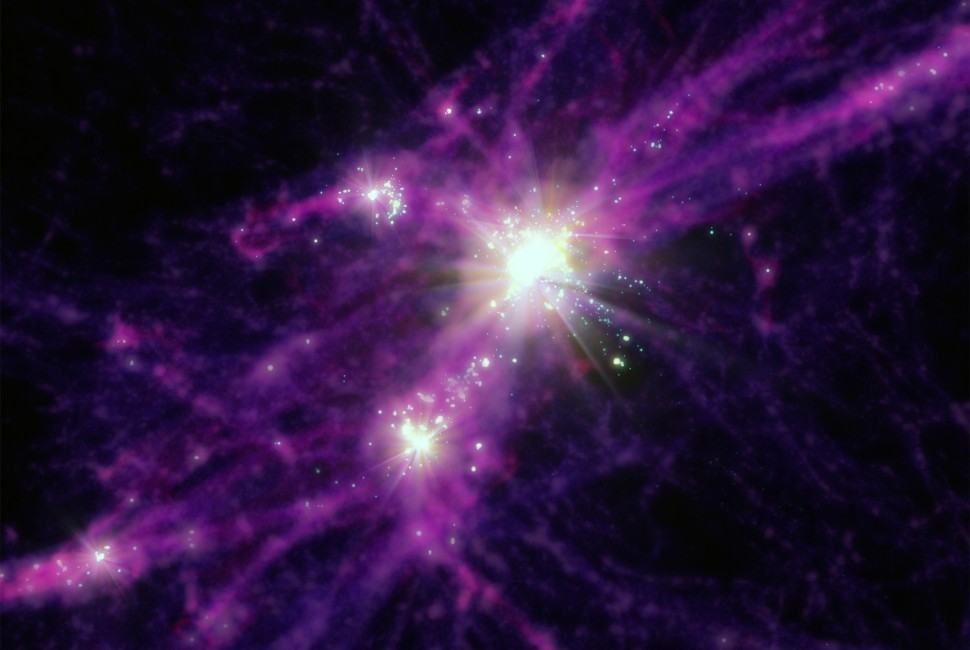
Artist conception of early starbursting galaxies. Stars and galaxies are shown in the bright white points of light, while the more diffuse dark matter and gas are shown in purples and reds. Image by Aaron M. Geller, Northwestern, CIERA + IT-RCDS

Intense flashes of light, not mass, resolve the puzzle of impossible brightness. When scientists viewed the James Webb Space Telescope’s (JWST) first images of the universe’s earliest galaxies, they were shocked. The young galaxies appeared too bright, too massive and too mature to have formed so soon after the Big Bang. It would be like an infant growing into an adult within just a couple years.

The startling discovery even caused some physicists to question the standard model of cosmology, wondering whether or not it should be upended.

Read More