
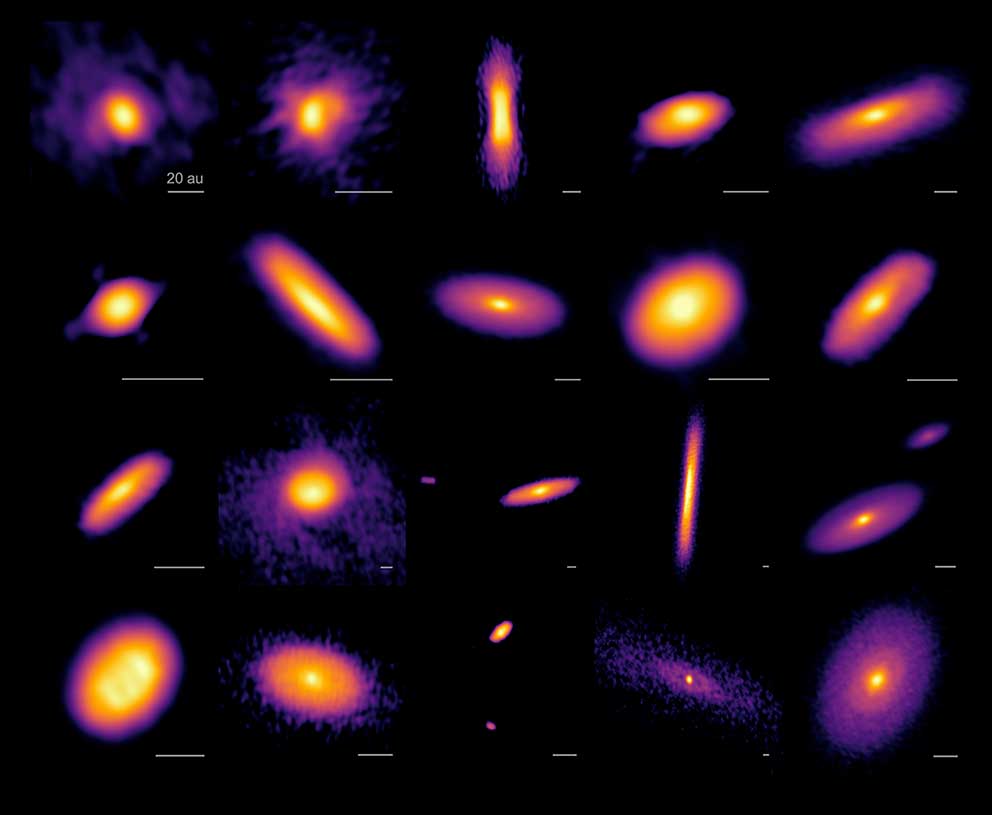
An international research team used the Atacama Large Millimeter/submillimeter Array (ALMA) to observe disks around 19 protostars with a very high resolution to search for the earliest...
Read More


An international research team used the Atacama Large Millimeter/submillimeter Array (ALMA) to observe disks around 19 protostars with a very high resolution to search for the earliest...
Read More
This cloud of orange and red, part of the Sh2-284 nebula, is shown here in spectacular detail using data from the VLT Survey Telescope, hosted by the European Southern Observatory (ESO). This nebula is teeming with young stars, as gas and dust within it clumps together to form new suns. If you take a look at the cloud as a whole, you might be able to make out the face of a cat, smiling down from the sky.
The Sh2-284 stellar nursery is a vast region of dust and gas and its brightest part, visible in this image, is about 150 light-years (over 1400 trillion kilometers) across. It’s located some 15,000 light-years away from Earth in the constellation Monoceros.
Nestled in the center of the brightest part of the nebula—right under...
Read More
June 28, 2023,
 Astronomy/Space
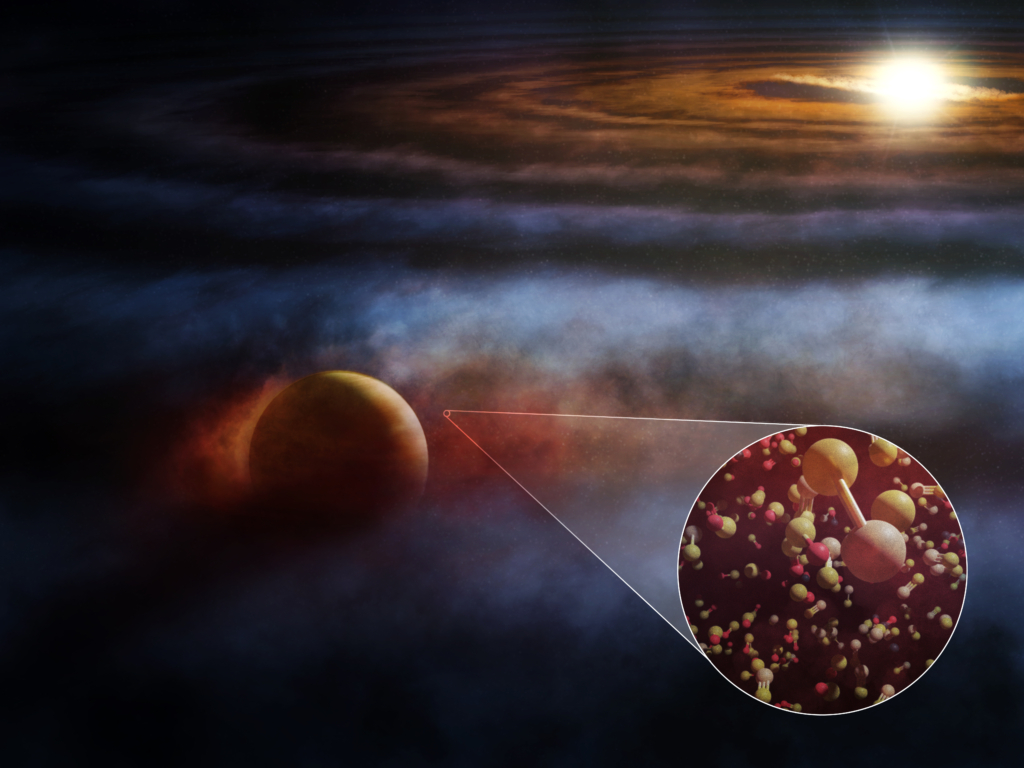
Scientists using the Atacama Large Millimeter/submillimeter Array (ALMA) to study the protoplanetary disk around a young star have discovered the most compelling chemical evidence to date of the formation of protoplanets. The discovery will provide astronomers with an alternate method for detecting and characterizing protoplanets when direct observations or imaging are not possible. The results will be published in an upcoming edition of The Astrophysical Journal Letters.
HD 169142 is a young star located in the constellation Sagittarius that is of significant interest to astronomers due to the presence of its large, dust- and gas-rich circumstellar disk that is viewed nearly face-on...
Read More
June 27, 2023,
Astronomy/Space
The first stars of the universe were very different than the stars we see today. They were made purely of hydrogen and helium, without heavier elements to help them generate energy in their core. As a result, they were likely hundreds of times more massive than the sun. But some of the first stars may have been even stranger. In the early universe, dark matter could have been more concentrated than it is now, and it may have powered strange stellar objects known as dark stars.
Since dark matter and regular matter act similarly under gravity, clumps of dark matter in the early universe could have gathered clouds of hydrogen and helium around them. As this matter collapsed under its own weight, dark matter in its core might have generated energy...
Read More

Recent Comments