

Credits: ESA/Webb, NASA, CSA, M. Zamani (ESA/Webb), and the PDRs4All ERS Team
A team of international scientists has used NASA’s James Webb Space Telescope to detect a new carbon compound in space for the first time...
Read More


A team of international scientists has used NASA’s James Webb Space Telescope to detect a new carbon compound in space for the first time...
Read More
June 26, 2023,
 Astronomy/Space
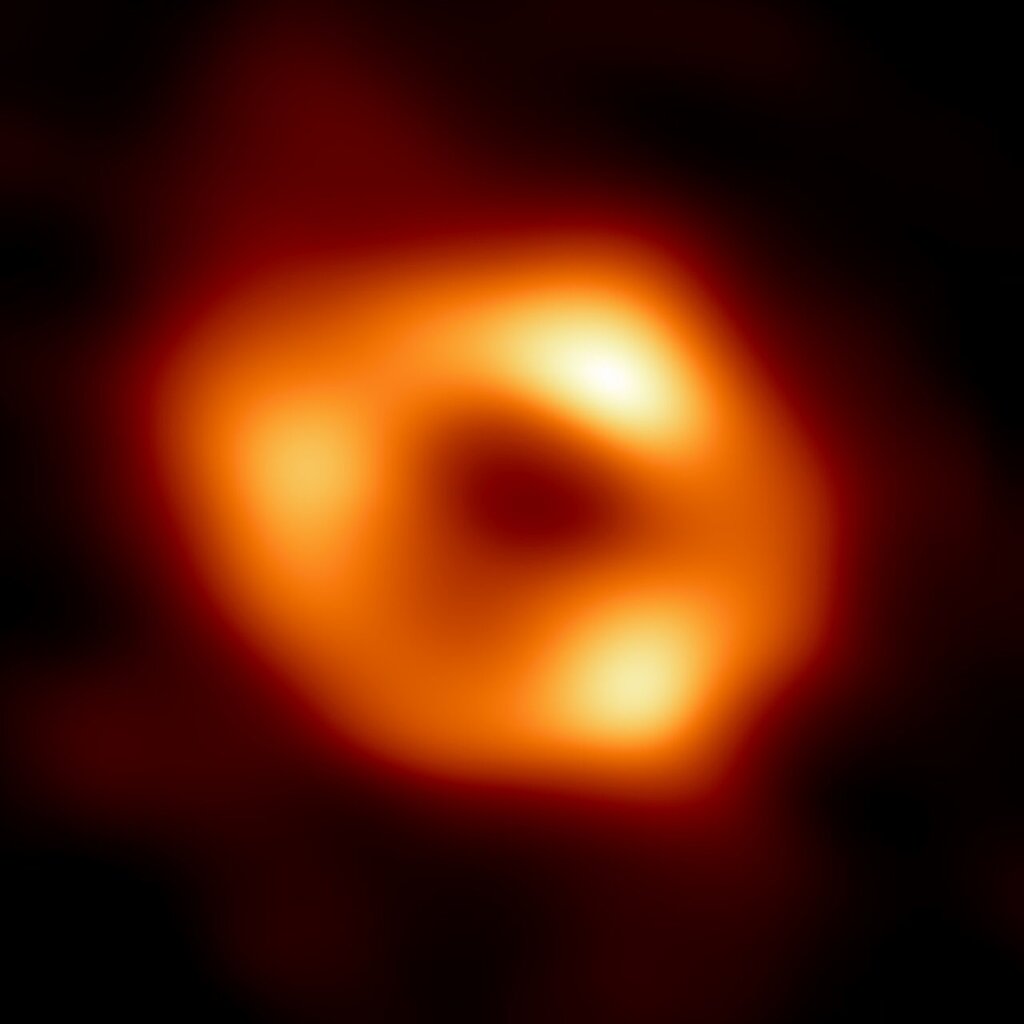
The supermassive black hole lurking at the center of our Milky Way galaxy is not as dormant as had been thought, a new study shows.
The slumbering giant woke up around 200 years ago to gobble up some nearby cosmic objects before going back to sleep, according to the study published in the journal Nature on Wednesday.
NASA’s IXPE space observatory spotted an Xray echo of this powerful resurgence of activity, the researchers said.
The supermassive black hole Sagittarius A—abbreviated to Sgr A—is four million times more massive than the Sun. It sits 27,000 light years from Earth at the center of the Milky Way’s spiral.
Last year astronomers revealed the first...
Read More
June 23, 2023,
Astronomy/Space
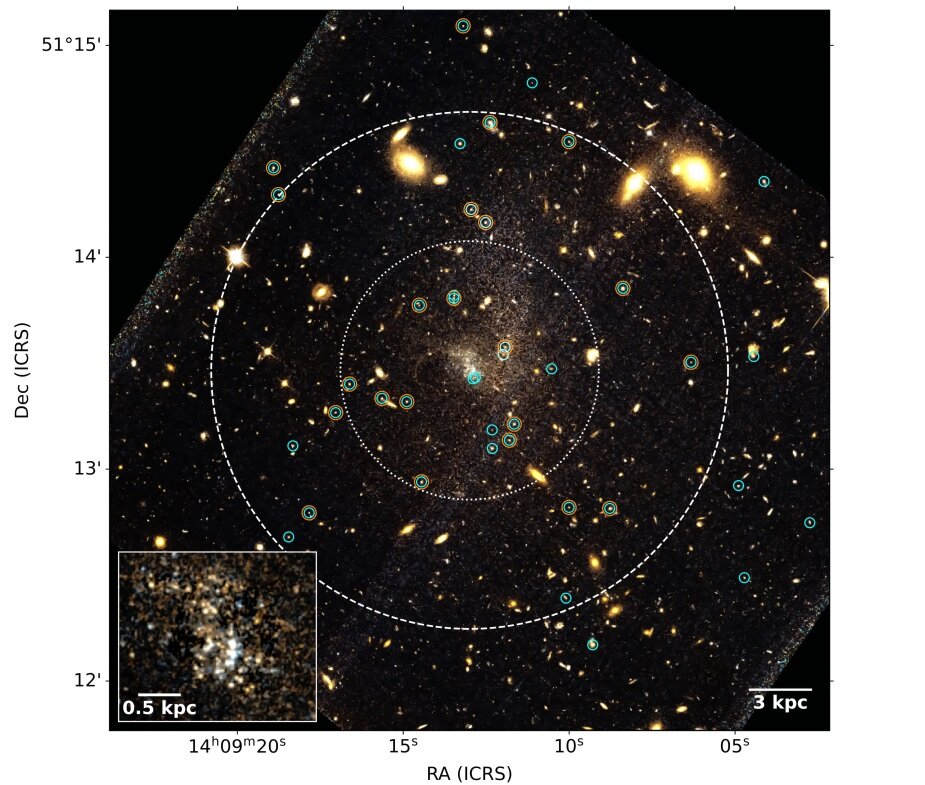
Using the Hubble Space Telescope (HST) and Jansky Very Large Array (VLA), astronomers have investigated an ultra-diffuse galaxy known as UGC 9050-Dw1. Results of the study, published June 9 on the pre-print server arXiv, yield important insights into the properties of this galaxy.
Ultra-diffuse galaxies (UDGs) are extremely-low-density galaxies. The largest UDGs have sizes similar to the Milky Way, but have only about 1% as many stars as our home galaxy...
Read More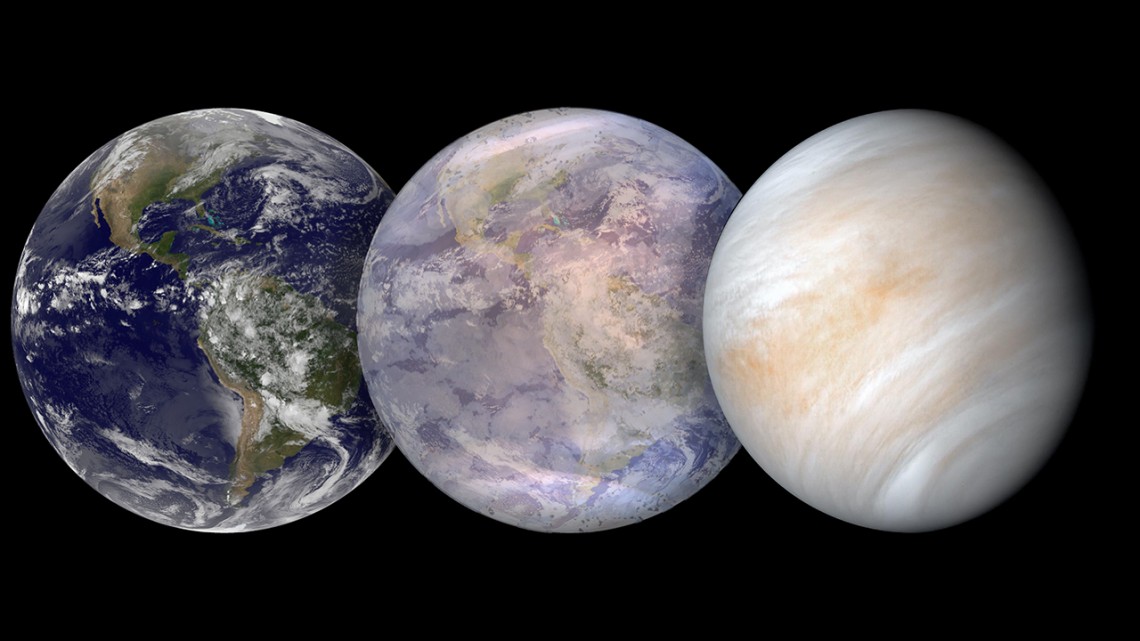
How close can a rocky planet be to a star, and still sustain water and life? A recently discovered exoplanet may be key to solving that Edge of Habitabilitymystery.
“Super-Earth” LP 890-9c (also named SPECULOOS-2c) is providing important insights about conditions at the inner edge of a star’s habitable zone and why Earth and Venus developed so differently, according to new research led by Lisa Kaltenegger, associate professor of astronomy at Cornell University.
Her team found LP 890-9c, which orbits close to the inner edge of its solar system’s habitable zone, would look vastly different depending on whether it still had warm oceans, a ste...
Read More

Recent Comments