Category Astronomy/Space

New study puts a Definitive Age on Saturn’s Rings – they’re really Young

Saturn's rings partially in shadow
Saturn’s rings partially in shadow as seen by NASA’s Cassini spacecraft. (Credit: NASA/JPL/Space Science Institute)

Physicists measured the flux of interplanetary dust around Saturn. The researchers concluded that the planet’s rings formed less than 400 million years ago, making them much younger than Saturn itself.

A new study led by physicist Sascha Kempf at the University of Colorado Boulder has delivered the strongest evidence yet that Saturn’s rings are remarkably young — potentially answering a question that has boggled scientists for well over a century.

The research, to be published May 12 in the journal Science Advances, pegs the age of Saturn’s rings at no more than 400 million years old. That makes the rings much younger than Saturn itself, which is about 4...

Read More
New Images reveal the Magnetic Fields in the Horsehead Nebula

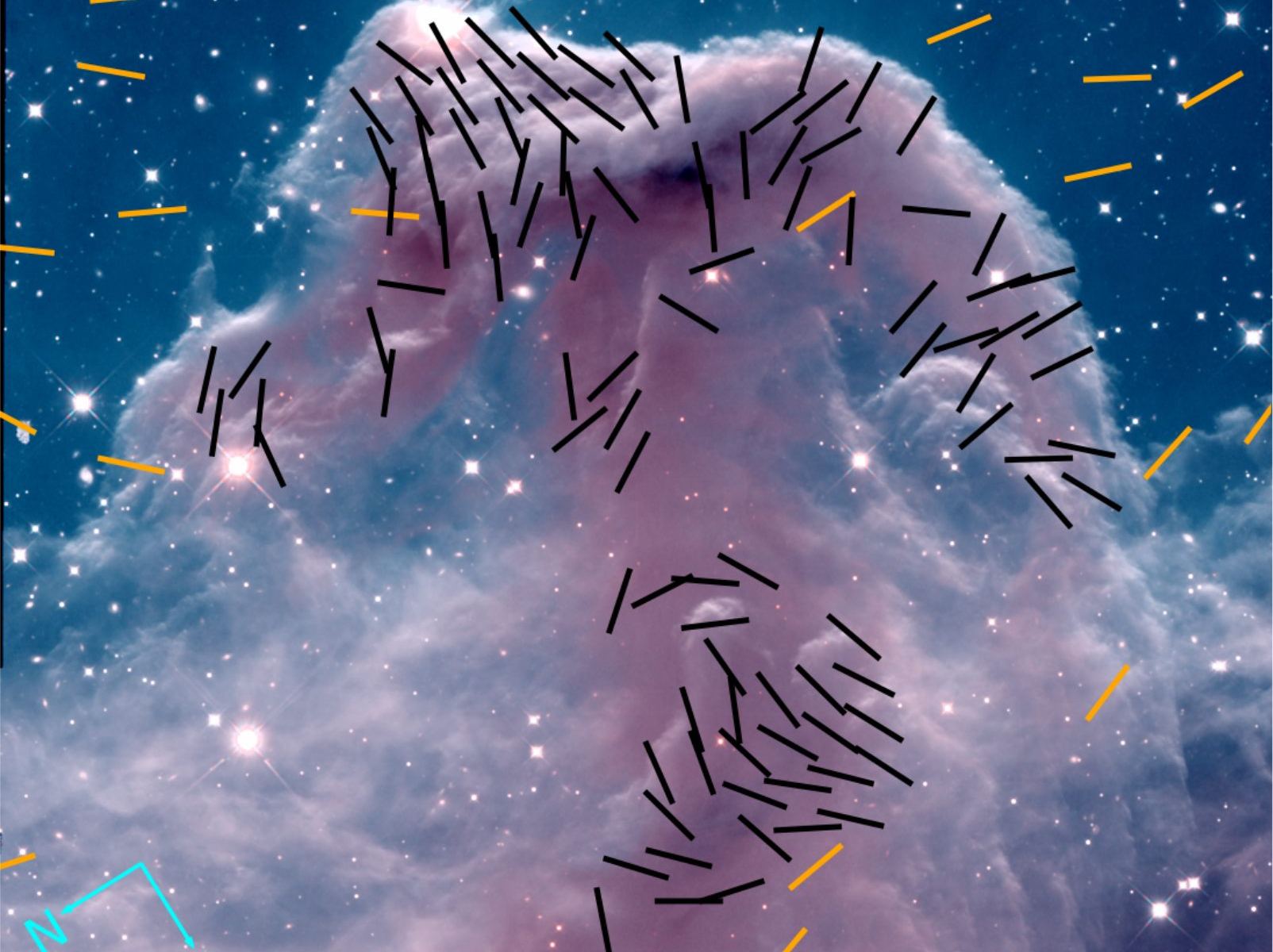
Magnetic field detections overlaid on a two-color composite of Hubble Space Telescope image taken at two near-IR wavelengths (Mikulski Archive for Space Telescopes). Black and orange segments show magnetic field orientations inferred from JCMT and Palomar Observatory. Credit: Hwang et al. 2023.

Located near the summit of Maunakea, Hawaii, the 15-meter (~49 ft) James Clerk Maxwell Telescope (JCMT) at the East Asia Observatory (EAO) is the largest telescope in the world designed to operate exclusively in the submillimeter-wavelength. In 2018, Molokai’i High School alumna Mallory Go was awarded time with the JCMT under the Maunakea Scholars program. With the assistance of EAO astronomer Dr...

Read More

Astronomers reveal the Largest Cosmic Explosion ever seen

Impression of black hole accretion
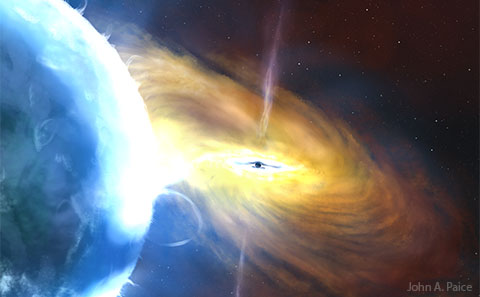
Artist impression of a black hole accretion. Credit John A. Paice

A team of astronomers led by the University of Southampton have uncovered the largest cosmic explosion ever witnessed.

The explosion is more than ten times brighter than any known supernova (exploding star) and three times brighter than the brightest tidal disruption event, where a star falls into a supermassive black hole.

The explosion, known as AT2021lwx, has currently lasted over three years, compared to most supernovae which are only visibly bright for a few months. It took place nearly 8 billion light years away, when the universe was around 6 billion years old, and is still being detected by a network of telescopes.

The researchers believe that the explosion is a result of a vast cloud of gas, possibly th...

Read More

How 1,000 Undergraduates helped Solve an Enduring Mystery about the Sun

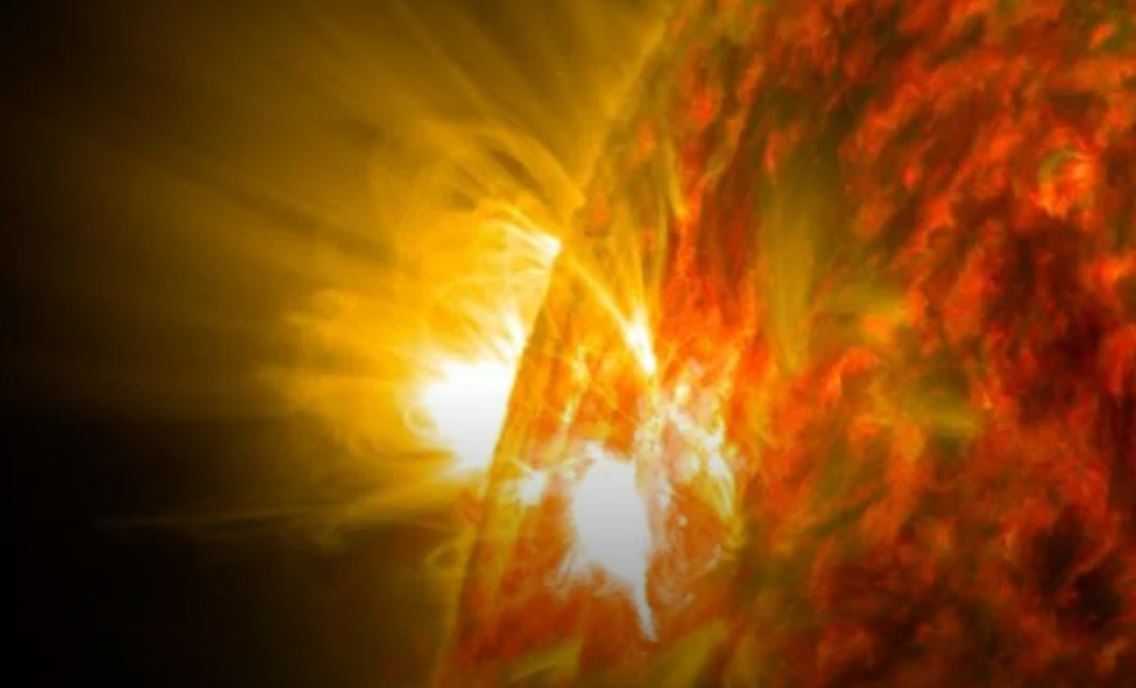
For a new study, a team of physicists recruited roughly 1,000 undergraduate students at the University of Colorado Boulder to help answer one of the most enduring questions about the sun: How does the star’s outermost atmosphere, or “corona,” get so hot?

The research represents a nearly-unprecedented feat of data analysis: From 2020 to 2022, the small army of mostly first- and second-year students examined the physics of more than 600 real solar flares—gigantic eruptions of energy from the sun’s roiling corona.

The researchers, including 995 undergraduate and graduate students, published their finding in The Astrophysical Journal. The results suggest that solar flares may not be responsible for superheating the sun’s corona, as a popular theory in astrophysics suggests.

“We...

Read More