Category Astronomy/Space

New Findings released from World’s most Powerful Solar Telescope

New findings released from world's most powerful solar telescope
National Solar Observatory. Credit: National Science Foundation, Association of Universities for Research in Astronomy 

New research conducted as part of the science verification phase of the Visible Spectropolarimeter (ViSP) instrument at the National Science Foundation’s Daniel K. Inouye Solar Telescope is the first to use data from this instrument. It is hoped that the work will pave the way for future studies to enable a better understanding of the potential risks to key power and communications infrastructure.

The study, which is published in The Astrophysical Journal Letters, was the result of an exciting collaboration between the U.K. and the National Science Foundation and marks an important milestone for the astronomical community and this ground-breaking telescope.

De...

Read More
Remains of a Modern Glacier found near Mars’ Equator implies Water Ice possibly present at Low Latitudes on Mars even today

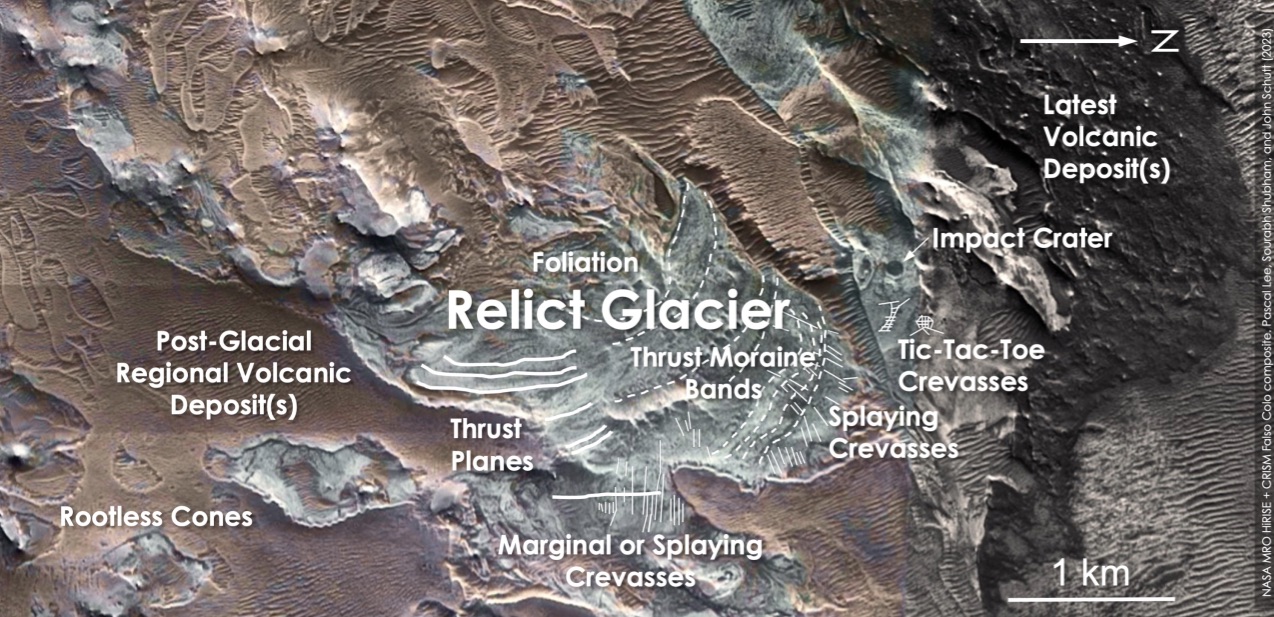
Interpretation of the “Relict Glacier” ‘s features. (Lee et al. 2023).
 Interpretation of the “Relict Glacier” ‘s features. (Lee et al. 2023).

If there is still water ice preserved at shallow depths at a low latitude on Mars, there would be implications for science and human exploration.

In a groundbreaking announcement at the 54th Lunar and Planetary Science Conference held in The Woodlands, Texas, scientists revealed the discovery of a relict glacier near Mars’ equator. Located in Eastern Noctis Labyrinthus at coordinates 7° 33′ S, 93° 14′ W, this finding is significant as it implies the presence of surface water ice on Mars in recent times, even near the equator. This discovery raises the possibility that ice may still exist at shallow depths in the area, which could have significant implications for future human exploration.

The surface ...

Read More

‘Terminator Zones’ on Distant Planets could harbor life

'Terminator zones' on distant planets could harbor life, astronomers say
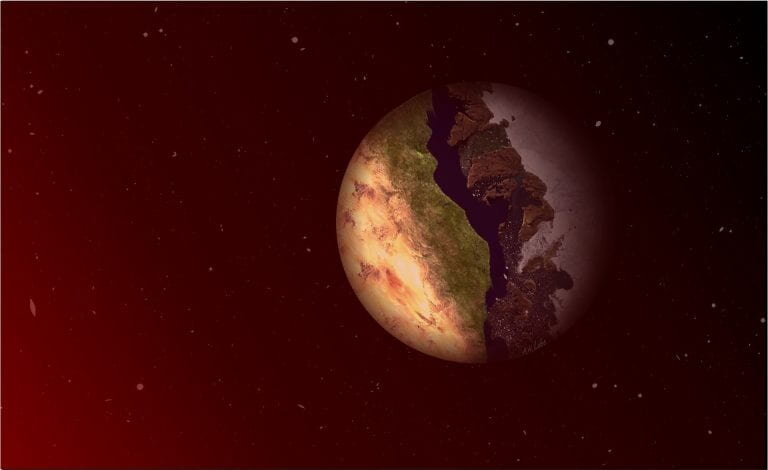
Some exoplanets have one side permanently facing their star while the other side is in perpetual darkness. The ring-shaped border between these permanent day and night regions is called a “terminator zone.” In a new paper in The Astrophysical Journal, physics and astronomy researchers at UC Irvine say this area has the potential to support extraterrestrial life. Ana Lobo / UCI

These in-between regions could be prime sites for liquid water. In a new study, University of California, Irvine astronomers describe how extraterrestrial life has the potential to exist on distant exoplanets inside a special area called the “terminator zone,” which is a ring on planets that have one side that always faces its star and one side that is always dark.

“These planets have a permanent day side ...

Read More

Evidence that Venus is Volcanically Active

Image from research paper.
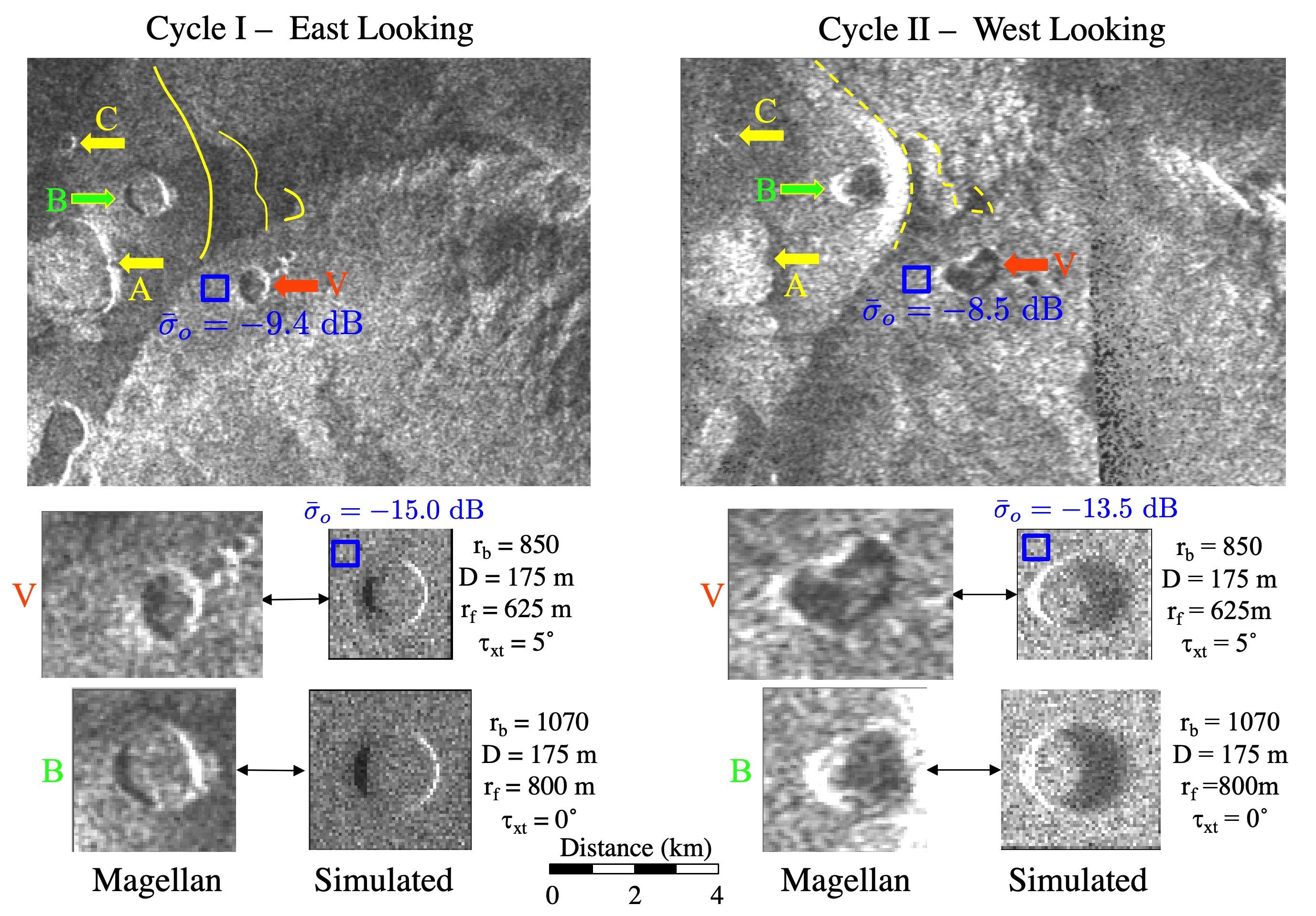
The panels show the east-looking first (A) and west-looking second (B) images of the vent.

Venus appears to have volcanic activity, according to a new research paper that offers strong evidence to answer the lingering question about whether Earth’s sister planet currently has eruptions and lava flows.

Venus, although similar to Earth in size and mass, differs markedly in that it does not have plate tectonics. The boundaries of Earth’s moving surface plates are the primary locations of volcanic activity.

New research by University of Alaska Fairbanks Geophysical Institute research professor Robert Herrick revealed a nearly 1-square-mile volcanic vent that changed in shape and grew over eight months in 1991...

Read More