Category Astronomy/Space

Twice a day, Mars may briefly host water that could support life

Vincent Chevrier

Frost-covered regions present the best candidates for the future habitability of Mars and further astrobiological exploration, research into brines shows. Mars, once thought too cold and dry for liquid water, may briefly host salty brines twice a day during certain seasons. These fleeting bursts wouldn’t be enough to sustain humans, but they could have supported hardy life in Mars’ past—and may guide future missions searching for signs of it.

Due to extreme temperatures and the dryness of Mars, it’s thought to be impossible for liquid water to form on the planet’s surface, a critical precondition for habitability...

Read More
Voyager missed it, but now we know Uranus has a fiery secret

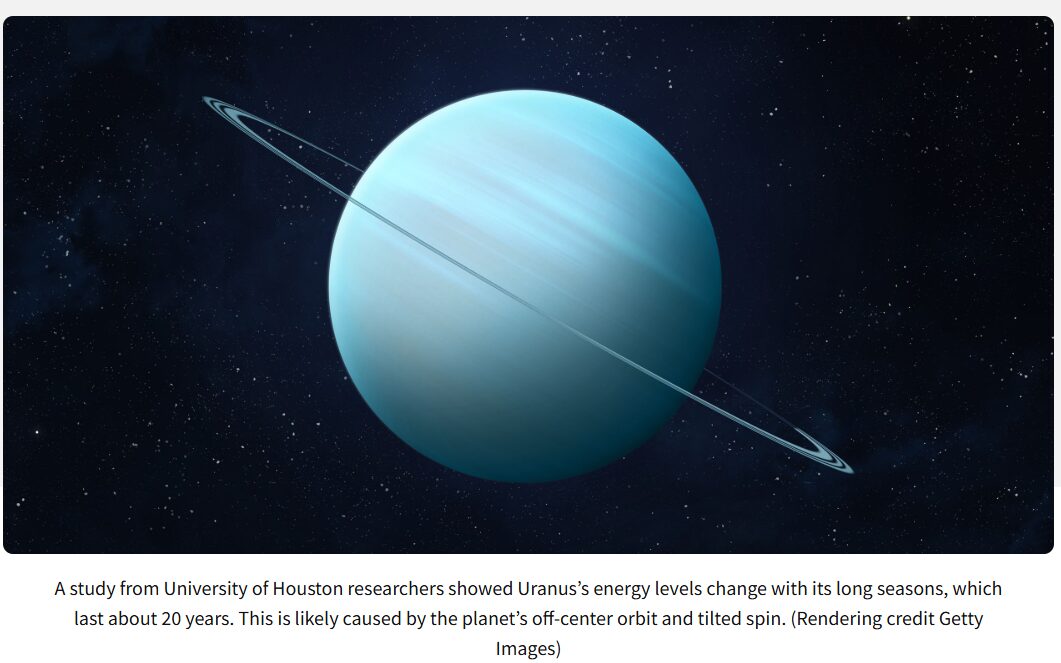
For decades, scientists puzzled over why Uranus seemed colder than expected. Now, an international research team led by the University of Houston has solved the mystery: Uranus emits more heat than it gets from the Sun, meaning it still carries internal warmth from its ancient formation. This revelation rewrites what scientists know about the ice giant’s history, strengthens the case for NASA’s upcoming mission, and offers fresh insight into the forces shaping not only other planets, but also Earth’s future climate.

A new study led by University of Houston researchers, in collaboration with planetary scientists worldwide, suggests Uranus does have its own internal heat — an advance that not only informs NASA’s future missions but also deepens scientists’ understanding of plan...

Read More

Astronomers spot the ‘Eye of Sauron’ in deep space

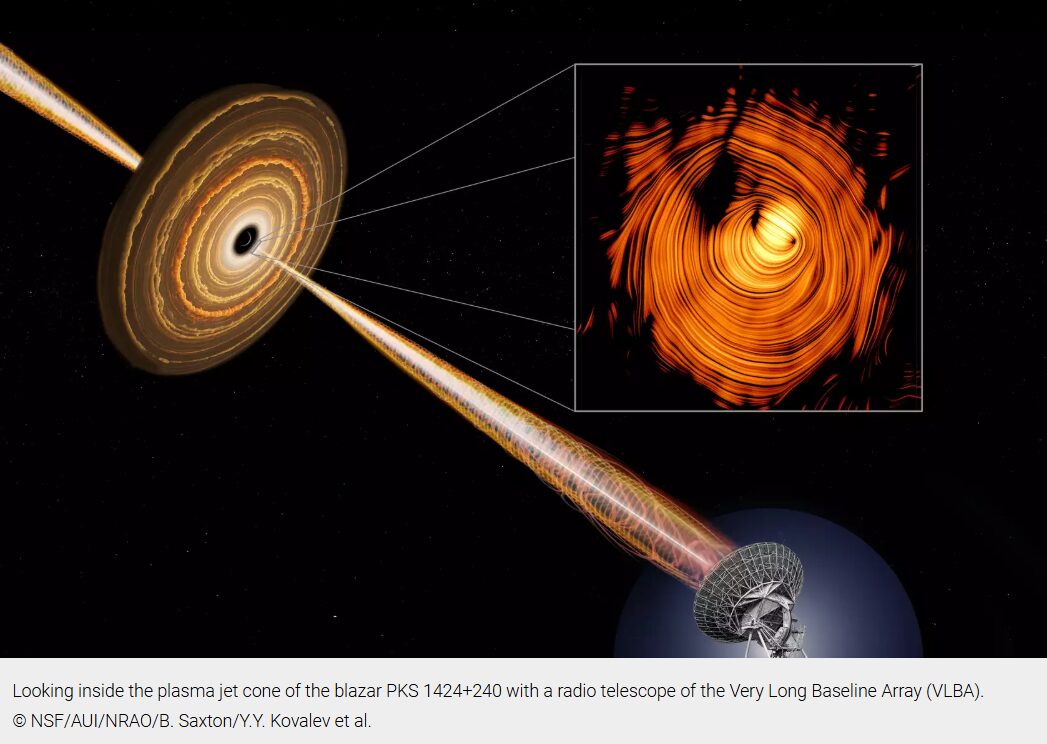
A stunning new image of a cosmic jet has helped astronomers unlock the mystery behind the usually bright emission of high-energy gamma rays and neutrinos from a peculiar celestial object. The source is a blazar—a type of active galaxy powered by a supermassive black hole devouring matter a the heart of a galaxy. They have captured what looks like the mythical “Eye of Sauron” in the distant universe and may have just solved a decade-long cosmic puzzle.

The researchers made a discovery that will help in understanding how a seemingly slow-moving blazar, known as PKS 1424+240, could be one of the brightest sources of high-energy gamma rays and cosmic neutrinos ever observed. The work is published in the journal Astronomy & Astrophysics.

Located billions of light-years away, the bl...

Read More

Hubble Captures a Tarantula

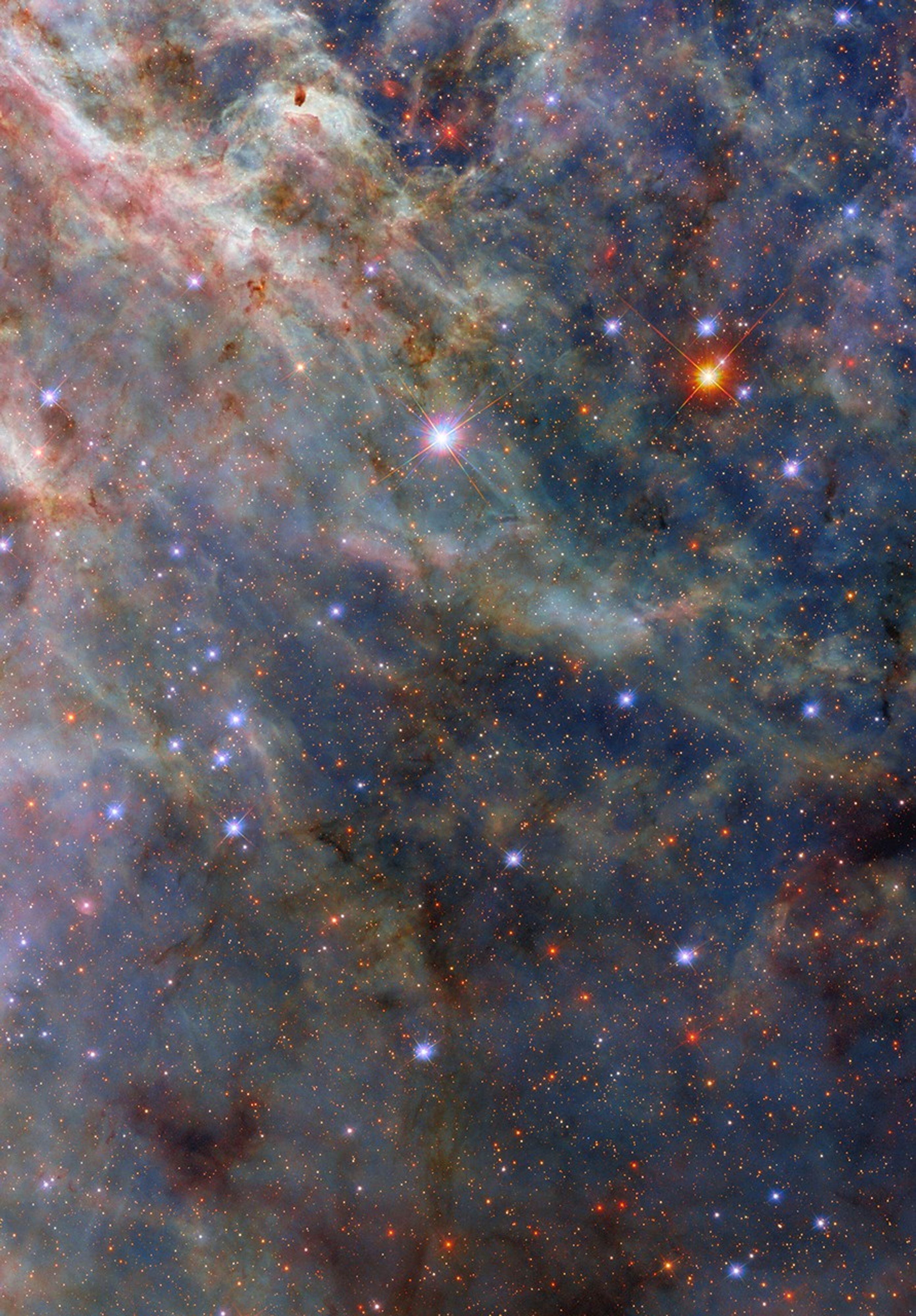
A colorful nebula. The image’s top-left is filled with layers of fluffy pink and greenish clouds. Long strands of green clouds stretch out from here; a faint layer of translucent blue dust combines with them to create a three-dimensional scene. A sparse network of dark dust clouds in the foreground adds reddish-black patches atop the nebula. Blue-white and orange stars, from our galaxy and beyond, are spread throughout the clouds.
This NASA/ESA Hubble Space Telescope image shows a portion of the Tarantula Nebula.
ESA/Hubble & NASA, C. Murray

This NASA/ESA Hubble Space Telescope image captures incredible details in the dusty clouds of a star-forming factory called the Tarantula Nebula. Most of the nebulae Hubble images are in our galaxy, but this nebula is in the Large Magellanic Cloud, a dwarf galaxy located about 160,000 light-years away in the constellations Dorado and Mensa.

The Large Magellanic Cloud is the largest of the dozens of small satellite galaxies that orbit the Milky Way. The Tarantula Nebula is the largest and brightest star-forming region, not just in the Large Magellanic Cloud, but in the entire group of nearby galaxies to which the Milky Way belongs.

The Tarantula Nebula is home to the mos...

Read More