Category Astronomy/Space

Super-Earth vs Sub-Neptune? The Winner is Super-Venus!

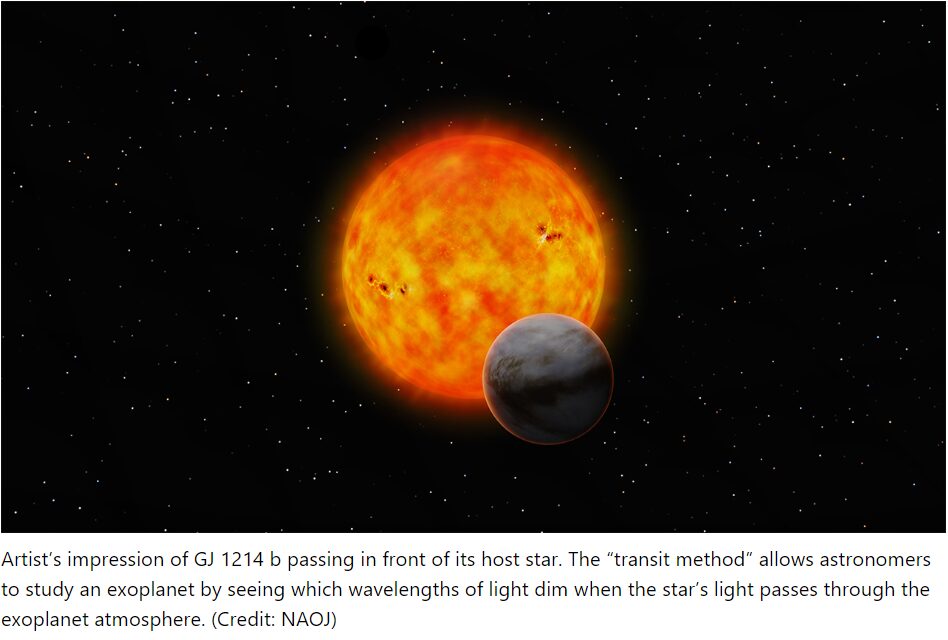
New observational data from the James Webb Space Telescope and simulation models have confirmed a new type of planet unlike anything found in the Solar System. This provides another piece of the puzzle to understand how planets and planetary systems form.

To date, more than 5000 exoplanets have been confirmed around stars other than the Sun.

Many exoplanets are unlike any of the planets in the Solar System, making it difficult to guess their true natures.

One of the most common types of exoplanets falls in a size range between Earth and Neptune.

Astronomers have debated whether these planets are Earth-like rocky planets with thick hydrogen-rich atmospheres, or Neptune-like icy planets surrounded by water-rich atmospheres, called water worlds.

Previous studies have been ...

Read More
First-ever Detection of a Mid-Infrared Flare in SagittariusA*, the Milky Way’s supermassive black hole

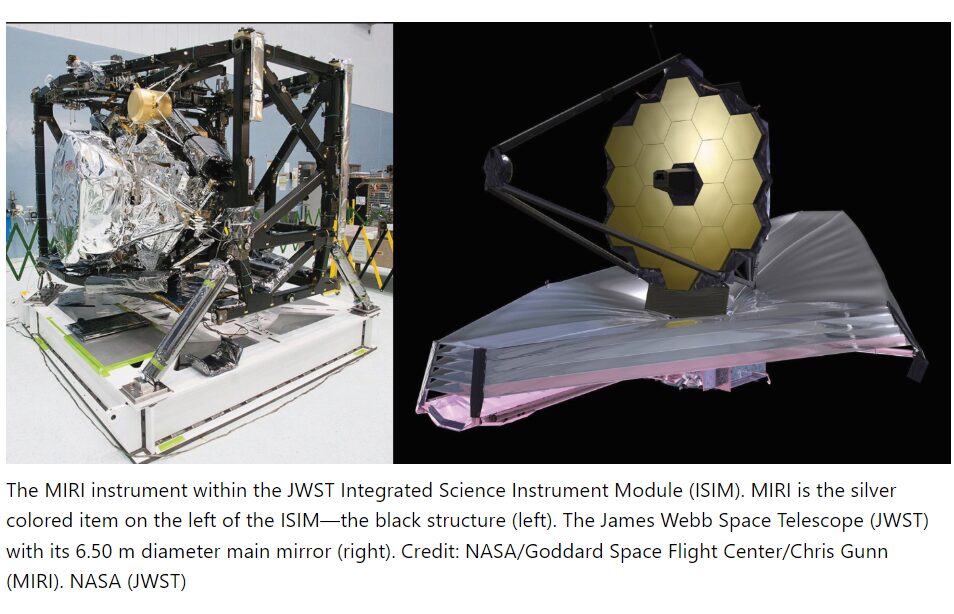
Using the MIRI instrument onboard the James Webb Space Telescope, an international team of scientists made the first-ever detection of a mid-IR flare from Sagittarius A*, the supermassive blackhole at the heart of the Milky Way. In simultaneous radio observations, the team found a radio counterpart of the flare lagging behind in time. The paper is published on the arXiv preprint server.

Scientists have been actively observing Sagittarius A* (Sgr A)—a supermassive black hole roughly 4 million times the mass of the sun— since the early 1990s. Sgr A regularly exhibits flares that can be observed in multiple wavelengths, allowing scientists to see different views of the same flare and better understand how it emits light and how the emission is generated...

Read More

‘What is that?’ Scientists explain White Patch that appears Near Northern Lights

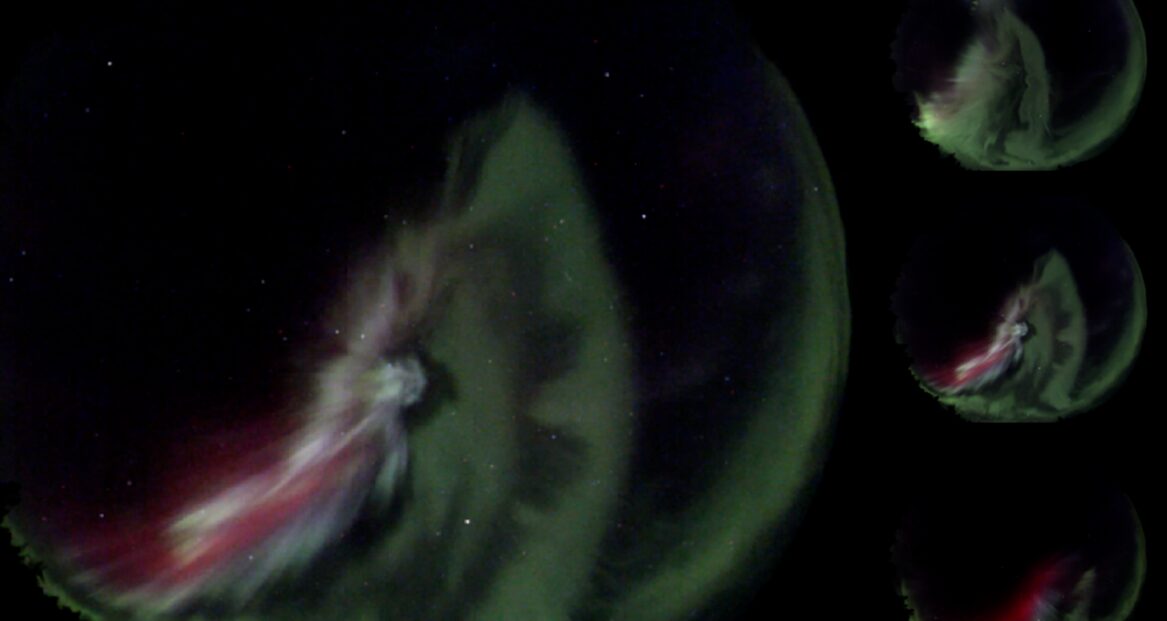
Images of the aurora borealis showing the structured continuum emission.Courtesy Faculty of Science research team

A whitish, gray patch that sometimes appears in the night sky alongside the northern lights has been explained for the first time by researchers at the University of Calgary.

The article, which was published on Dec. 30 in the journal Nature Communications, explores a “structured continuum emission” that’s associated with aurora borealis.

“You’d see this dynamic green aurora, you’d see some of the red aurora in the background and, all of a sudden, you’d see this structured—almost like a patch—gray-toned or white toned-emission connected to the aurora,” says Dr. Emma Spanswick, Ph.D...

Read More

High-Resolution Simulations Explore the Physics of Star Formation

Rocking the magnetic cradle of stellar birth
The new simulations show a cross section of the star and its surrounding disk of gas. In the left image, where the young star is weakly magnetized, gas can be seen flowing freely from the surrounding disk of material to the surface of the protostar. In the right image, material flows along the magnetic field lines towards the star’s poles, in a much more defined flow. Credit: Astronomy & Astrophysics (2024). DOI: 10.1051/0004-6361/202451842

Stars are born in clouds of gas and dust, making it difficult to observe their early development. But researchers at Chalmers have now succeeded in simulating how a star with the mass of the sun absorbs material from the surrounding disk of material—a process called accretion.

The researchers simulated four stars with the same mass but with v...

Read More