Category Astronomy/Space

Lightning strikes kick off a game of electron pinball in space

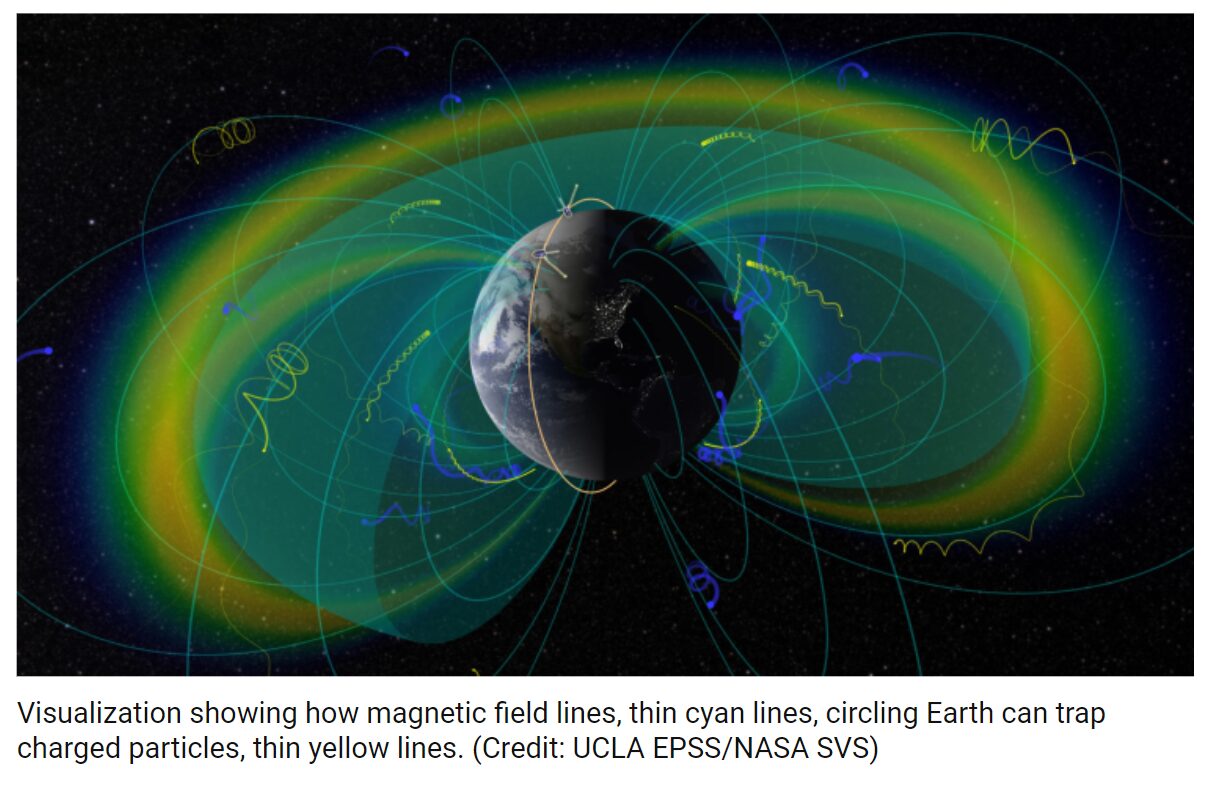
When lightning strikes, the electrons come pouring down. In a new study, researchers at the University of Colorado Boulder, led by an undergraduate student, have discovered a novel connection between weather on Earth and space weather. The team utilized satellite data to reveal that lightning storms on our planet can dislodge particularly high-energy, or “extra-hot,” electrons from the inner radiation belt—a region of space enveloped by charged particles that surround Earth like an inner tube.

The team’s results could help satellites and even astronauts avoid dangerous radiation in space. This is one kind of downpour you don’t want to get caught in, said lead author and undergraduate Max Feinland.

“These particles are the scary ones or what some people call ‘killer electrons,'...

Read More
Astronomers find Webb Data Conflict with Reionization Models

Astronomers Find JWST Data Conflicts with Reionization Models
Simulation of galaxies ionizing hydrogen gas (bright areas) during the epoch of Reionization. Credit: M. Alvarez, R. Kaehler, and T. Abel / European Southern Observatory (ESO).

Reionization is a critical period when the first stars and galaxies changed the physical structure of their surroundings, and eventually the entire universe. Established theories state that this epoch ended around 1 billion years after the Big Bang. However, if calculating this milestone using observations from the James Webb Space Telescope (JWST), reionization would have ended at least 350 million years earlier than expected. That’s according to a new paper published in Monthly Notices of the Royal Astronomical Society: Letters.

Throughout its history, the universe has undergone several major changes...

Read More

NASA’s Hubble watches Jupiter’s Great Red Spot Behave Like a Stress Ball

Astronomers have observed Jupiter’s legendary Great Red Spot (GRS), an anticyclone large enough to swallow Earth, for at least 150 years. But there are always new surprises — especially when NASA’s Hubble Space Telescope takes a close-up look at it.

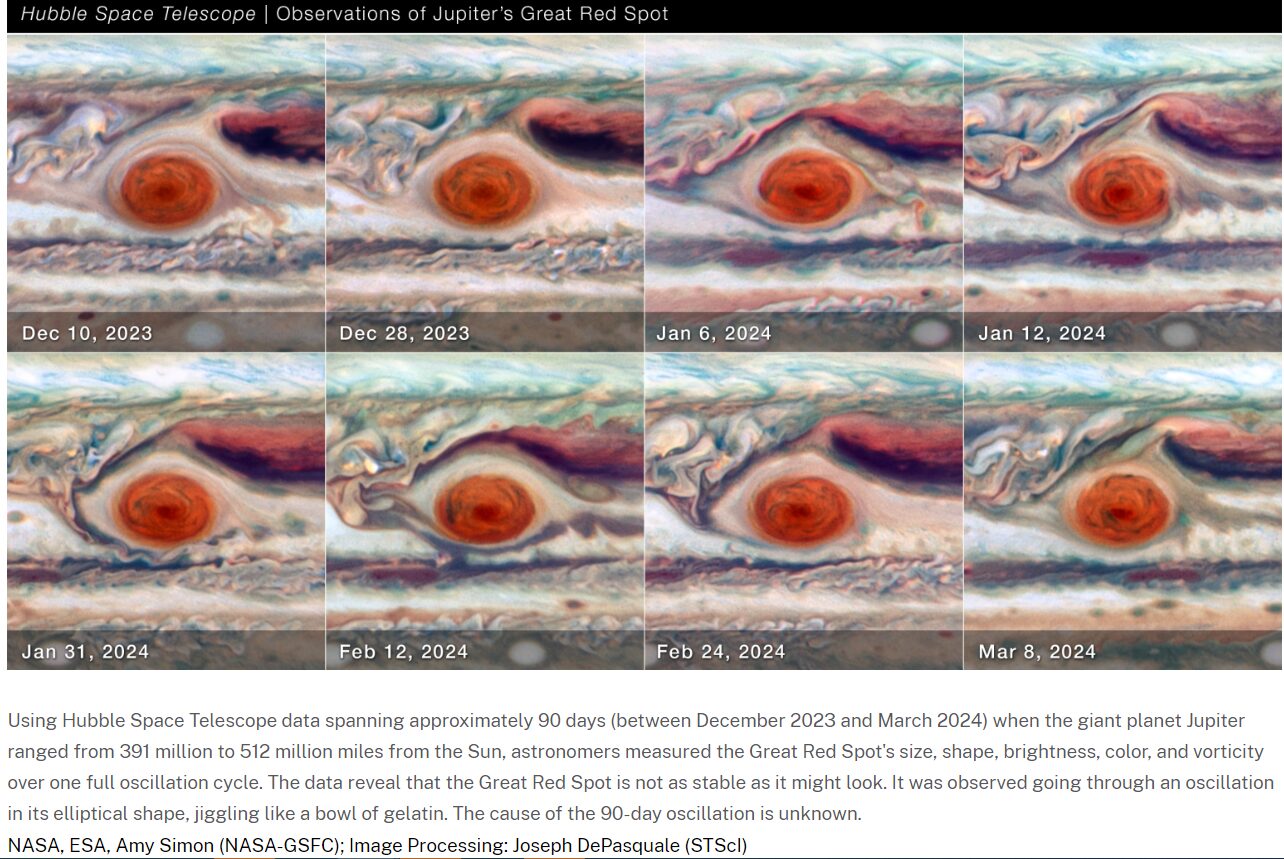
Hubble’s new observations of the famous red storm, collected 90 days between December 2023 to March 2024, reveal that the GRS is not as stable as it might look. The recent data show the GRS jiggling like a bowl of gelatin. The combined Hubble images allowed astronomers to assemble a time-lapse movie of the squiggly behavior of the GRS.

“While we knew its motion varies slightly in its longitude, we didn’t expect to see the size oscillate...

Read More

New Insights into how Mars became Uninhabitable

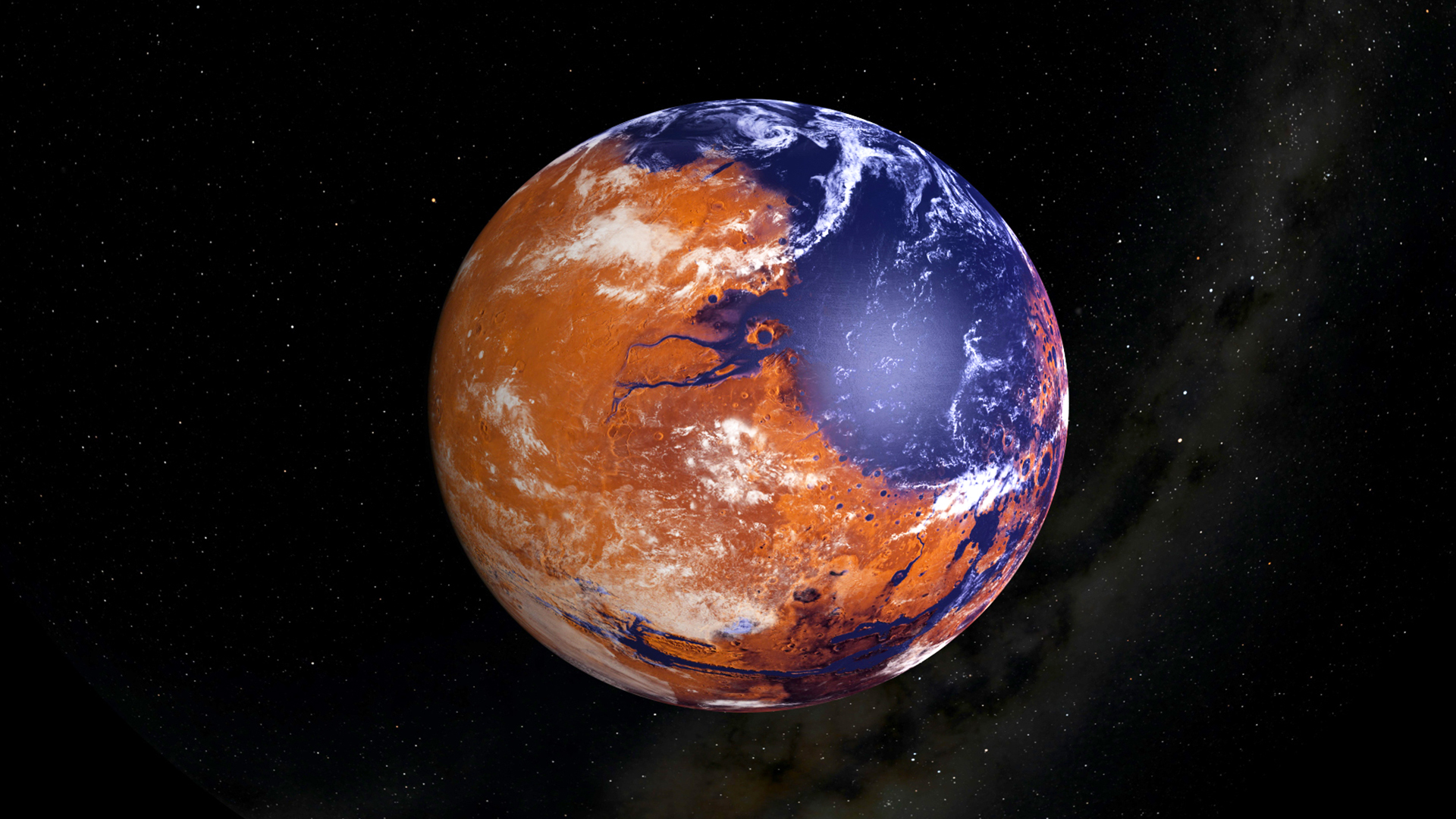
Artist concept image of an early wet Mars.
This is an artist’s concept of an early Mars with liquid water (blue areas) on its surface. Ancient regions on Mars bear signs of abundant water – such as features resembling valleys and deltas, and minerals that only form in the presence of liquid water. Scientists think that billions of years ago, the atmosphere of Mars was much denser and warm enough to form rivers, lakes, and perhaps even oceans of water. As the planet cooled and lost its global magnetic field, the solar wind and solar storms eroded away to space a significant amount of the planet’s atmosphere, turning Mars into the cold, arid desert we see today.
NASA/MAVEN/The Lunar and Planetary Institute

NASA’s Curiosity rover, currently exploring Gale crater on Mars, is providing new details about how the ancient Martian clim...

Read More