Category Astronomy/Space

Space Oddity: Most Distant Rotating Disc Galaxy found

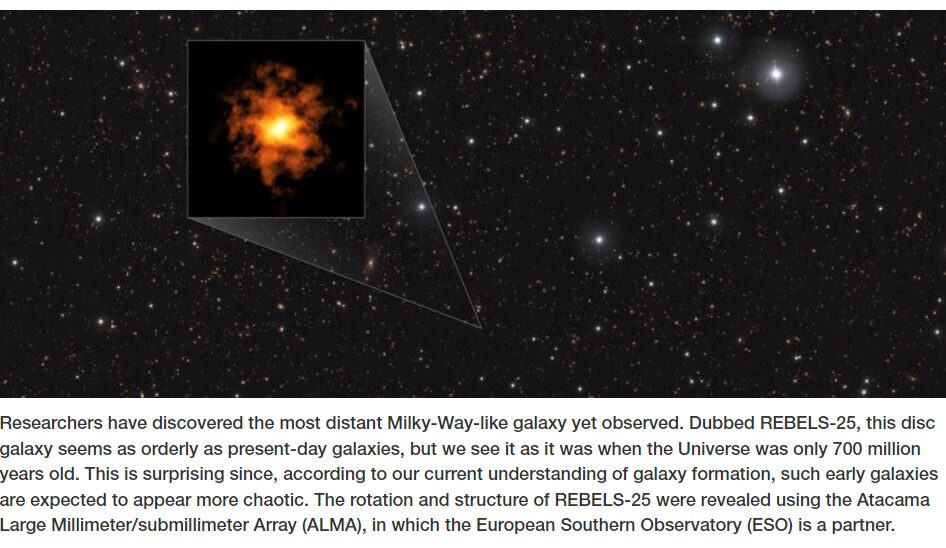
Researchers have discovered the most distant Milky-Way-like galaxy yet observed. Dubbed REBELS-25, this disc galaxy seems as orderly as present-day galaxies, but we see it as it was when the Universe was only 700 million years old. This is surprising since, according to our current understanding of galaxy formation, such early galaxies are expected to appear more chaotic. The rotation and structure of REBELS-25 were revealed using the Atacama Large Millimeter/submillimeter Array (ALMA), in which the European Southern Observatory (ESO) is a partner.

The galaxies we see today have come a long way from their chaotic, clumpy counterparts that astronomers typically observe in the early Universe...

Read More
Nuclear Rockets could Travel to Mars in Half the Time, but designing the Reactors that would Power them isn’t

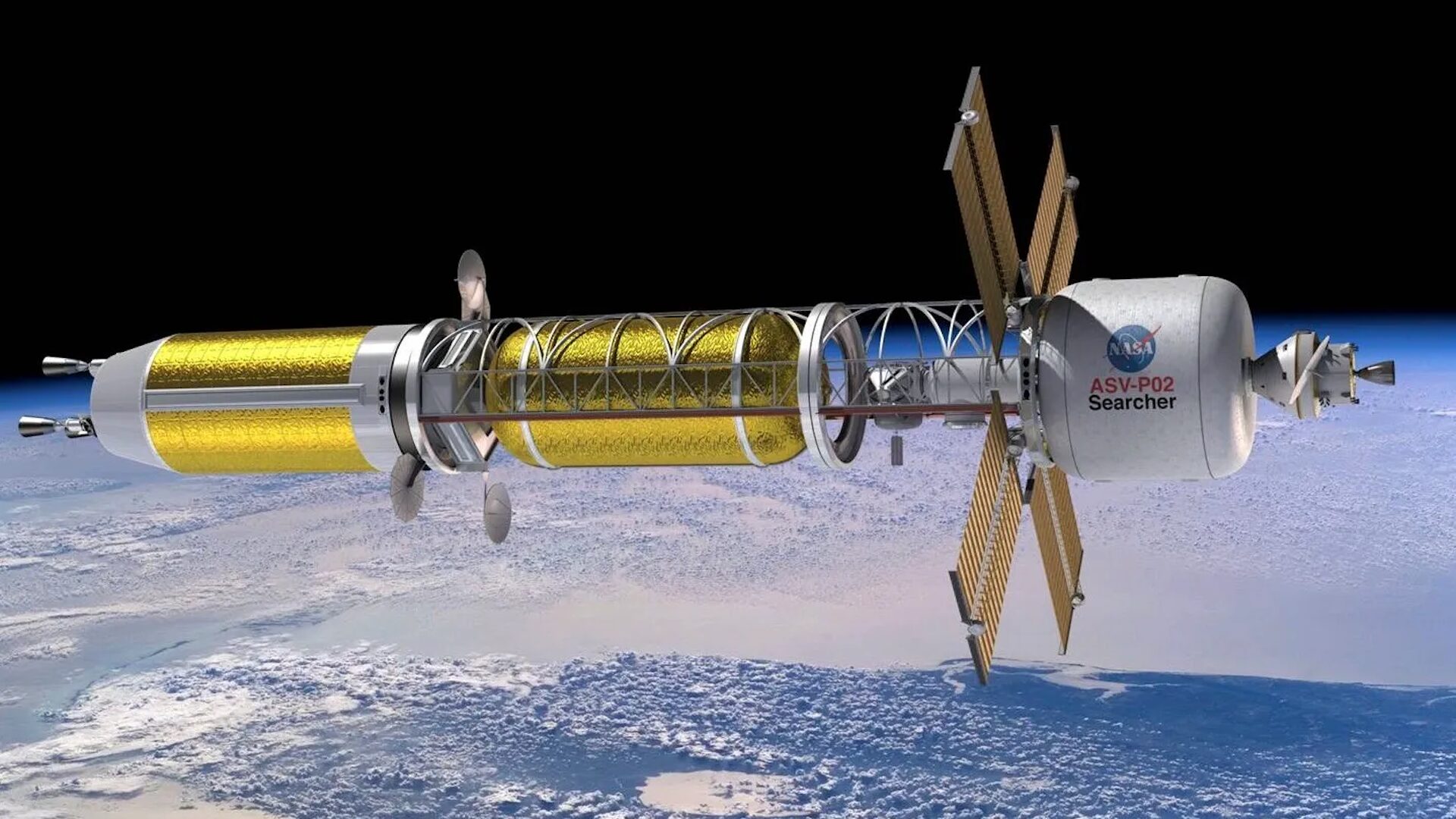
Nuclear-powered rockets could one day enable faster space travel. NASA

NASA plans to send crewed missions to Mars over the next decade—but the 140 million-mile (225 million-kilometer) journey to the red planet could take several months to years round trip.

This relatively long transit time is a result of the use of traditional chemical rocket fuel. An alternative technology to the chemically propelled rockets the agency develops now is called nuclear thermal propulsion, which uses nuclear fission and could one day power a rocket that makes the trip in just half the time.

Nuclear fission involves harvesting the incredible amount of energy released when an atom is split by a neutron. This reaction is known as a fission reaction...

Read More

Investigating the possibility of using Asteroid material to Grow Edible Biomass for Astronauts

asteroid
Credit: Pixabay/CC0 Public Domain

A team of engineers and planetary scientists at Western University’s Institute for Earth and Space Exploration, in Canada, has found that it might be possible to produce food for space travelers by feeding bacteria asteroid material, resulting in the growth of an edible biomass.

In their paper published in the International Journal of Astrobiology, the group describes how they tested the idea by calculating how much asteroid material would be needed and what they found.

Prior research has shown that future spacecraft traveling to remote parts of the solar system or beyond could not possibly hold enough food to sustain astronauts. Such craft could not support the growth of enough food onboard, either.

In this new study, the researchers propose ...

Read More

Lunar Mission Data Analysis Finds Widespread Evidence of Ice Deposits

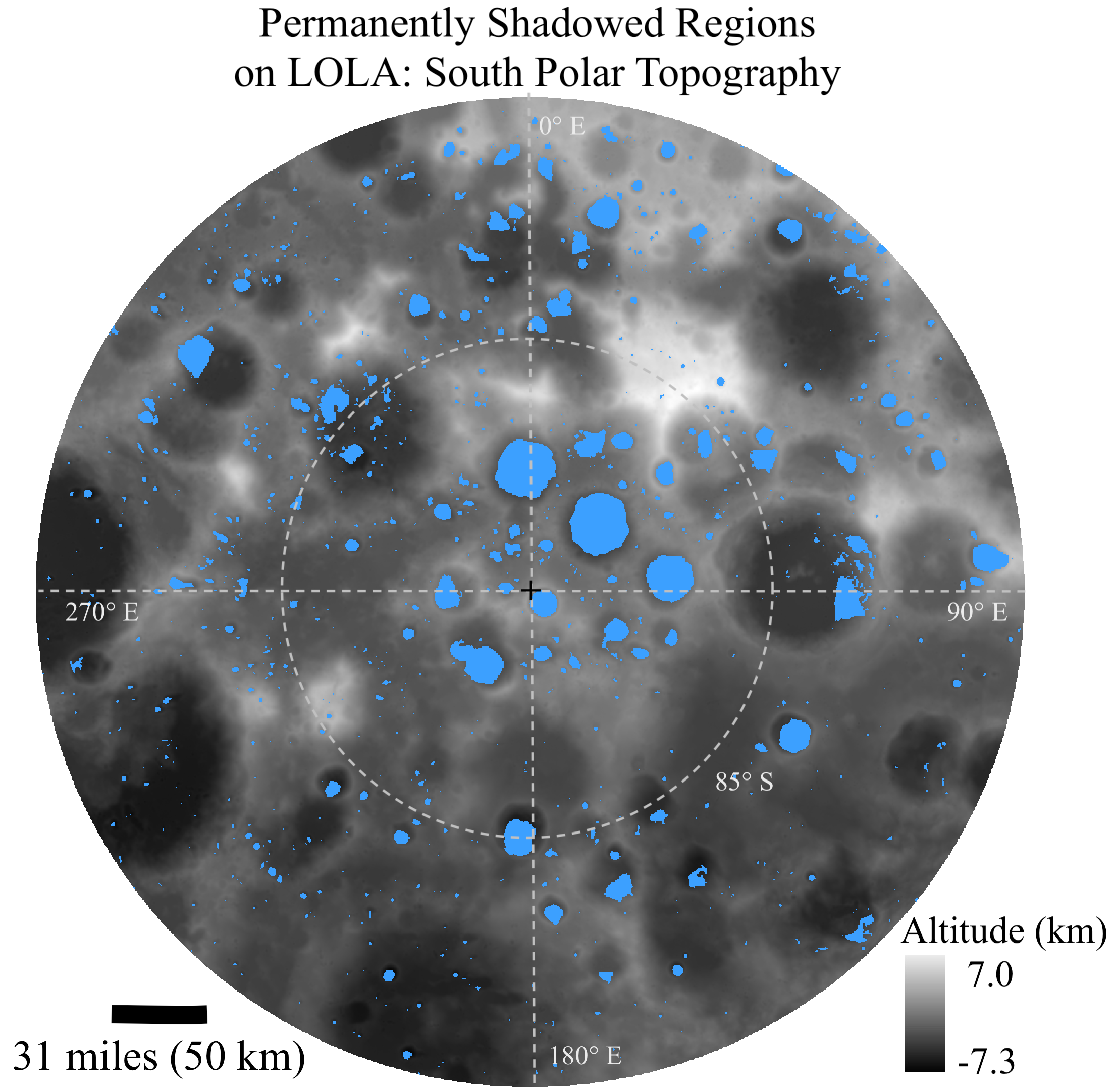
Illustration of permanently shadowed regions near the lunar south pole.
This illustration shows the distribution of permanently shadowed regions (in blue) on the Moon poleward of 80 degrees South latitude. They are superimposed on a digital elevation map of the lunar surface (grey) from the Lunar Orbiter Laser Altimeter instrument on board NASA’s Lunar Reconnaissance Orbiter spacecraft.
NASA/GSFC/Timothy P. McClanahan

Deposits of ice in lunar dust and rock (regolith) are more extensive than previously thought, according to a new analysis of data from NASA’s LRO (Lunar Reconnaissance Orbiter) mission. Ice would be a valuable resource for future lunar expeditions. Water could be used for radiation protection and supporting human explorers, or broken into its hydrogen and oxygen components to make rocket fuel, energy, and breathable air.

Prior studies fou...

Read More