Category Astronomy/Space

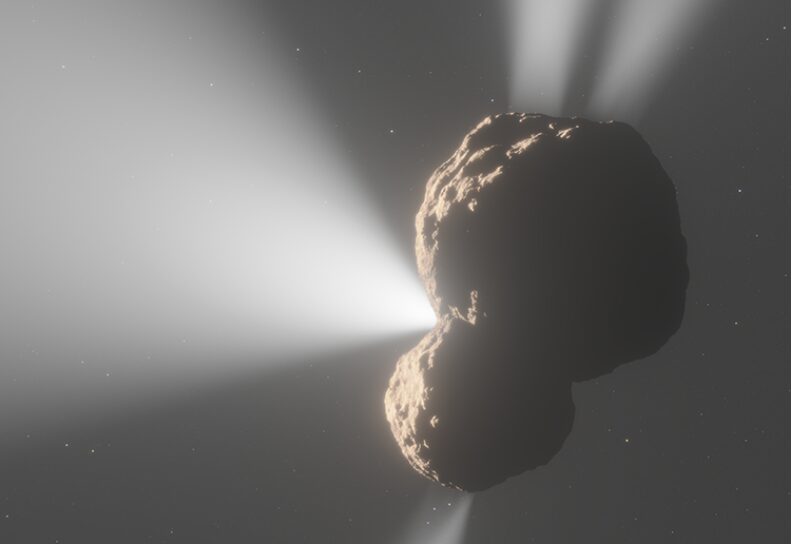
Webb Telescope Detects Unusual Gas Jets from Centaur 29P

Centaur 29P Outgassing (Artist’s Concept)

Inspired by the half-human, half-horse creatures that are part of Ancient Greek mythology, the field of astronomy has its own kind of centaurs: distant objects orbiting the sun between Jupiter and Neptune. NASA’s James Webb Space Telescope has mapped the gases spewing from one of these objects, suggesting a varied composition and providing new insights into the formation and evolution of the solar system.

Centaurs are former trans-Neptunian objects that have been moved inside Neptune’s orbit by subtle gravitational influences of the planets in the last few million years, and may eventually become short-period comets...

Read More
Scientists Discover Planet Orbiting Closest Single Star to our Sun

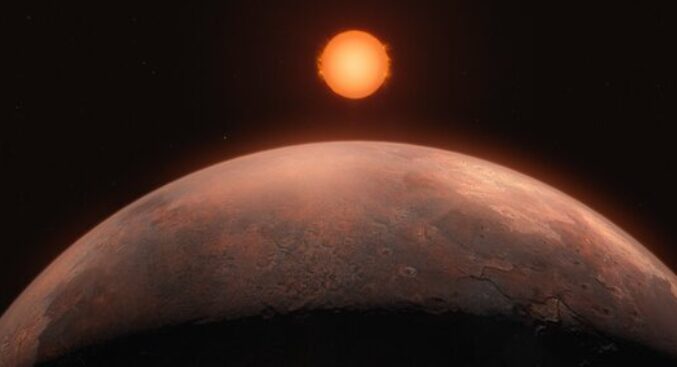
Using the European Southern Observatory’s Very Large Telescope (ESO’s VLT), astronomers have discovered an exoplanet orbiting Barnard’s star, the closest single star to our sun. On this newly discovered exoplanet, which has at least half the mass of Venus, a year lasts just over three Earth days. The team’s observations also hint at the existence of three more exoplanet candidates, in various orbits around the star.

Located just six light-years away, Barnard’s star is the second-closest stellar system—after Alpha Centauri’s three-star group—and the closest individual star to us. Owing to its proximity, it is a primary target in the search for Earth-like exoplanets. Despite a promising detection back in 2018, no planet orbiting Barnard’s star had been confirmed until now.

The...

Read More

Our Cosmic Neighborhood May be 10x Larger

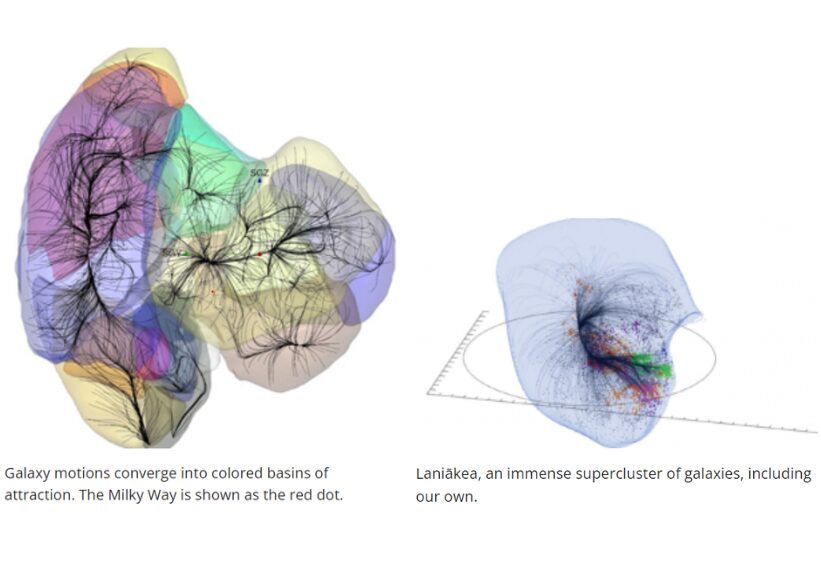
The Cosmicflows team has been studying the movements of 56,000 galaxies, revealing a potential shift in the scale of our galactic basin of attraction. A team of international researchers guided by astronomers at University of Hawai’i Institute for Astronomy is challenging our understanding of the universe with groundbreaking findings that suggest our cosmic neighborhood may be far larger than previously thought.

A decade ago, the team concluded that our galaxy, the Milky Way, resides within a massive basin of attraction called Laniākea, stretching 500 million light-years across.

However, new data suggests that this understanding may only scratch the surface.

There is now a 60% probability that we are part of an even grander structure, potentially 10 times larger in volume, ...

Read More

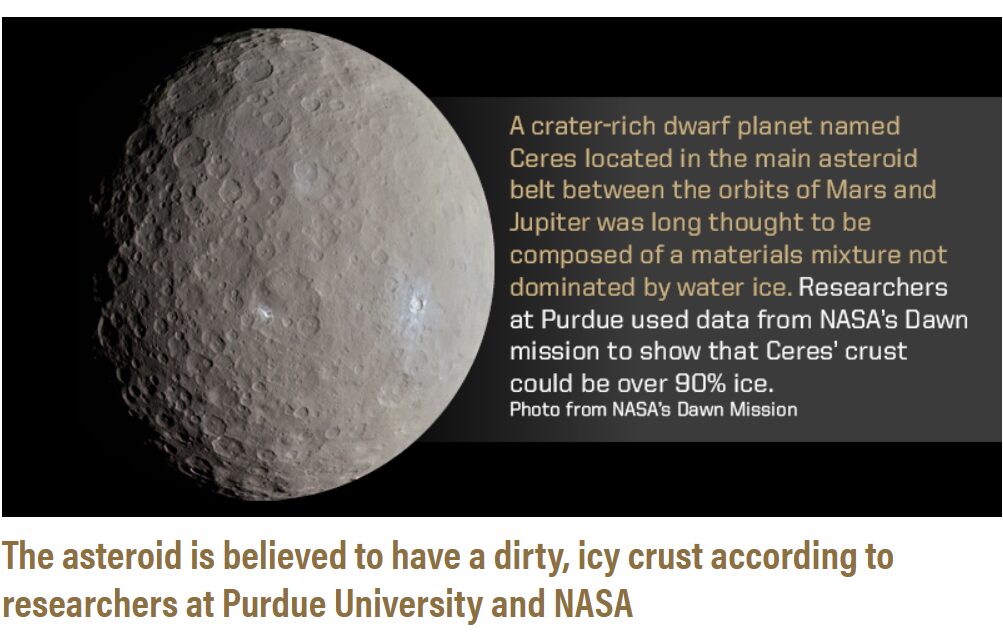
Asteroid Ceres is a Former Ocean World that Slowly Formed into a Giant, Murky Icy Orb

Since the first sighting of the first-discovered and largest asteroid in our solar system was made in 1801 by Giuseppe Piazzi, astronomers and planetary scientists have pondered the make-up of this asteroid/dwarf planet. Its heavily battered and dimpled surface is covered in impact craters. Scientists have long argued that visible craters on the surface meant that Ceres could not be very icy.

Researchers at Purdue University and the NASA’s Jet Propulsion Lab (JPL) now believe Ceres is a very icy object that possibly was once a muddy ocean world. This discovery that Ceres has a dirty ice crust is led by Ian Pamerleau, Ph.D...

Read More