Category Astronomy/Space

ESO Telescope Captures the Most Detailed Infrared Map ever of our Milky Way

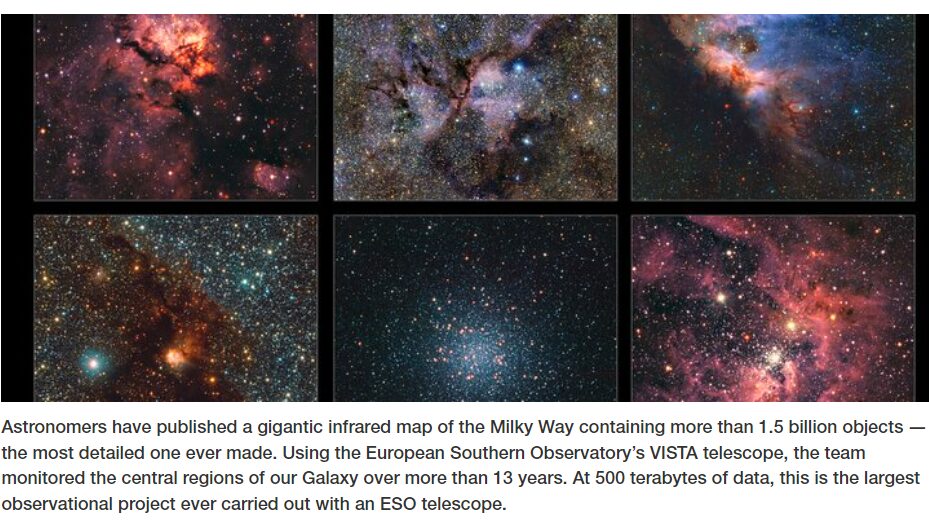
Astronomers have published a gigantic infrared map of the Milky Way containing more than 1.5 billion objects — the most detailed one ever made. Using the European Southern Observatory’s VISTA telescope, the team monitored the central regions of our Galaxy over more than 13 years. At 500 terabytes of data, this is the largest observational project ever carried out with an ESO telescope.

“We made so many discoveries, we have changed the view of our Galaxy forever,” says Dante Minniti, an astrophysicist at Universidad Andrés Bello in Chile who led the overall project.

This record-breaking map comprises 200,000 images taken by ESO’s VISTA — the Visible and Infrared Survey Telescope for Astronomy...

Read More
Nuking a Huge Asteroid could Save Earth, Lab Experiment Suggests

A big asteroid could threaten life on Earth -- but nuclear bombs could come to the rescue, a new laboratory experiment suggests
A big asteroid could threaten life on Earth — but nuclear bombs could come to the rescue, a new laboratory experiment suggests.

The biggest real-life test of our planetary defenses was carried out in 2022, when NASA’s fridge-sized DART spacecraft smashed into a 160-metre (525-feet) wide asteroid, successfully knocking it well off course.

But for bigger asteroids, merely crashing spaceships into them will probably not do the trick.

When the roughly 10-kilometer wide Chicxulub asteroid struck the Yucatan peninsula around 66 million years ago, it is believed to have plunged Earth into darkness, sent kilometers-high tsunamis rippling around the globe and killed three quarters of all life—including wiping out the dinosaurs.

We humans are hoping to avoid a similar fate.

The...

Read More

What happens to the Climate when Earth Passes Through Interstellar Clouds?

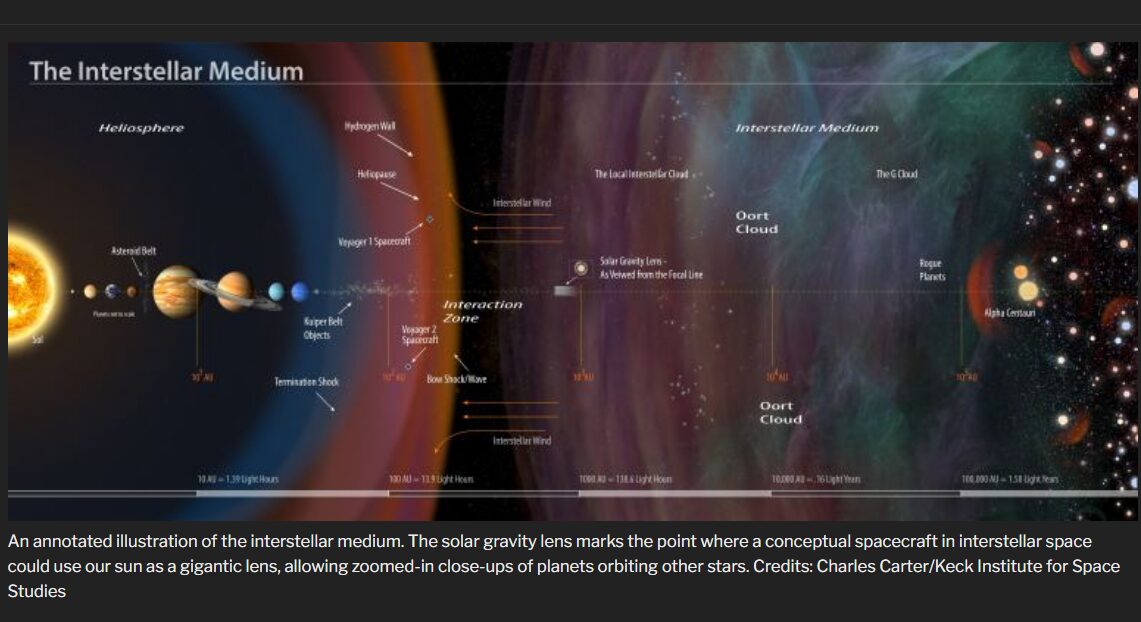
Noctilucent clouds were once thought to be a fairly modern phenomenon. A team of researchers recently calculated that Earth and the entire solar system may well have passed through two dense interstellar clouds, causing global noctilucent clouds that may have driven an ice age.

The event is thought to have happened 7 million years ago and would have compressed the heliosphere, exposing Earth to the interstellar medium.

Interstellar clouds are vast regions of gas and dust between the stars within galaxies. They are mostly made up of hydrogen along with a little helium and trace elements of heavier elements.

They are a key part of the life cycle of stars, providing the materials for new stars to be formed, and are seeded with elements after stars die...

Read More

Low Gravity in Space Travel found to Weaken and Disrupt Normal Rhythm in Heart Muscle Cells

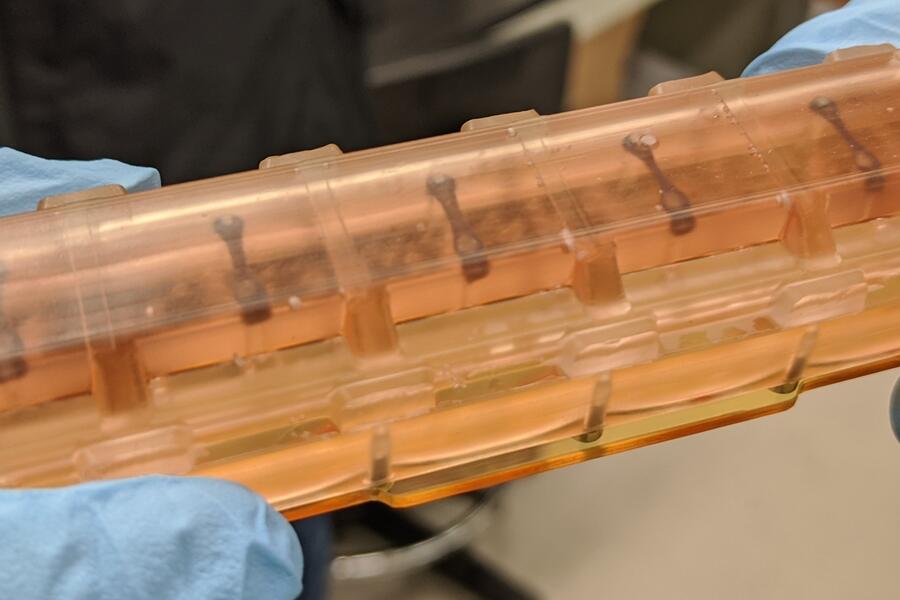
Heart tissues within one of the launch-ready chambers, held by two hands.
Heart tissues within one of the launch-ready chambers.
Credit:Jonathan Tsui

Johns Hopkins Medicine scientists who arranged for 48 human bioengineered heart tissue samples to spend 30 days at the International Space Station report evidence that the low gravity conditions in space weakened the tissues and disrupted their normal rhythmic beats when compared to Earth-bound samples from the same source.

The scientists said the heart tissues “really don’t fare well in space,” and over time, the tissues aboard the space station beat about half as strongly as tissues from the same source kept on Earth.

The findings, they say, expand scientists’ knowledge of low gravity’s potential effects on astronauts’ survival and health during long space missions, and they may serve as models for study...

Read More