Category Astronomy/Space

Volcanoes may help Reveal Interior Heat on Jupiter Moon

Nearly 400 active volcanoes punctuate the Jupiter moon Io. Using flyby data from NASA’s Juno mission that examines the volcanoes, doctoral student Madeline Pettine led a group of Cornell astronomers to study a fundamental process in planetary formation and evolution: tidal heating.

By staring into the hellish landscape of Jupiter’s moon Io – the most volcanically active location in the solar system – Cornell University astronomers have been able to study a fundamental process in planetary formation and evolution: tidal heating.

“Tidal heating plays an important role in the heating and orbital evolution of celestial bodies,” said Alex Hayes, professor of astronomy.

“It provides the warmth necessary to form and sustain subsurface oceans in the moons around giant planets like Jupi...

Read More
Organic Matter on Mars was formed from Atmospheric Formaldehyde

Organic Matter on Mars was Formed from Atmospheric Formaldehyde

Researchers have developed a Martian atmospheric evolution model to propose a new theory about Mars’s past. Although Mars is currently a cold, dry planet, geological evidence suggests that liquid water existed there around 3 to 4 billion years ago. Where there is water, there is usually life. In their quest to answer the burning question about life on Mars, researchers at Tohoku University created a detailed model of organic matter production in the ancient Martian atmosphere.

Organic matter refers to the remains of living things such as plants and animals, or the byproduct of certain chemical reactions.

Whatever the case, the stable carbon isotope ratio (13C/12C) found in organic matter provides valuable clues about...

Read More

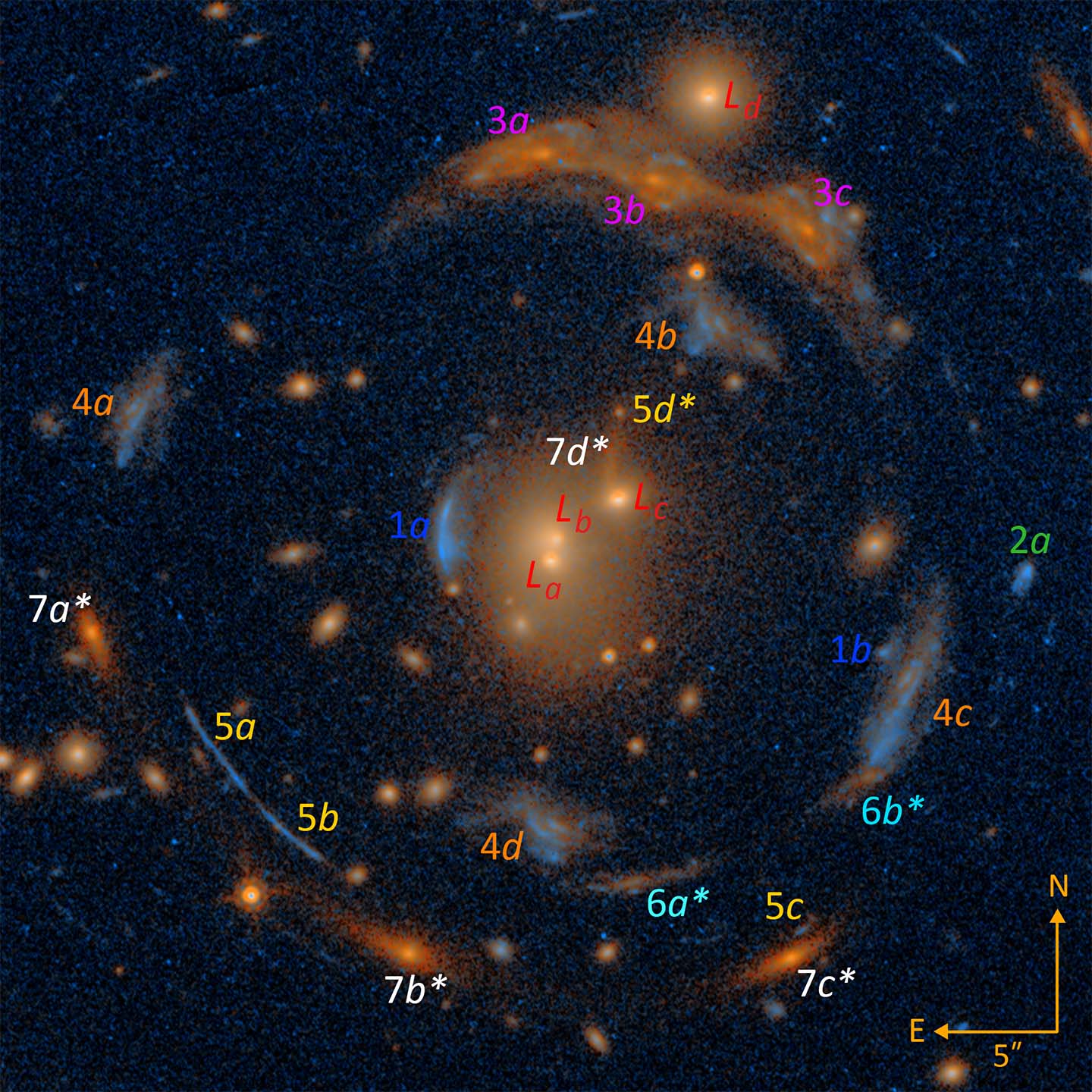
Magnifying Deep Space Through the ‘Carousel Lens’

Annotated Hubble Space Telescope image of the Carousel Lens, taken in two 10-minute exposures, one using an optical filter and another using an infrared filter.
Hubble Space Telescope image of the Carousel Lens, taken in two 10-minute exposures, one using an optical filter and another using an infrared filter. The “L” indicators near the center (La, Lb, Lc, and Ld) show the most massive galaxies in the lensing cluster, located 5 billion light years away. Seven unique galaxies (numbered 1 through 7) – located an additional 2.6 to 7 billion light years beyond the lens – appear in multiple, distorted “fun-house mirror” iterations (indicated by each number’s letter index, e.g., a through d), as seen through the lens. (Credit: Credit: William Sheu (UCLA) using Hubble Space Telescope data.)

A newly discovered cluster-scale strong gravitational lens, with a rare alignment of seven background lensed galaxies, provides a unique opportuni...

Read More

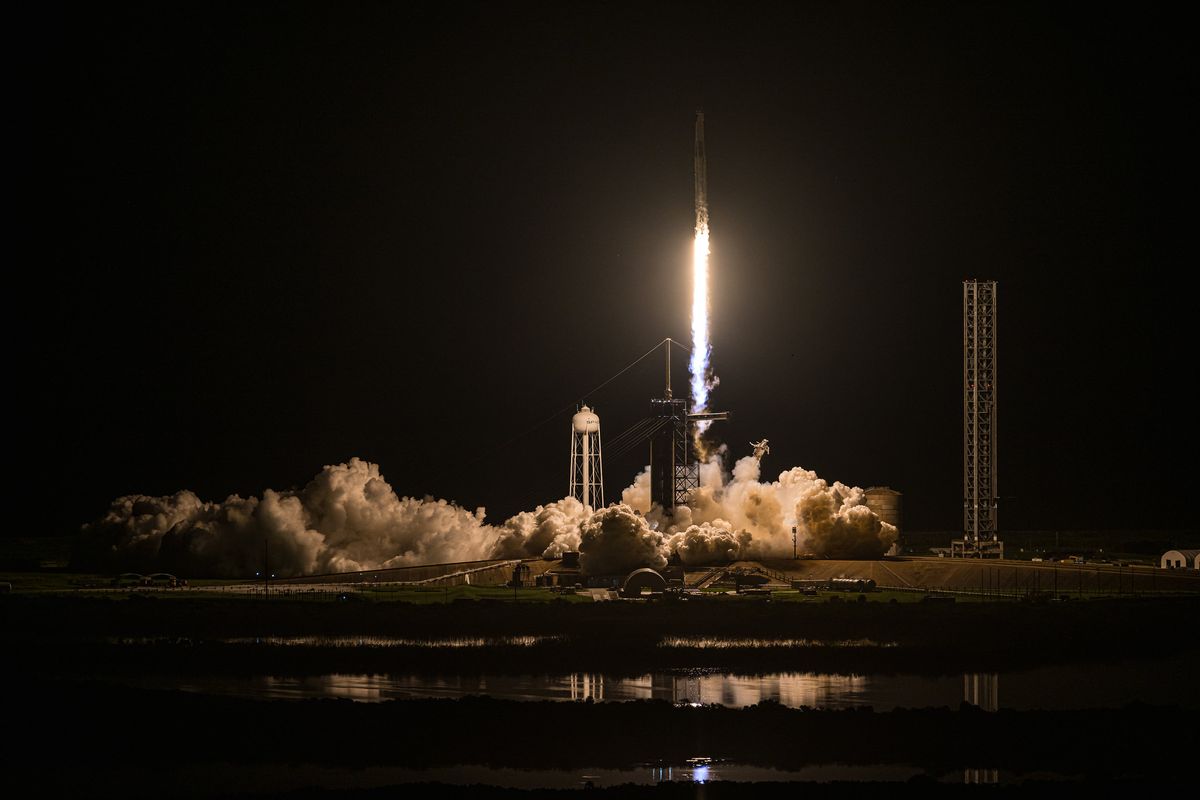
Polaris Dawn brings new areas of Research, Medical Care

Spacecraft launch, spacecraft rising
This week’s Polaris Dawn launch and civilian spacewalk provide new opportunities for space medicine research, says UCF’s Dr. Emmanuel Urquieta. Photo by Polaris Program/John Kraus.

The launch of Polaris Dawn from Kennedy Space Center includes the first civilian commercial spacewalk and other factors that will be firsts for space medicine research. And that’s why Emmanuel Urquieta, an internationally recognized space medicine expert who recently joined UCF’s College of Medicine, is especially excited about this latest mission.

The spacecraft is flying up to 870 miles above Earth—the highest orbit flown in the last half century...

Read More