Category Astronomy/Space

Formation of Super-Earths is Limited Near Metal-Poor Stars – New study may help the search for life beyond Earth

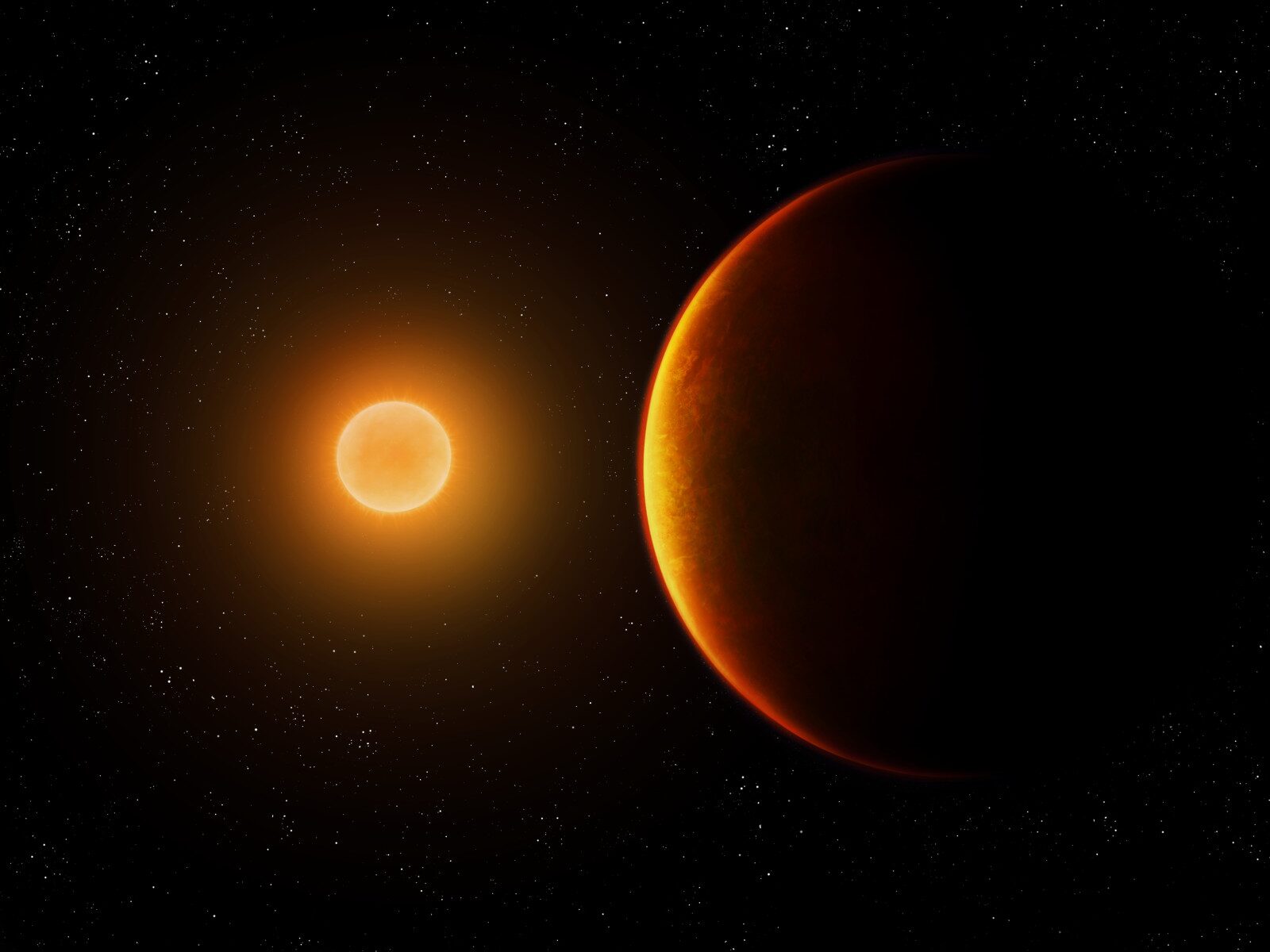
In a new study, astronomers report novel evidence regarding the limits of planet formation, finding that after a certain point, planets larger than Earth have difficulty forming near low-metallicity stars.

Using the sun as a baseline, astronomers can measure when a star formed by determining its metallicity, or the level of heavy elements present within it. Metal-rich stars or nebulas formed relatively recently, while metal-poor objects were likely present during the early universe.

Previous studies found a weak connection between metallicity rates and planet formation, noting that as a star’s metallicity goes down, so, too, does planet formation for certain planet populations, like sub-Saturns or sub-Neptunes.

Yet this work is the first to observe that under current theories...

Read More
AI Shines a New Light on Exoplanets

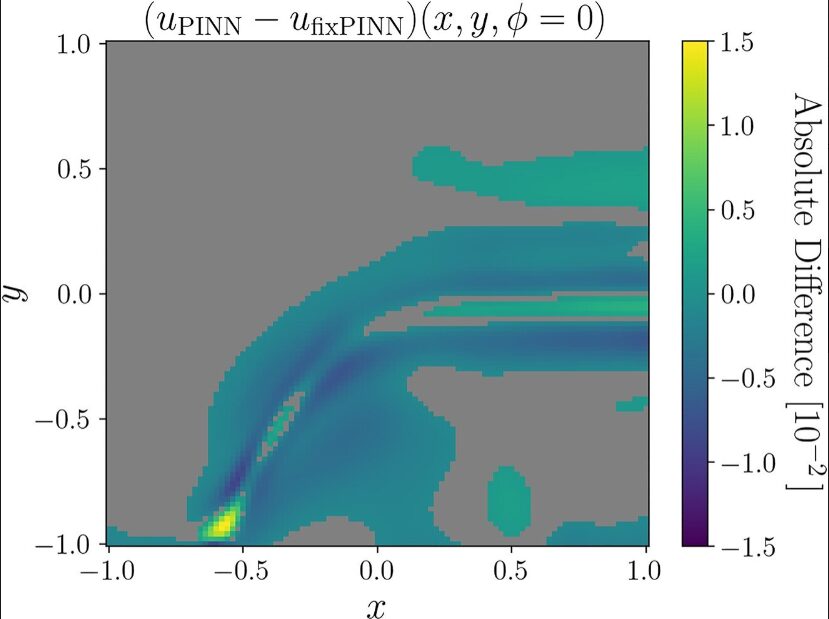
Comparison of the solution from the scattering PINN with a higher accuracy PINN with fixed parameters. Credit: Monthly Notices of the Royal Astronomical Society (2024). DOI: 10.1093/mnras/stae1872

Researchers from LMU, the ORIGINS Excellence Cluster, the Max Planck Institute for Extraterrestrial Physics (MPE), and the ORIGINS Data Science Lab (ODSL) have made an important breakthrough in the analysis of exoplanet atmospheres.

Using physics-informed neural networks (PINNs), they have managed to model the complex light scattering in the atmospheres of exoplanets with greater precision than has previously been possible.

This method opens up new opportunities for the analysis of exoplanet atmospheres, especially with regard to the influence of clouds, and could significantly improv...

Read More

NASA’s Hubble, MAVEN help Solve the Mystery of Mars’s Escaping Water

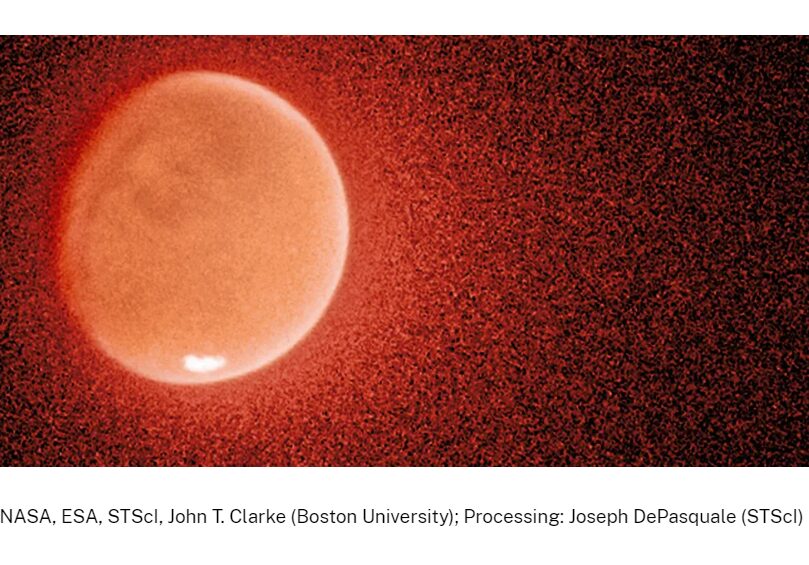
Mars was once a very wet planet, as is evident in its surface geological features. Scientists know that over the last 3 billion years, at least some water went deep underground, but what happened to the rest? Now, NASA’s Hubble Space Telescope and MAVEN (Mars Atmosphere and Volatile Evolution) missions are helping unlock that mystery.

“There are only two places water can go. It can freeze into the ground, or the water molecule can break into atoms, and the atoms can escape from the top of the atmosphere into space,” explained study leader John Clarke of the Center for Space Physics at Boston University in Massachusetts. “To understand how much water there was and what happened to it, we need to understand how the atoms escape into space.”

Clarke and his team combined data from H...

Read More

Distorted Galaxy Forming Cosmic Question Mark

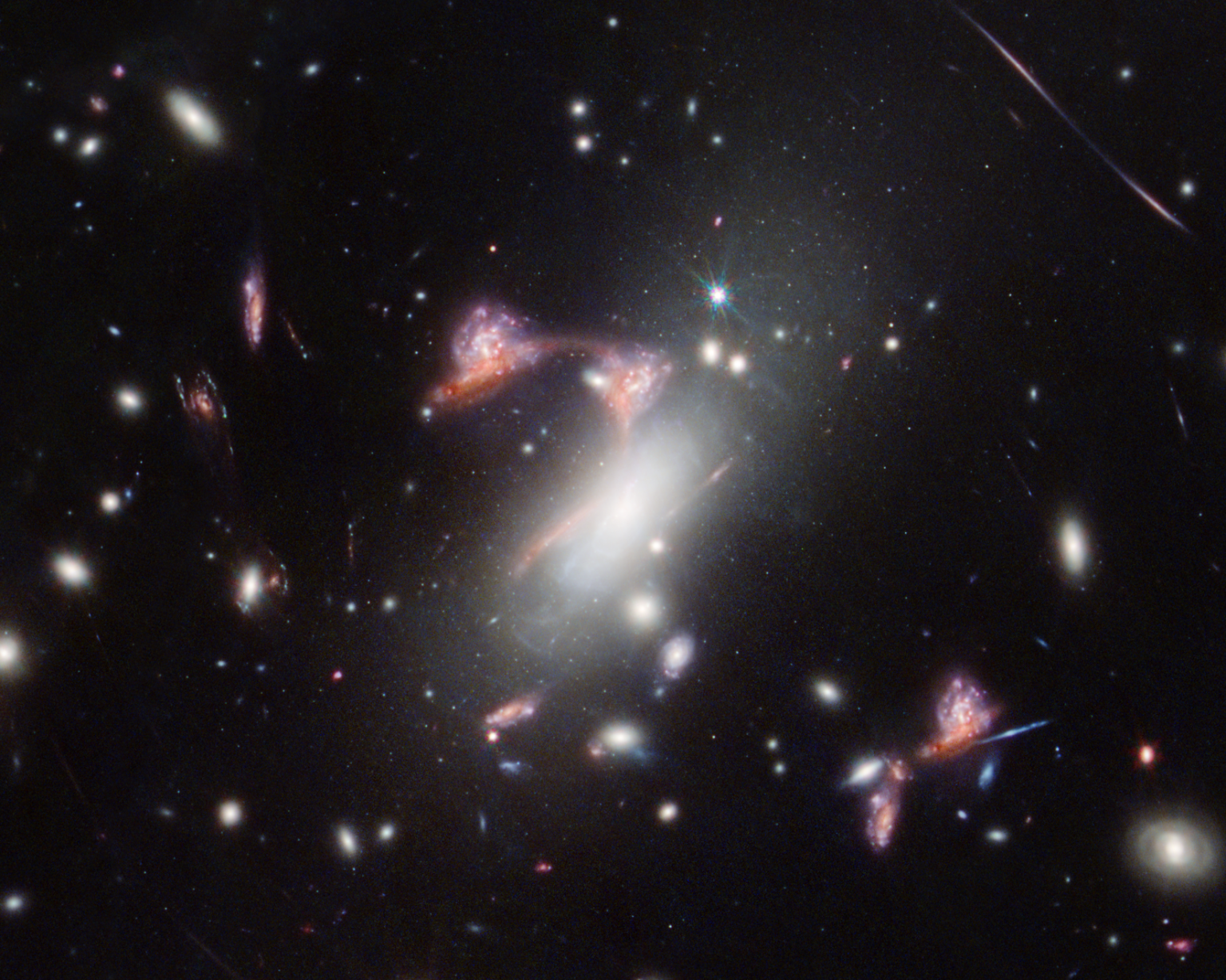
The galaxy cluster MACS-J0417.5-1154 is so massive it is warping the fabric of space-time and distorting the appearance of galaxies behind it, an effect known as gravitational lensing. This natural phenomenon magnifies distant galaxies and can also make them appear in an image multiple times, as NASA’s James Webb Space Telescope saw here. Two distant, interacting galaxies — a face-on spiral and a dusty red galaxy seen from the side — appear multiple times, tracing a familiar shape across the sky. Active star formation, and the face-on galaxy’s remarkably intact spiral shape, indicate that these galaxies’ interaction is just beginning.
NASA, ESA, CSA, STScI, V. Estrada-Carpenter (Saint Mary’s University).

It’s 7 billion years ago, and the universe’s heyday of star formation is ...

Read More