Category Astronomy/Space

Gigantic Asteroid Impact Shifted the Axis of Solar System’s Biggest Moon

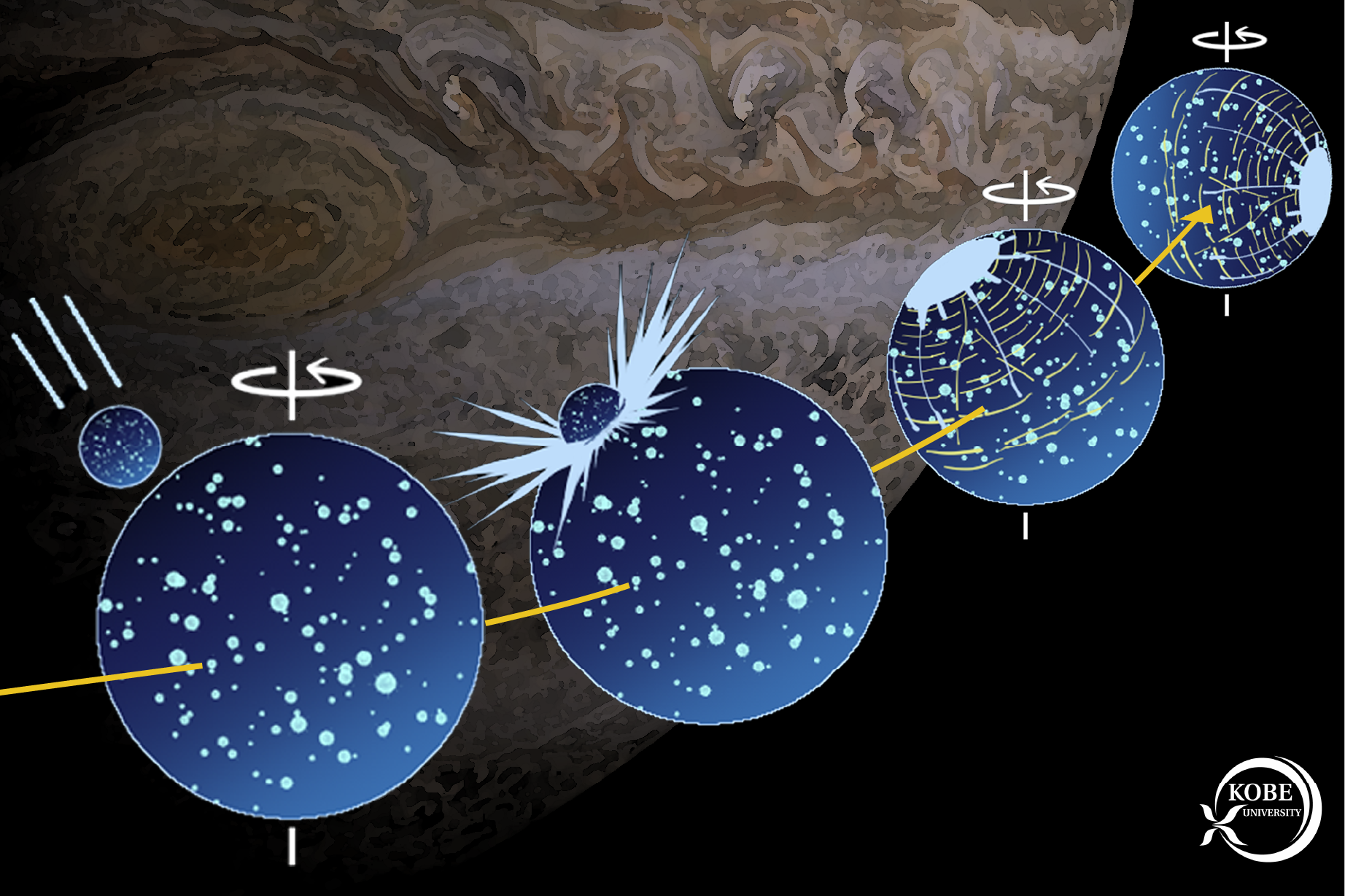
Kobe University HIRATA Naoyuki was the first to realize that the location of an asteroid impact on Jupiter’s moon Ganymede is almost precisely on the meridian farthest away from Jupiter. This implied that Ganymede had undergone a reorientation of its rotational axis and allowed Hirata to calculate what kind of impact could have caused this to happen. © HIRATA Naoyuki (CC BY)

Around 4 billion years ago, an asteroid hit the Jupiter moon Ganymede. Now, a Kobe University researcher realized that the Solar System’s biggest moon’s axis has shifted as a result of the impact, which confirmed that the asteroid was around 20 times larger than the one that ended the age of the dinosaurs on Earth, and caused one of the biggest impacts with clear traces in the Solar System.

Ganymede is the la...

Read More
Q&A: Scientist discusses the MESSENGER mission to Mercury by Carnegie Institution for Science

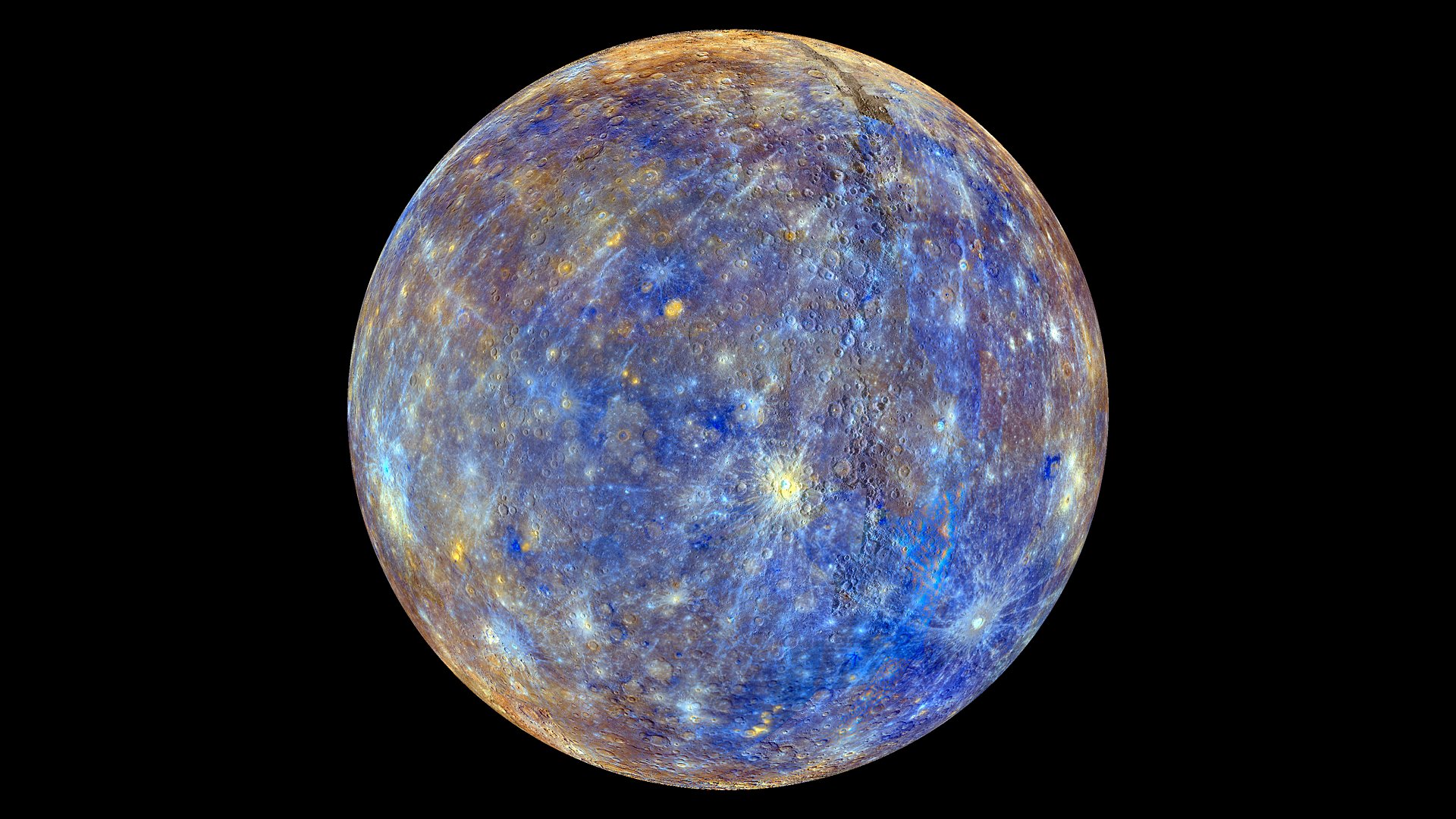
planet mercury
Credit: CC0 Public Domain

Twenty years ago, the MESSENGER mission revolutionized our understanding of Mercury. We sat down with project head and former Carnegie Science director Sean Solomon to talk about how the mission came together and the groundbreaking work it enabled.

Q: As the principal investigator of the MESSENGER mission, what were your personal highlights or proudest moments throughout the mission’s duration?
Sean Solomon: There were many personal highlights for me during the MESSENGER mission, beginning with our initial selection by NASA in 1999 and culminating in the publication by the MESSENGER science team of all of the findings from our mission in a book published nearly two decades later.

The most challenging events in any planetary orbiter mission are launch and ...

Read More

Six New Rogue Worlds: Star Birth Clues

Webb discovers six new
This stunning new mosaic of images from the NASA/ESA/CSA James Webb Space Telescope showcases the nearby star-forming cluster, NGC 1333. Credit: ESA/Webb, NASA & CSA, A. Scholz, K. Muzic, A. Langeveld, R. Jayawardhana

The James Webb Space Telescope has spotted six likely rogue worlds — objects with planet-like masses but untethered from any star’s gravity — including the lightest ever identified with a dusty disk around it.

The elusive objects offer new evidence that the same cosmic processes that give birth to stars may also play a common role in making objects only slightly bigger than Jupiter.

The James Webb Space Telescope has spotted six likely rogue worlds — objects with planetlike masses but untethered from any star’s gravity — including the lightest ever identified with a...

Read More

University of Florida Professor to Fly Blue Origin New Shepard on Mission for NASA

Earth
Credit: CC0 Public Domain

University of Florida horticulture science professor Rob Ferl is going where some men have gone before, including William Shatner and Jeff Bezos, but he’s bringing along some experimental plant life for NASA.

Ferl, a researcher within UF’s Institute of Food and Agricultural Sciences, is also the director of UF’s new Astraeus Space Institute. He is joining five other people on the launch of Blue Origin’s suborbital New Shepard rocket today for what will be its eighth human spaceflight. Dubbed NS-26, the capsule is set for liftoff as early as 9:00 a.m. EDT from Blue Origin’s West Texas launch facility.

Along for the ride will be a species of plant called Arabidopsis thaliana. Ferl will be looking at how its genes adapt on the way to space.

“Space is a c...

Read More