Category Biology/Biotechnology

Researchers Identify Brain Region involved in Control of Attention

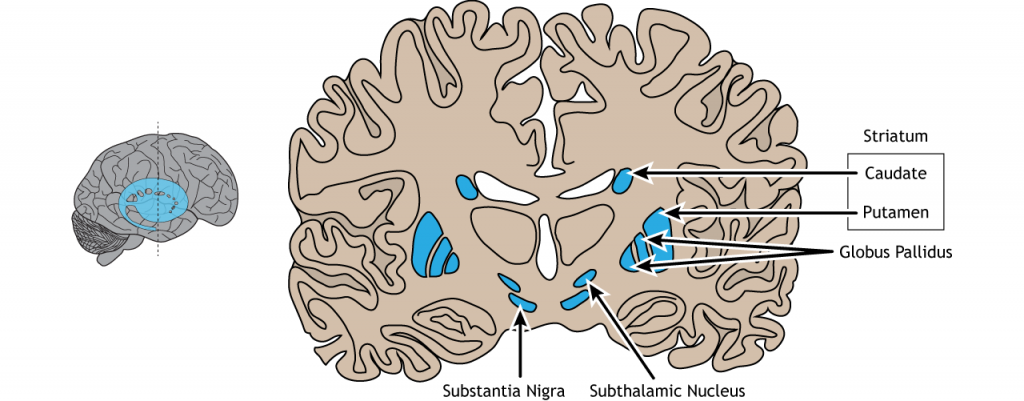
Illustration of a coronal section of the brain showing the location of the basal ganglia and region names. Details in caption.
The basal ganglia are subcortical structures located at the base of the forebrain. They are comprised of the caudate and putamen, which both make up the striatum, as well as the globus pallidus, substantia nigra, and subthalamic nucleus. ‘Basal Ganglia’ by Casey Henley is licensed under a Creative Commons Attribution Non-Commercial Share-Alike (CC BY-NC-SA) 4.0 International License.

Researchers at the University of Iowa in a new study have linked a region in the brain to how humans redirect thoughts and attention when distracted. The connection is important because it offers insights into cognitive and behavioral side effects to a technique being used to treat patients with Parkinson’s disease.

The subthalamic nucleus is a pea-sized brain region involved in the motor-contro...

Read More

Scientists uncover a Missing Link between Poor Diet and Higher Cancer Risk

2024 0409 (CSI) Poor diet and higher cancer risks
A new study by NUS researchers reveals that methylglyoxal, a chemical produced when our body break down glucose for energy production, instigates faults in our DNA that are early warning signs of cancer initiation.

A research team from the National University of Singapore (NUS) has unearthed new findings which may help explain the connection between cancer risk and poor diet, as well as common diseases like diabetes, which arise from poor diet. The insights gained from this study hold promise for advancing cancer prevention strategies aimed at promoting healthy ageing.

Led by Professor Ashok Venkitaraman, this ground-breaking study was conducted by scientists from the Cancer Science Institute of Singapore (CSI Singapore) at NUS and NUS Centre for Cancer Research (N2CR) under the Yon...

Read More

Scientists use Wearable Technology to Detect Stress Levels During Sleep

Scientists use wearable technology to detect stress levels during sleep

What if changes in a person’s stress levels could be detected while they sleep using wearable devices? A new study by University of Vermont researchers published in PLOS Digital Health is the first to find changes in perceived stress levels reflected in sleep data—an important step towards identifying biomarkers that may help flag individuals in need of support.

Given how critical sleep is to physical and mental health, the research team suspected signals might exist in sleep data, says Laura Bloomfield, a research assistant professor of mathematics and statistics and lead author of the study. “Changes in stress are visible.”

When parsing baseline sleep data, the researchers found “consistent associations” between people’s perceived stress scores and factors such as total slee...

Read More

Research uncovers Differences between Men and Women in Sleep, Circadian Rhythms and Metabolism

Man and woman asleep in bed

A new review of research evidence has explored the key differences in how women and men sleep, variations in their body clocks, and how this affects their metabolism.

Published in Sleep Medicine Reviews, the paper highlights the crucial role sex plays in understanding these factors and suggests a person’s biological sex should be considered when treating sleep, circadian rhythm and metabolic disorders.

Differences in sleep

The review found women rate their sleep quality lower than men’s and report more fluctuations in their quality of sleep, corresponding to changes throughout the menstrual cycle.

“Lower sleep quality is associated with anxiety and depressive disorders, which are twice as common in women as in men,” says Dr Sarah L...

Read More