Category Biology/Biotechnology

New Vaccine design uses Immunity against Influenza to offer Faster Protection against Emerging Pathogens

After COVID vaccination, it usually takes weeks for our bodies to develop protective antibody responses. Imagine, however, a vaccine that speeds up the production of antibodies against SARS-CoV-2, the virus that spreads COVID-19.

A research team led by Rong Hai, an associate professor of microbiology and plant pathology at the University of California, Riverside, has developed such a vaccine by using preexisting immunity to a separate virus (the influenza virus) to help kickstart the process of making antibodies against SARS-CoV-2.

“Any delay in the immune response to SARS-CoV-2 means there is some time when people are left poorly protected against the virus,” Hai said...

Read More
SARS-CoV-2 can Infect Dopamine Neurons causing Senescence

SARS-CoV-2 can infect dopamine neurons causing senescence
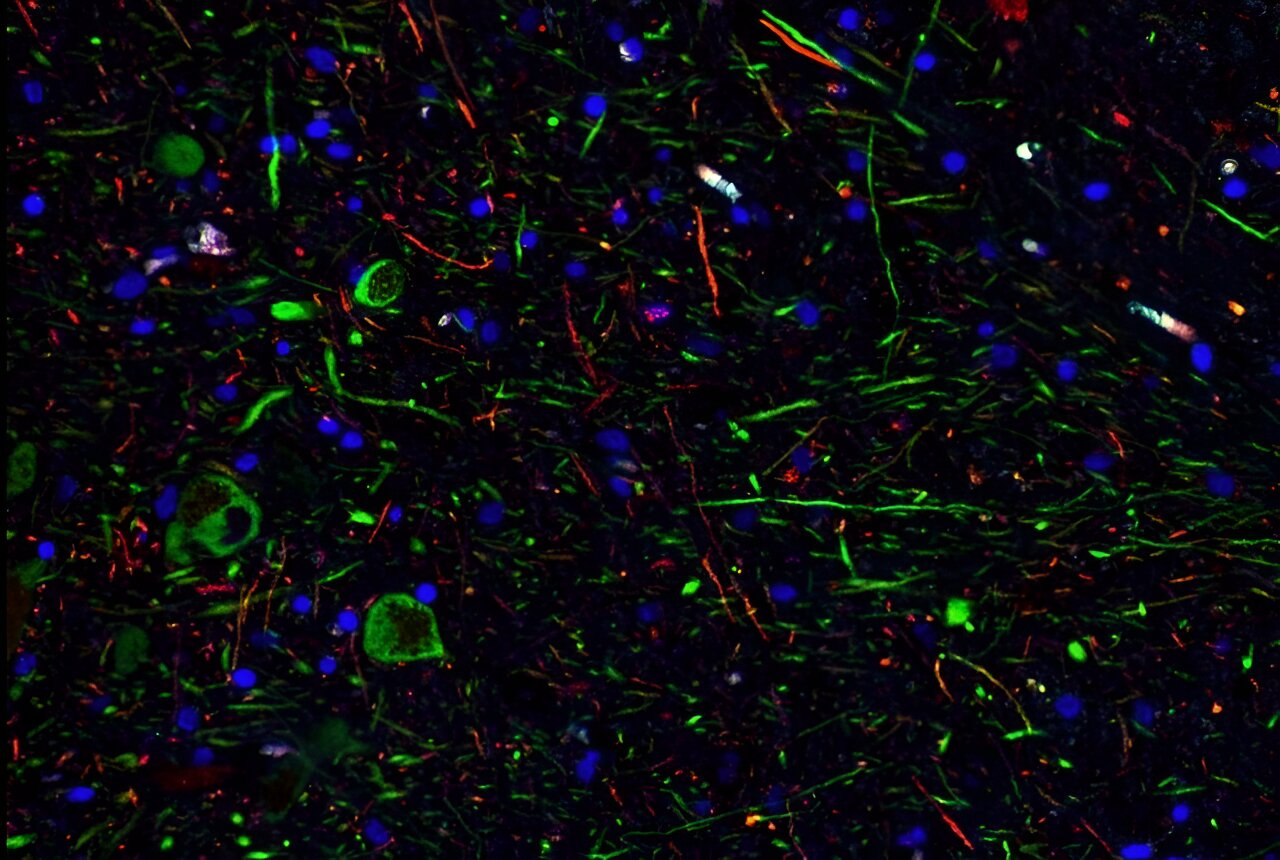
Stained tissue from the midbrain of a COVID-19 patient shows DNA in the cells’ nuceli (blue), dopamine neurons (green) and phosphor-alpha-synuclein (red). Credit: Liuliu Yang

A new study reported that SARS-CoV-2, the virus that causes COVID, can infect dopamine neurons in the brain and trigger senescence—when a cell loses the ability to grow and divide. The researchers from Weill Cornell Medicine, Memorial Sloan Kettering Cancer Center, and Columbia University Vagelos College of Physicians and Surgeons suggest that further research on this finding may shed light on the neurological symptoms associated with long COVID, such as brain fog, lethargy, and depression.

The findings, published in Cell Stem Cell on Jan...

Read More

Research demonstrates that Killer T cells can support Tissue Regeneration

Killer T cells support tissue regeneration
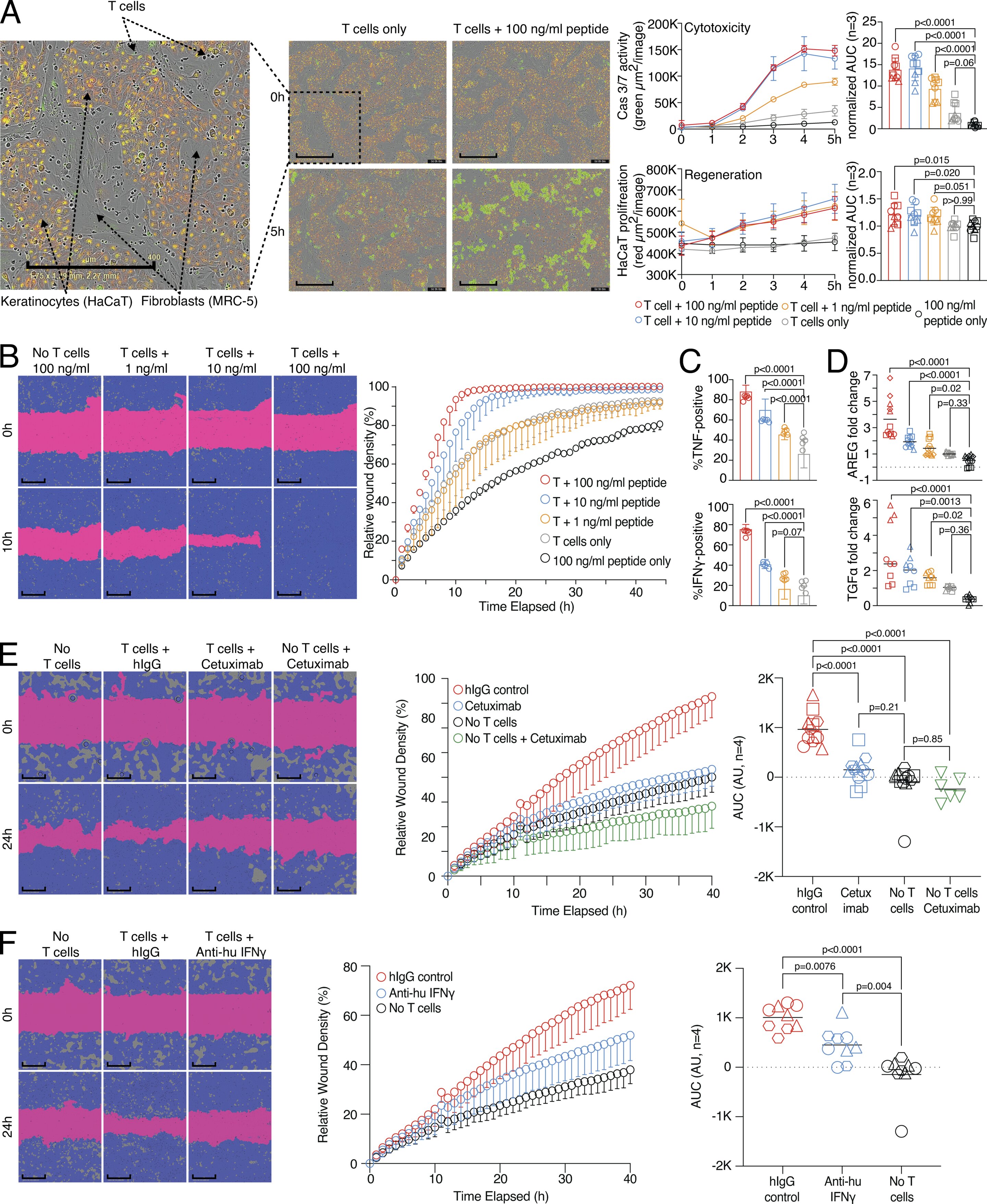
Wound healing and target killing are both effector mechanisms of CD8 T cells. (A) Combined proliferation and killing assay in the presence of influenza-specific CD8 T cells and varying amounts of pulsed peptides on MRC-5 and HaCaT cells seeded in a 30:70 ratio. Left, representative image with labels (0 versus 5 h; T cells only versus T cells + 100 ng/ml peptide). Right, representative quantification of Cas3/7 activity (green) and HaCaT proliferation (red) with titrated amounts of influenza peptide, with statistical verification across experiments using normalized area under the curve (AUC, n = 3, one-way ANOVA, symbols indicate individual experiments). Scale bars = 400 µm; enhanced for improved visibility...
Read More

Novel Regulator of Immune Evasion in Cancer identified

Novel regulator of immune evasion in cancer identified
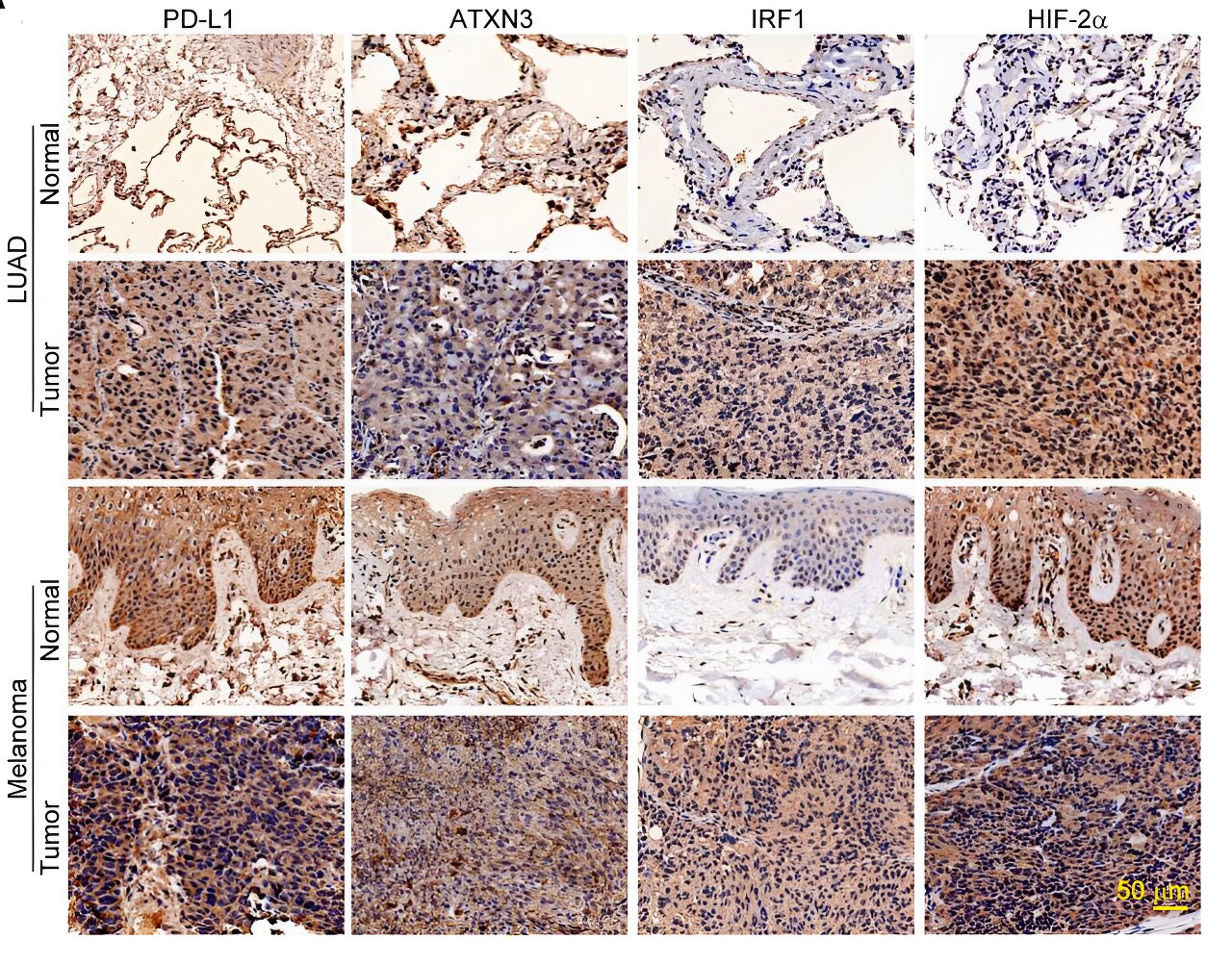
Representative images from immunohistochemical staining of PD-L1, ATXN3, IRF1, and HIF-2α in human lung adenocarcinoma (LUAD) and melanoma patients. Courtesy of Deyu Fang, PhD. Credit: Journal of Clinical Investigation (2023). DOI: 10.1172/JCI167728

Northwestern Medicine investigators have identified a previously unknown regulator of tumor immune evasion, which may help improve the efficacy of current and future antitumor immunotherapies, according to recent findings published in the Journal of Clinical Investigation.

“The study provides a molecular insight into understanding why some cancer patients cannot be treated by the checkpoint blockade antitumor therapy, but others can,” said Deyu Fang, Ph.D...

Read More