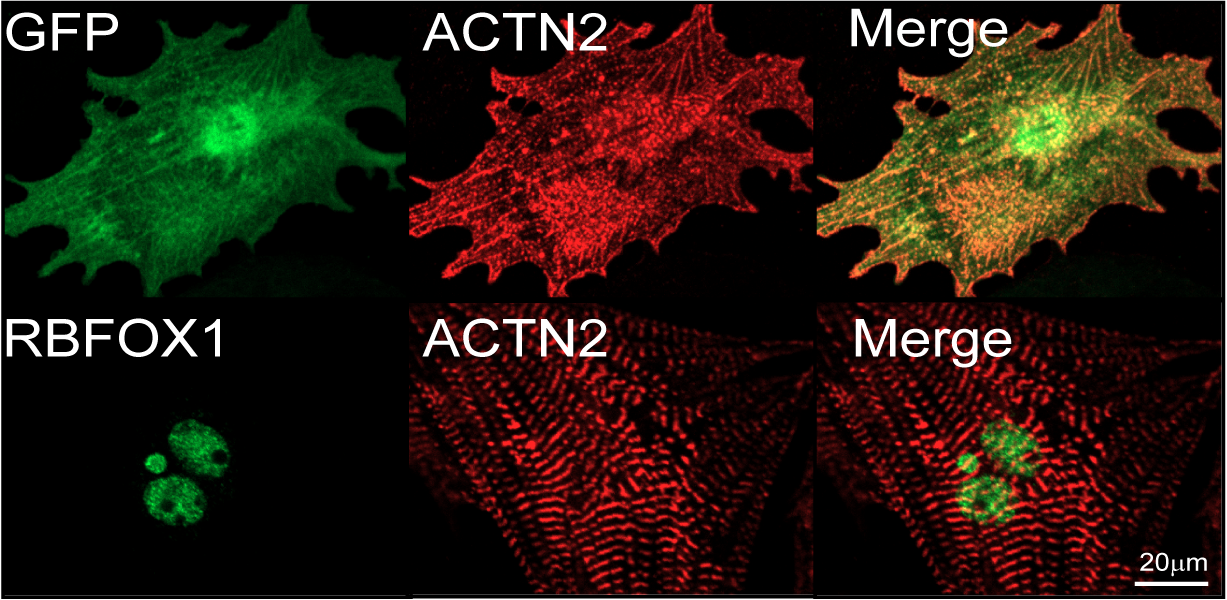
The top row depicts immature human heart muscle cells generated from stem cells. Their shape and fibre organisation is irregular. Upon Rbfox1 expression, the cells, as seen in the lower row, are more organised, closer to the shape and organisation of mature muscle cells in an adult heart. (Credit:[Huang J, Lee JZ, Rau CD, et al. Regulation of postnatal cardiomyocyte maturation by an RNA splicing regulator rbfox1. Circulation. 2023;148(16):1263-1266. doi: 10.1161/circulationaha.122.061602)
Researchers identify RBFox1 as a key intrinsic regulator of heart muscle cell maturation, overcoming a major limitation in cardiac regenerative therapy and disease modelling and demonstrating for the first time that RNA splicing control can significantly impact this process.
With more of us looking for alternatives to eating animals, new research has found a surprising environmentally friendly source of protein – algae.
The University of Exeter study has been published in The Journal of Nutrition and is the first of its kind to demonstrate that the ingestion of two of the most commercially available algal species are rich in protein which supports muscle remodeling in young healthy adults. Their findings suggest that algae may be an interesting and sustainable alternative to animal-derived protein with respect to maintaining and building muscle.
Researcher Ino Van Der Heijden from the University of Exeter said: “Our work has shown algae could become part of a secure and sustainable food future...
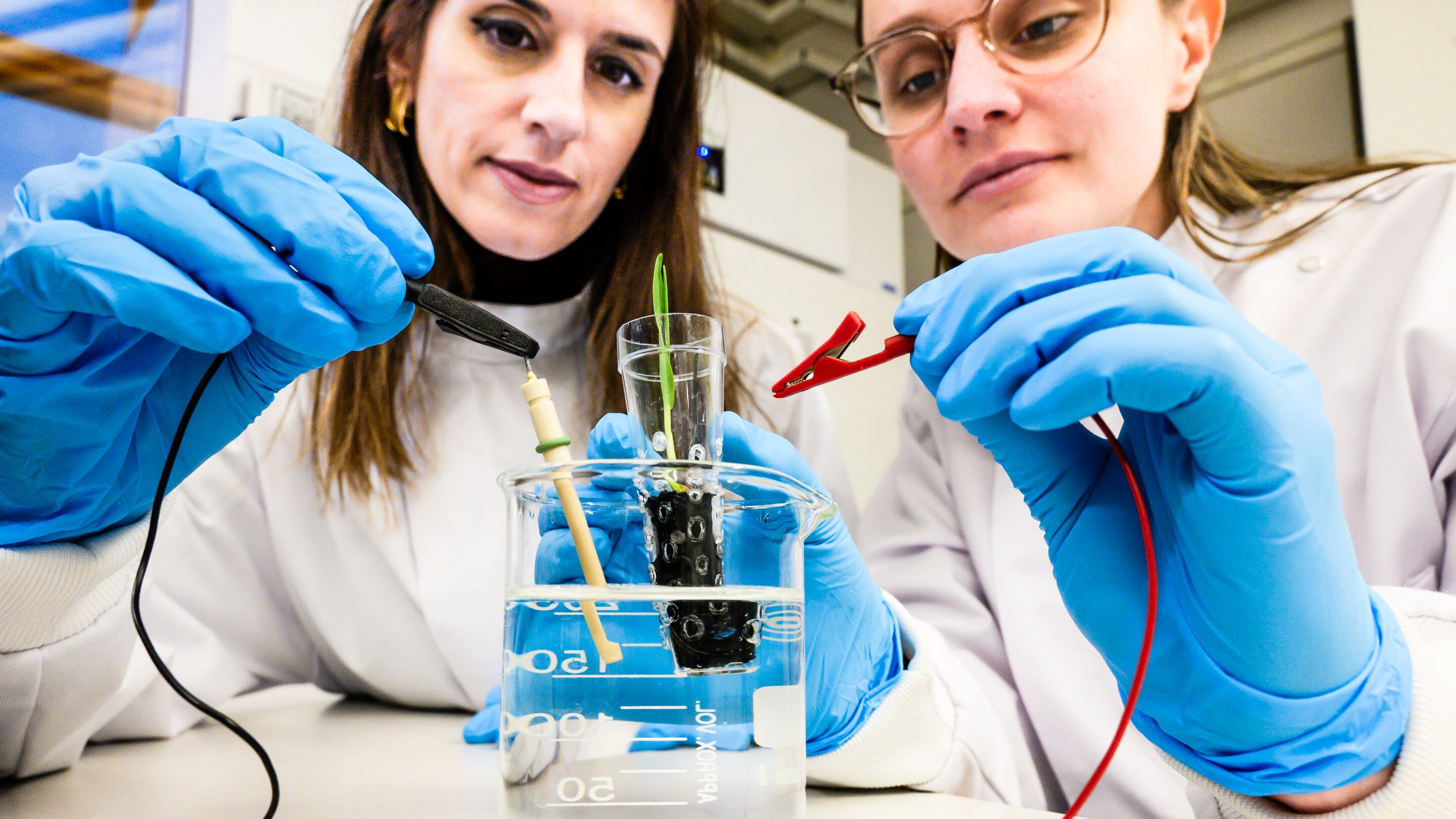
Eleni Stavrinidou, associate professor, and supervisor of the study and Alexandra Sandéhn, Ph.D. student, one of the lead authors, connect the eSoil to a low power source for stimulating plant growth. Credit: Thor Balkhed
Barley seedlings grow on average 50% more when their root system is stimulated electrically through a new cultivation substrate. In a study published in the journal PNAS, researchers from Linköping University have developed an electrically conductive “soil” for soilless cultivation, known as hydroponics.
“The world population is increasing, and we also have climate change. So it’s clear that we won’t be able to cover the food demands of the planet with only the already existing agricultural methods...
Researchers have created an Artificial Intelligence tool that uses sequences of life events—such as health history, education, job and income—to predict everything from a person’s personality to their mortality.
Built using transformer models, which power large language models (LLMs) like ChatGPT, the new tool, life2vec, is trained on a data set pulled from the entire population of Denmark—6 million people. The data set was made available only to the researchers by the Danish government.
The tool the researchers built based on this complex set of data is capable of predicting the future, including the lifespan of individuals, with an accuracy that exceeds state-of-the-art models...








Recent Comments