
Category Biology/Biotechnology

Potential Glaucoma Treatment Strategy to Guide Stem Cells to the Retina

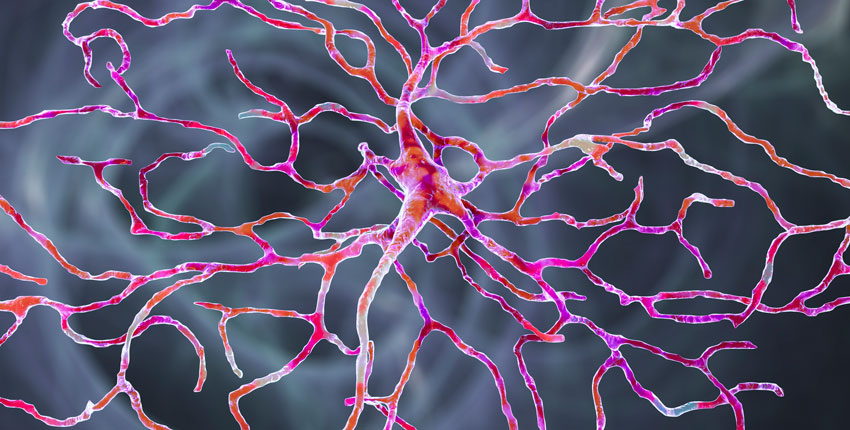
Retinal neuron shown in bright colors, including pink and orange, on a grey background
Retinal neuron. Image: Dr_Microbe/iStock/Getty Images Plus

Scientists have developed a novel approach that allows stem cells to be turned into retinal ganglion cells that are capable of migrating and surviving in the eye’s retina. This approach presents a promising new treatment strategy for diseases like glaucoma, in which the loss of retinal ganglion cells caused by the disease leads to irreversible vision loss.

Glaucoma is one of the leading causes of blindness worldwide, and vision loss, due to the loss of retinal ganglion cells (RGCs), cannot currently be reversed with any treatment...

Read More

Ingestible Electronic Device Detects Breathing Depression in Patients

A woman sleeps in bed. An illustrated network-like design in blue, with medical icons connected by straight lines, appears across half of the image.

A new ingestible capsule can monitor vital signs from within the patient’s GI tract. The sensor could be used for less intrusive monitoring of sleep disorders such as sleep apnea, or for detecting opioid overdoses.

Diagnosing sleep disorders such as sleep apnea usually requires a patient to spend the night in a sleep lab, hooked up to a variety of sensors and monitors. Researchers from MIT, Celero Systems, and West Virginia University hope to make that process less intrusive, using an ingestible capsule they developed that can monitor vital signs from within the patient’s GI tract.

The capsule, which is about the size of a multivitamin, uses an accelerometer to measure the patient’s breathing rate and heart rate...

Read More

New ‘Patch’ uses Natural Body Motion to Fix Disk Herniation

A rendered image of a patch used to fix disc herniation.

A new biologic “patch” that is activated by a person’s natural motion could be the key to fixing herniated disks in people’s backs, according to researchers at the Perelman School of Medicine at the University of Pennsylvania and the CMC VA Medical Center (CMCVAMC).

Combining years of work from many different projects, the “tension-activated repair patches” (TARPs) provide controlled release of an anti-inflammatory molecule called anakinra from microcapsules over time, which helped disks in a large animal model regain the tension they need to reverse herniation and prevent further degeneration. This pre-clinical research is detailed in a paper published in Science Translational Medicine.

“Currently there is no curative treatment for disk herniation, and the best thing out there ...

Read More

Scientists 3D-Print Hair Follicles in Lab-Grown Skin

Image
Pankaj Karande, left, and Carolina Catarino, right

The technique represents an important step in engineering skin grafts, drug testing. A team led by scientists at Rensselaer Polytechnic Institute has 3D-printed hair follicles in human skin tissue cultured in the lab. This marks the first time researchers have used the technology to generate hair follicles, which play an important role in skin healing and function.

The finding, published in the journal Science Advances, has potential applications in regenerative medicine and drug testing, though engineering skin grafts that grow hair are still several years away.

“Our work is a proof-of-concept that hair follicle structures can be created in a highly precise, reproducible way using 3D-bioprinting...

Read More
