Category Biology/Biotechnology

Tiny Nanocarriers could prove the Magic Bullet for Acne Sufferers

Tiny nanocarriers could prove to be the magic bullet for acne sufferers
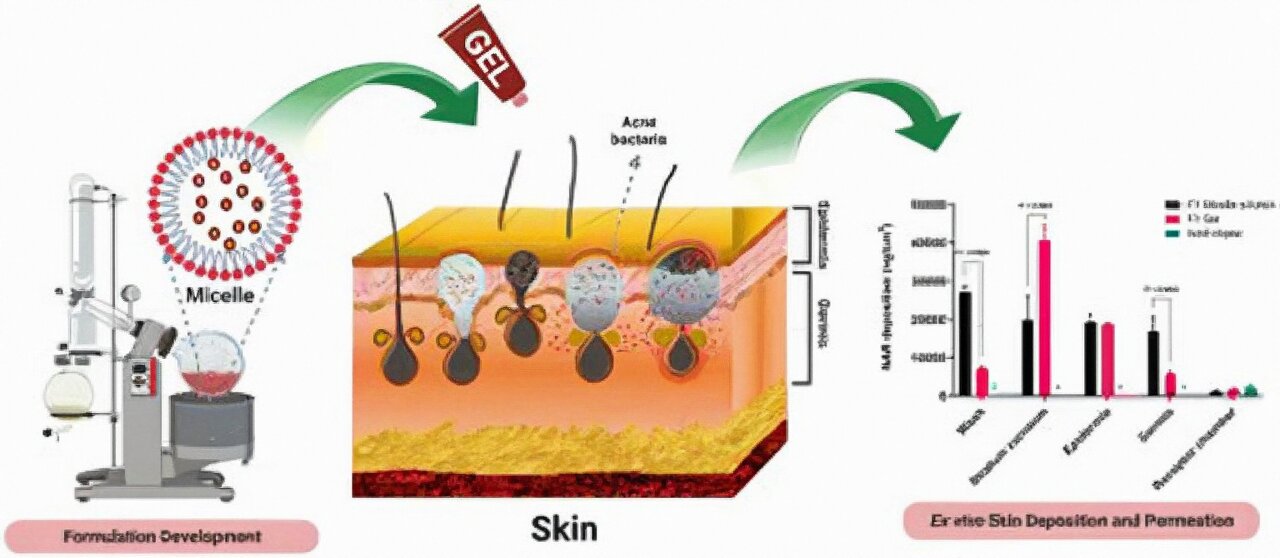
Credit: Nanoscale (2023). DOI: 10.1039/D3NR01789C

It’s a skin disorder that makes life miserable for around 800 million teenagers and adults worldwide, but Australian scientists may have found an effective treatment for acne, delivered via tiny nanoparticles.

In a study led by the University of South Australia (UniSA), a new antibacterial compound known as Narasin was encased in tiny, soft nanoparticles 1000 times smaller than a single strand of human hair and applied in a gel form to targeted acne sites.

The drug — more commonly used in the livestock industry — proved successful against drug-resistant acne bacteria and delivered via nanocarriers achieved a 100-fold increase in absorption than simply taken with water.

The findings have been published in the journal Nanoscale...

Read More
How the Respiratory Tract Microbiome influences the Severity of Bacterial Pneumonia

Pneumonia is an infection of the lung alveoli caused by bacteria, viruses or fungi. It is one of the leading causes of morbidity and mortality worldwide, representing a clinical and economic burden and a global public health problem. The microbial ecosystem (or microbiome) of the human respiratory tract colonizes different niches. The respiratory tract microbiome is of interest to scientists as it contributes to human health by stimulating the immune system and protecting against infection by pathogens. Scientists from the Institut Pasteur and the CNRS have demonstrated that the microbiome composition, pathogen load and clinical interventions influence the severity of bacterial pneumonia caused by Legionella pneumophila...

Read More

Researchers explain Plant’s Medicinal Power against COVID and Glioblastoma

UTSA researchers explain plant’s medicinal power against COVID and glioblastoma

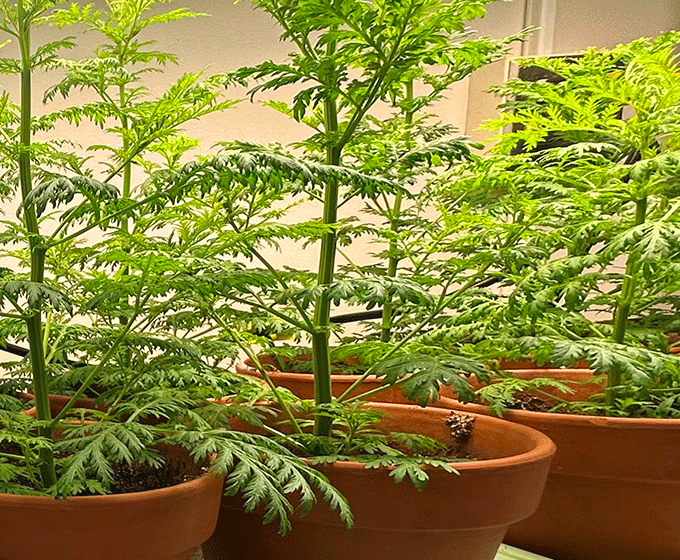
Vibrant green leaves sprout from tall fragrant plants sitting neatly in two rows of terracotta pots in Valerie Sponsel’s UTSA biology laboratory. One floor just above her is the chemistry lab of Francis Yoshimoto, who is extracting the plant’s leaves for medicinal compounds. Soon, the researchers will meet with UTSA researcher Annie Lin, who will test the extracted compounds on cancer cells.

The plant is Artemisia annua, or Sweet Annie, and it contains medicinal compounds. UTSA researchers are studying the plant to understand the bioactive properties of one of these compounds, Arteannuin B, in cancer cells and COVID, the disease caused by the virus, SARS-CoV-2.

“Around 50% of prescription drugs are derived from natural products. They’re made by plants, fungi or bacteria...

Read More

Nutrients drive Cellular Reprogramming in the Intestine

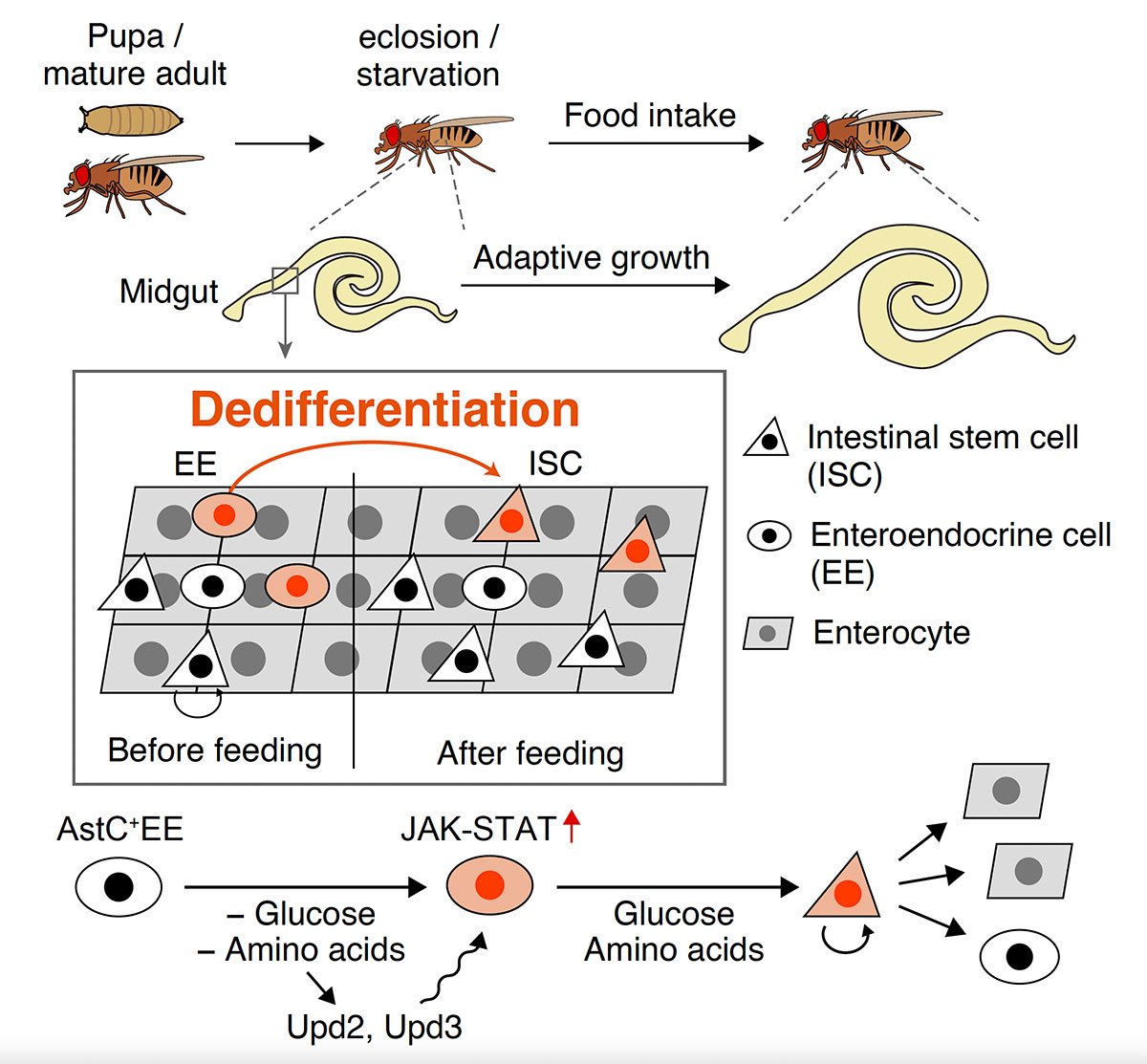
A detailed summary of this study: the Drosophila adult midgut rapidly grows in size upon the first food intake after eclosion or upon refeeding after starvation. ©Hiroki Nagai et al.

Researchers have unveiled an intriguing phenomenon of cellular reprogramming in mature adult organs, shedding light on a novel mechanism of adaptive growth. The study, which was conducted on fruit flies (Drosophila), provides further insights into dedifferentiation — where specialized cells that have specific functions transform into less specialized, undifferentiated cells like stem cells.

Until now, dedifferentiation has primarily been associated with severe injuries or stressful conditions, observed during tissue regeneration and diseases like tumorigenesis...

Read More