Category Biology/Biotechnology

Bioengineered E. coli Generates Electricity from Wastewater

Bacteria generate electricity from wastewater
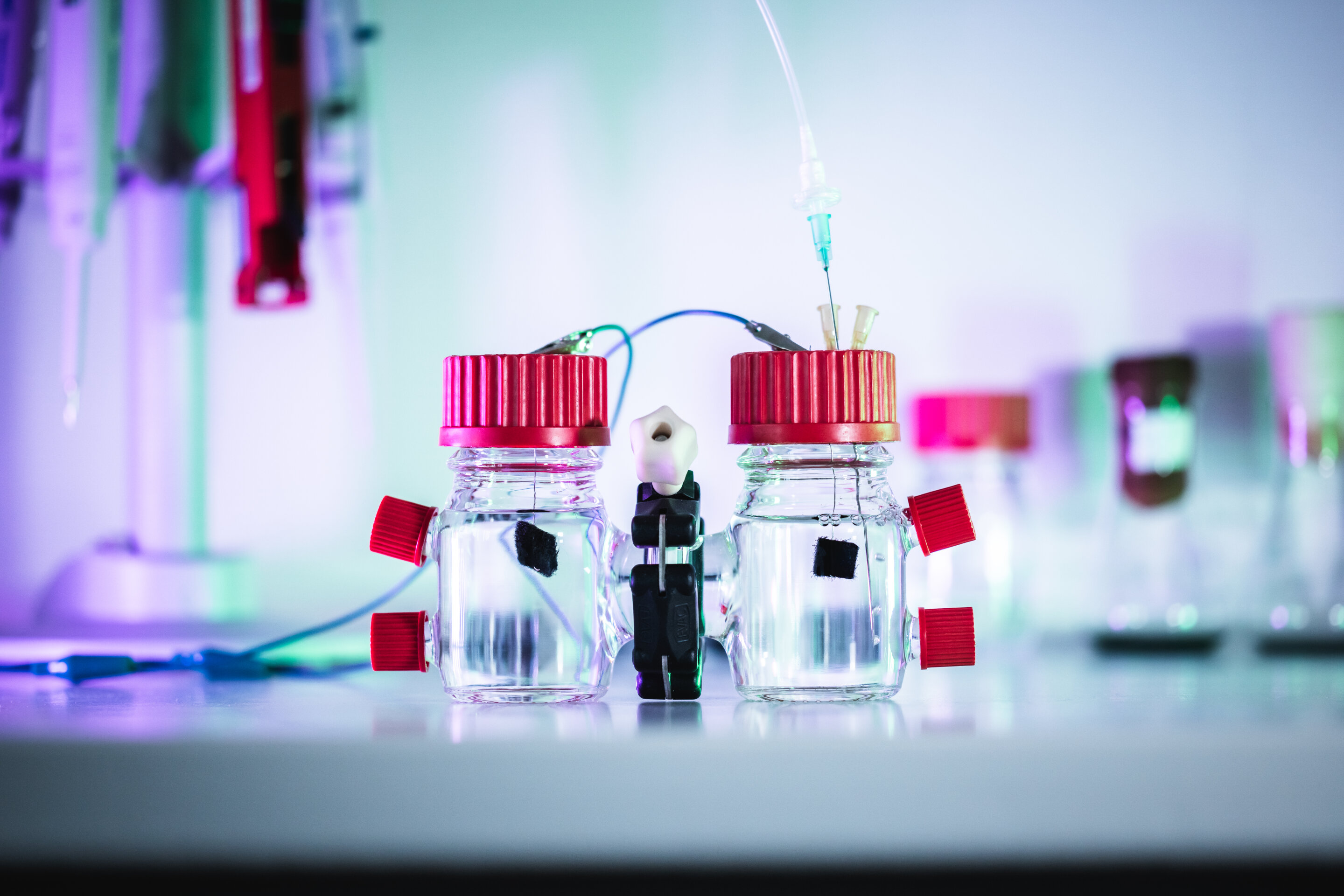
Flasks containing the electricity-producing E. coli. Credit: Jamani Caillet (EPFL)

In a breakthrough for the field of bioelectronics, researchers at EPFL have enhanced the ability of E. coli bacteria to generate electricity. The innovative approach offers a sustainable solution for organic waste processing while outperforming previous state-of-the-art technologies, opening new horizons for versatile microbial electricity production.

“We engineered E. coli bacteria, the most widely studied microbe, to generate electricity,” says Professor Ardemis Boghossian at EPFL. “Though there are exotic microbes that naturally produce electricity, they can only do so in the presence of specific chemicals. E...

Read More

Exercise-induced Hormone Irisin may Reduce Alzheimer’s Disease Plaque and Tangle Pathology in the Brain

Reconstitution of amyloid plaques and NFT pathlogy. (Dooyeon Kim/Massachusetts General Hospital)

Medical researchers have used a 3D human neural cell culture model to show that the exercise-induced muscle hormone, irisin, reduces the level of amyloid beta deposits associated with Alzheimer’s disease.

Researchers who previously developed the first 3D human cell culture models of Alzheimer’s disease (AD) that displays two major hallmarks of the condition — the generation of amyloid beta deposits followed by tau tangles — have now used their model to investigate whether the exercise-induced muscle hormone irisin affects amyloid beta pathology.

As reported in the journal Neuron, the Massachusetts General Hospital (MGH)-led team has uncovered promising results suggesting that irisin-b...

Read More

Red Blood Cells Exposed to Oxygen Deficiency Protect Against Myocardial Infarction

Red blood cells transport oxygen from the lungs to all the body’s cells. Photo: Getty Images

Red blood cells exposed to oxygen deficiency protect against myocardial infarction, according to a new KI study published in the Journal of Clinical Investigation. The study also shows that the protective effect is enhanced by a nitrate-rich vegetable diet.

Red blood cells carry oxygen from the lungs to all of the body’s cells and carbon dioxide back to the lungs. A new study, conducted at Karolinska Institutet in collaboration with Karolinska University Hospital, now shows that red blood cells have an intrinsic function of protecting against heart injury caused by myocardial infarction.

The effect is enhanced by a diet containing nitrate-rich vegetables, such as arugula and other green l...

Read More

AI helps ID Cancer Risk Factors

AI cancer - shutterstock_2204999465_web.jpg

A novel study from the University of South Australia has identified a range of metabolic biomarkers that could help predict the risk of cancer.

Deploying machine learning to examine data from 459,169 participants in the UK Biobank, the study identified 84 features that could signal increased cancer risk.

Several markers also signalled chronic kidney or liver disease, highlighting the significance of exploring the underlying pathogenic mechanisms of these diseases for their potential connections with cancer.

The study, “Hypothesis-free discovery of novel cancer predictors using machine learning,” was conducted by UniSA researchers: Dr Iqbal Madakkatel, Dr Amanda Lumsden, Dr Anwar Mulugeta, and Professor Elina Hyppönen, with University of Adelaide’s Professor Ian Olver.

“We...

Read More