Category Biology/Biotechnology

Scientists Identify Genes linked to High Production of Key Antibody

A rendering of a nanovial, a microscopic bowl-shaped container that the scientists used to capture individual cells and their secretions. The dark, donut-shaped object to the right is a cell; the blue-and-yellow objects to the left are secreted immunoglobulin G antibodies. (Image courtesy: Rene Chang/University of Washington)

A collaboration led by UCLA and the Seattle Children’s Research Institute has yielded new knowledge about the genes responsible for the production and release of immunoglobulin G, the most common type of antibody in the human body.

The finding has the potential to advance manufacturing of antibody-based therapies for diseases such as cancer and arthritis, as well as the development of medical treatments that rely on the production of antibodies.

Antibodies a...

Read More
Common Cold Virus Linked to Potentially Fatal Blood Clotting Disorder

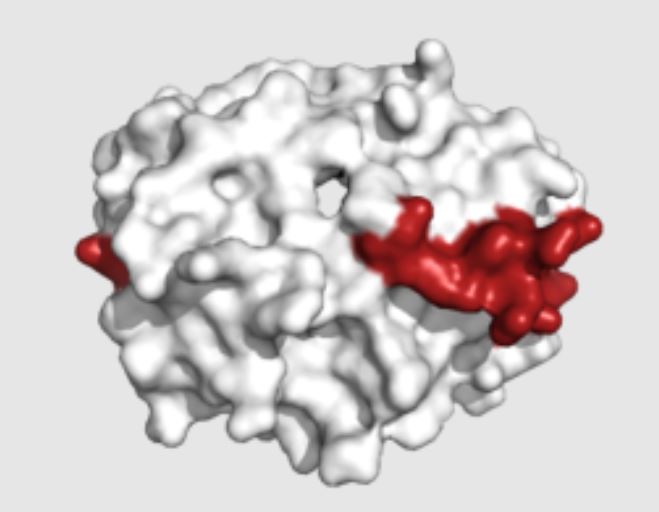
Image: Red-colored region depicts region on platelet factor 4 (PF4) molecule recognized by VITT-like antibodies obtained from patient 2 (adult). Credit: Mercy Daka (co-author) and Dr. Ishac Nazy (co-author)

A new observation suggests that a life-threatening blood clotting disorder can be caused by an infection with adenovirus, one of the most common respiratory viruses in pediatric and adult patients.

Platelets, or thrombocytes, are specialized cellular fragments that form blood clots when we get scrapes and traumatic injuries. Viral infections, autoimmune disease, and other conditions can cause platelet levels to drop throughout the body, termed thrombocytopenia.

After a robust clinical and research collaboration, Stephan Moll, MD, and Jacquelyn Baskin-Miller, MD, both in the UN...

Read More

Tubular Tissue Advance could pave way for Lab-grown Blood Vessels

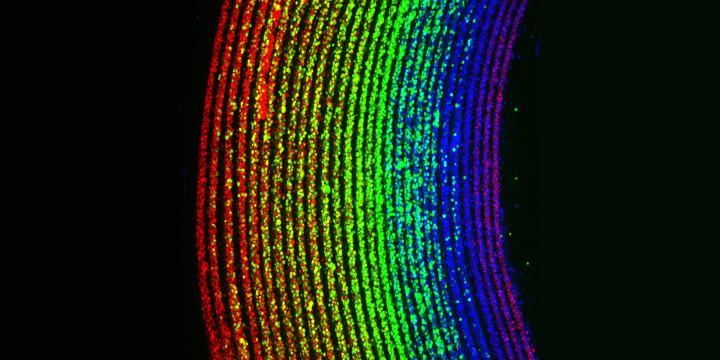
Human cells in red, green or blue are arranged in layers to create a microscopic cell rainbow against a black background

Innovative technology that creates ultra-thin layers of human cells in tube-like structures could spur development of lifelike blood vessels and intestines in the lab.

The technique, known as RIFLE – rotational internal flow layer engineering – enables the construction of separate layers as delicate as one cell thick.

Such versatility is crucial to developing accurate human models of layered tubular tissue for use in research, offering an important alternative to animal models, experts say.

Scientists have been able to demonstrate the technology by manufacturing cells into super-thin layers that mirror those seen in a human blood vessel.

Layered tubular tissue is found throughout the body — in blood vessels, the digestive tract and other organs...

Read More

Researchers find COVID-19 causes Mitochondrial Dysfunction in Heart and other Organs

Researchers find COVID-19 causes mitochondrial dysfunction in heart and other organs
A summary of prominent mRNA expression changes observed in COVID-19-derived nasopharyngeal samples collected early in infection when viral titers were high, SARS-CoV-2-positive rodent lungs when viral titers were in decline, and autopsy COVID-19 samples in which the virus had been cleared. Credit: Joseph W. Guarnieri, Gabrielle Widjaja, and Douglas C. Wallace.

Since the beginning of the COVID-19 pandemic caused by the SARS-CoV-2 virus, researchers have been trying to determine why this virus creates such negative long-term effects compared with most coronaviruses.

Now, a multi-institutional consortium of researchers led by a team at Children’s Hospital of Philadelphia (CHOP) and the COVID-19 International Research Team (COV-IRT) has found that the genes of the mitochondria can be ne...

Read More