
Category Biology/Biotechnology

Pathogenic Bacteria use a Sugar in the Intestinal Mucus Layer to Infect the Gut, study shows

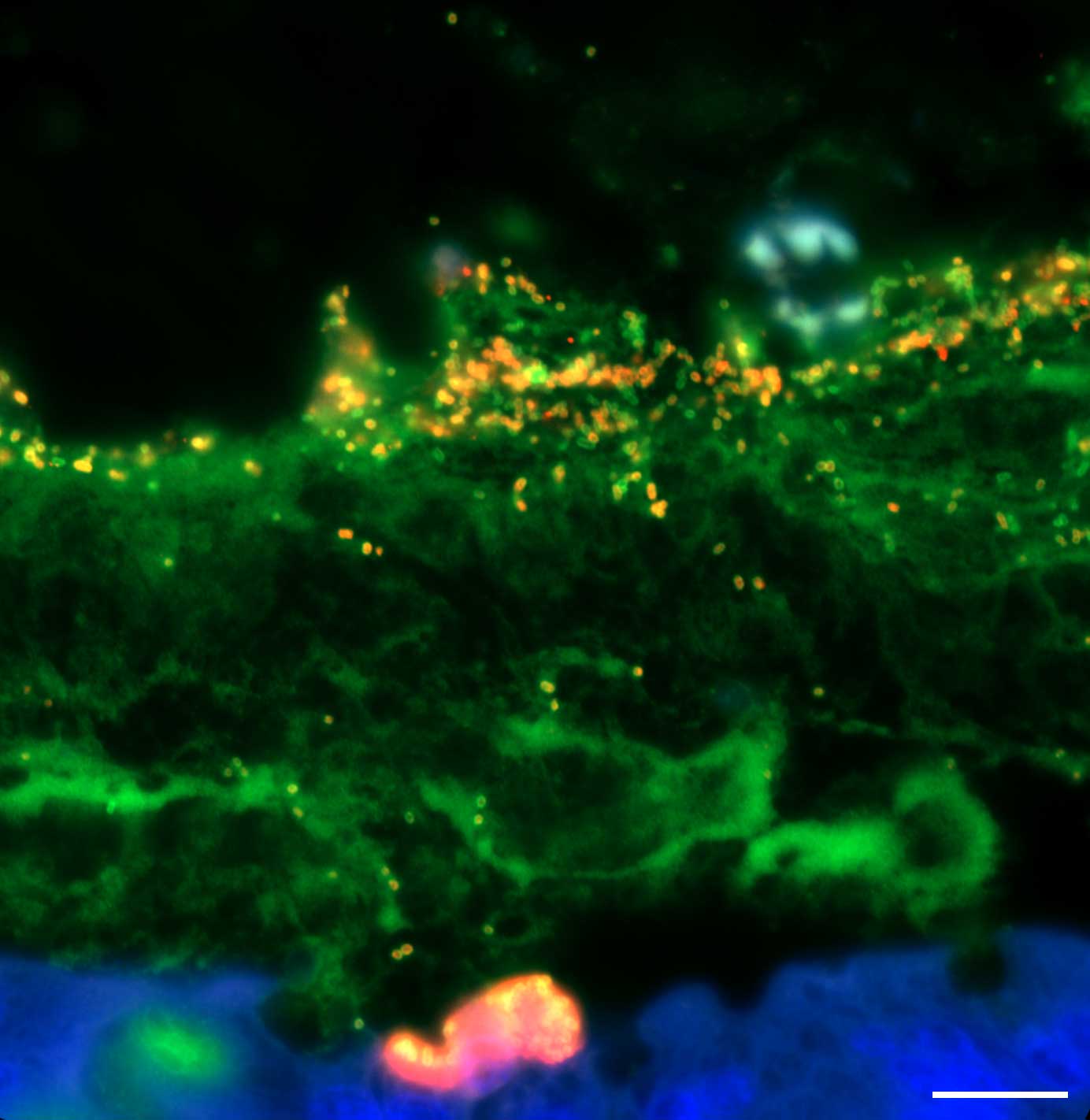
The Citrobacter rodentium (orange) rely on sugars in the intestinal mucus layer (green).
Harmful gut bacteria like Citrobacter rodentium (orange) rely on sugars in the intestinal mucus layer (green).

A new study by researchers at the University of British Columbia (UBC) and BC Children’s Hospital shows the sugar sialic acid, which makes up part of the protective intestinal mucus layer, fuels disease-causing bacteria in the gut.

The findings, published in PNAS, suggest a potential treatment target for intestinal bacterial infections and a range of chronic diseases linked to gut bacteria, including inflammatory bowel disease (IBD), celiac disease, IBS and short bowel syndrome.

“Bacteria need to find a place in our intestines to take hold, establish and expand, and then they need to overcome all the different defenses that normally protect our gut,” says Dr...

Read More


Lupus Flareups Strongly Linked to Specific Bacterial Growth in Gut

Gloved Hand Holding Glass Slide Next to Microscope's Objective Lenses
PHOTO: GETTY/NICOLAS_

Recurrent bouts of systemic lupus erythematosus, marked by the body’s immune system attack of its own tissues, closely tracked with measureable upticks in growth in the gut of a certain species of bacteria.

New research from NYU Grossman School of Medicine shows that bacterial blooms of the gut bacterium Ruminococcus blautia gnavus occurred at the same time as disease flare-ups in five of 16 women with lupus of diverse racial backgrounds studied over a four-year period. Systemic lupus erythematosus involves damaging inflammation, especially in the kidneys, but also in joints, skin, and blood vessels. Four of these study patients with R...

Read More

Benzodiazepine use associated with Brain Injury, Job Loss and Suicide

medication
Credit: CC0 Public Domain

Benzodiazepine use and discontinuation is associated with nervous system injury and negative life effects that continue after discontinuation, according to a new study from researchers at the University of Colorado Anschutz Medical Campus.

The study was published today in the journal PLOS ONE.

“Despite the fact that benzodiazepines have been widely prescribed for decades, this survey presents significant new evidence that a subset of patients experience long-term neurological complications,” said Alexis Ritvo, M.D, M.P.H., an assistant professor in psychiatry at the University of Colorado School of Medicine and medical director of the nonprofit Alliance for Benzodiazepine Best Practices...

Read More

Researchers uncover new CRISPR-like system in animals that can Edit the Human Genome

Fanzor/ωRNA/target DNA complex
Credit: Courtesy of the Zhang lab
Cryo-EM map of a Fanzor protein in complex with ωRNA and its target DNA.

A team of researchers led by Feng Zhang at the Broad Institute of MIT and Harvard and the McGovern Institute for Brain Research at MIT has uncovered the first programmable RNA-guided system in eukaryotes—organisms that include fungi, plants, and animals.

In a study published in Nature, the team describes how the system is based on a protein called Fanzor. They showed that Fanzor proteins use RNA as a guide to target DNA precisely, and that Fanzors can be reprogrammed to edit the genome of human cells...

Read More
