Category Biology/Biotechnology

Helping ‘Good’ Gut Bacteria and Clearing out the ‘Bad’ – all in one treatment

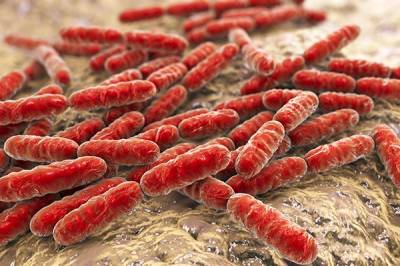
An illustration of several rod-shaped bacteria.
Probiotic bacteria, like those illustrated here, could one day be delivered to the body on spherical microgels.
Kateryna Kon/Shutterstock.com

Probiotics can help maintain a healthy gut microbiome or restore populations of “good bacteria” after a heavy course of antibiotics. But now, they could also be used as an effective treatment strategy for certain intestinal diseases, such as Crohn’s disease. Researchers reporting in ACS Central Science have developed a microgel delivery system for probiotics that keeps “good” bacteria safe while actively clearing out “bad” ones. In mice, the system treated intestinal inflammation without side effects.

In the digestive system, there’s a delicate balance of bacterial populations...

Read More

AI that uses Sketches to Detect Objects within an Image could Boost Tumor Detection, and Search for Rare Bird Species

Flock of birds - pixabay source

Teaching machine learning tools to detect specific objects in a specific image and discount others is a “game-changer” that could lead to advancements in cancer detection, according to leading researchers from the University of Surrey.

Surrey is set to present its unique sketch-based object detection tool at this year’s Computer Vision, Pattern, and Recognition Conference (CVPR). The tool allows the user to sketch an object, which the AI will use as a basis to search within an image to find something that matches the sketch — while discounting more general options.

Professor Yi-Zhe Song, leads this research at the University of Surrey’s Institute for People-Centred AI. He commented:

“An artist’s sketch is full of individual cues that words cannot convey concisely, reiterating...

Read More

Low-dose Aspirin may Increase Anaemia Risk in Healthy Older Adults: Study

Image credit: Christian Bowen via Unsplash

A new study analysing data from the landmark ASPREE trial has found that prolonged daily aspirin use increases the risk of anaemia by 20 per cent in people mostly aged 70 and over.

The results have prompted researchers to suggest that regular monitoring for anaemia be considered for older adults who take low-dose aspirin, and if older adults have concerns about their health or medications they should discuss them with their GP.

The Monash University-led study, published in Annals of Internal Medicine, followed 18,153 initially healthy older adults in Australia and the USA and recorded incidents of anaemia over an average 4.7 years.

The risk of developing anaemia was found to be 20 per cent higher in the aspirin group compared to those...

Read More

Scientists develop Magnetically Controlled Soft Medical Robot inspired by the Pangolin

Pangolin the inspiration for medical robot
The pangolin-inspired untethered magnetic robot. A Conceptual illustration of the pangolin-inspired robot operating in the small intestine. Robot is actuated with a low-frequency magnetic field and heated remotely with a high-frequency magnetic field. The pangolin’s body consist of individual overlapping hard keratin scales. The robot inspired by this overlapping design is shown on the right. Images of pangolins used under Standard licence from Shutterstock. Credit: Max Planck Institute for Intelligent Systems Tübingen

Pangolins are fascinating creatures. This animal looks like a walking pine cone, as it is the only mammal completely covered with hard scales. The scales are made of keratin, just like our hair and nails...

Read More