Category Biology/Biotechnology

Super Low-cost Smartphone Attachment brings Blood Pressure Monitoring to your Fingertips

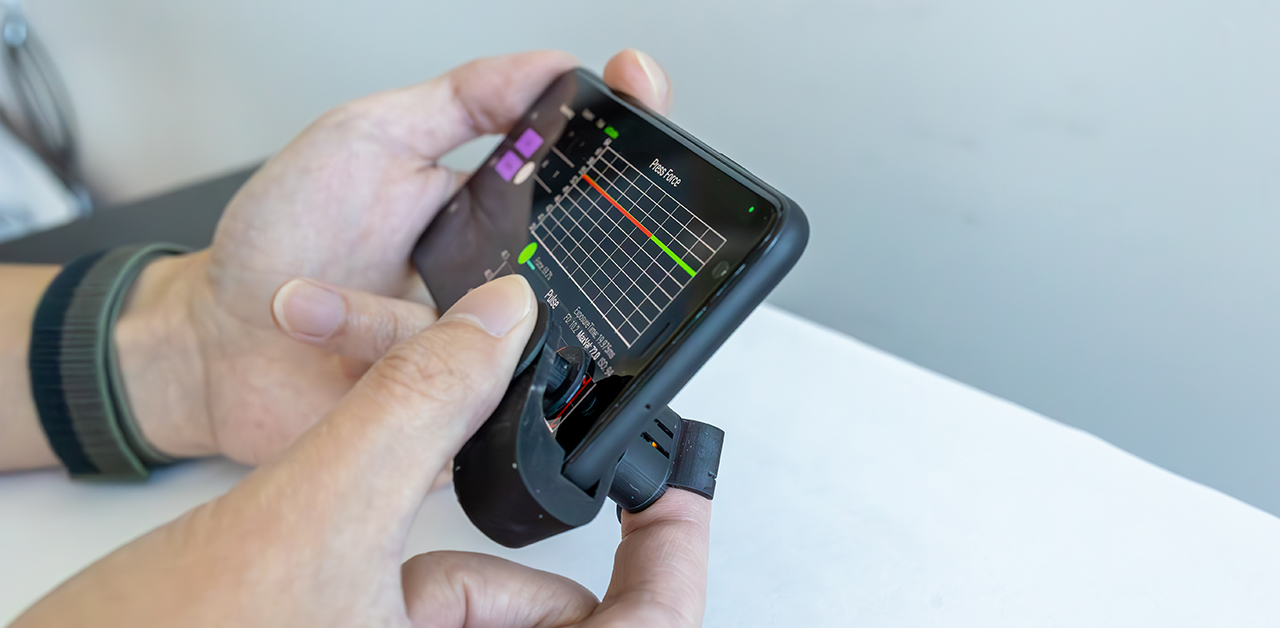
Two hands hold a black smartphone against a white background.
Prototype of the blood pressure monitoring clip. The user presses on the clip and a custom smartphone app guides the user on how hard and long to press during the measurement. Photos courtesy of the Digital Health Lab / UC San Diego.

Engineers at the University of California San Diego have developed a simple, low-cost clip that uses a smartphone’s camera and flash to monitor blood pressure at the user’s fingertip. The clip works with a custom smartphone app and currently costs about 80 cents to make. The researchers estimate that the cost could be as low as 10cents apiece when manufactured at scale.

The technology was published May 29 in Scientific Reports.

Researchers say it could help make regular blood pressure monitoring easy, affordable and accessible to people in resource-p...

Read More
Cancers in Distant Organs Alter Liver Function

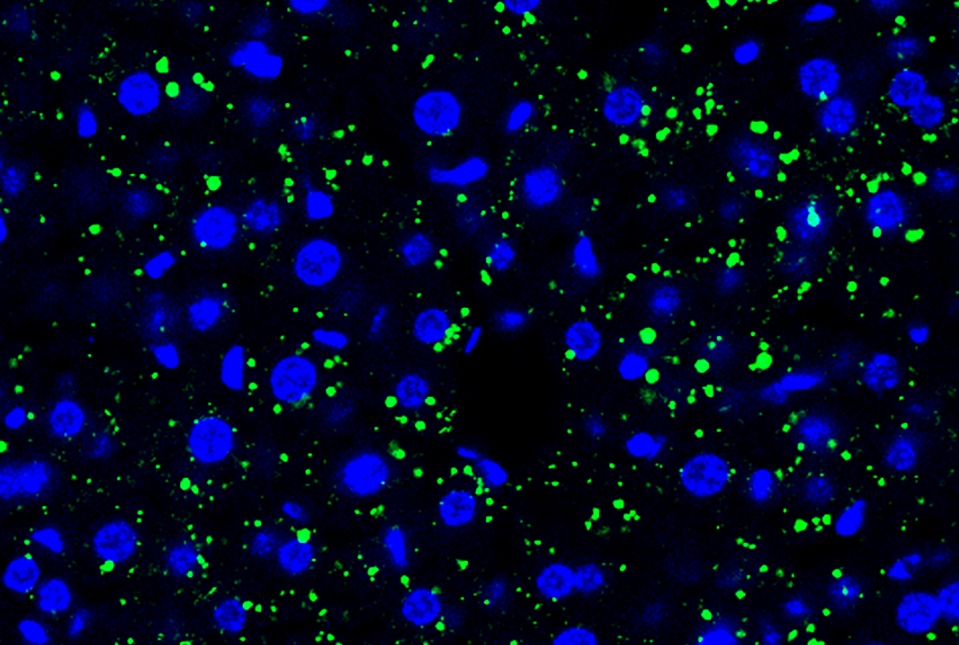
Tumor cell-derived EVPs induced accumulation of lipid droplets in the mouse liver. Green, lipid droplet. Blue, DAPI. Credit: Gang Wang, Jianlong Li, David Lyden.

Cancers often release molecules into the bloodstream that pathologically alter the liver, shifting it to an inflammatory state, causing fat buildup and impairing its normal detoxifying functions, according to a study from investigators at Weill Cornell Medicine. This discovery illuminates one of cancer’s more insidious survival mechanisms and suggests the possibility of new tests and drugs for detecting and reversing this process.

In the study, published May 24 in Nature, the researchers found that a wide variety of tumor types growing outside the liver remotely reprogram the liver to a state resembling fatty liver disease ...

Read More

Protein-based Nano-‘computer’ evolves in ability to Influence Cell Behavior

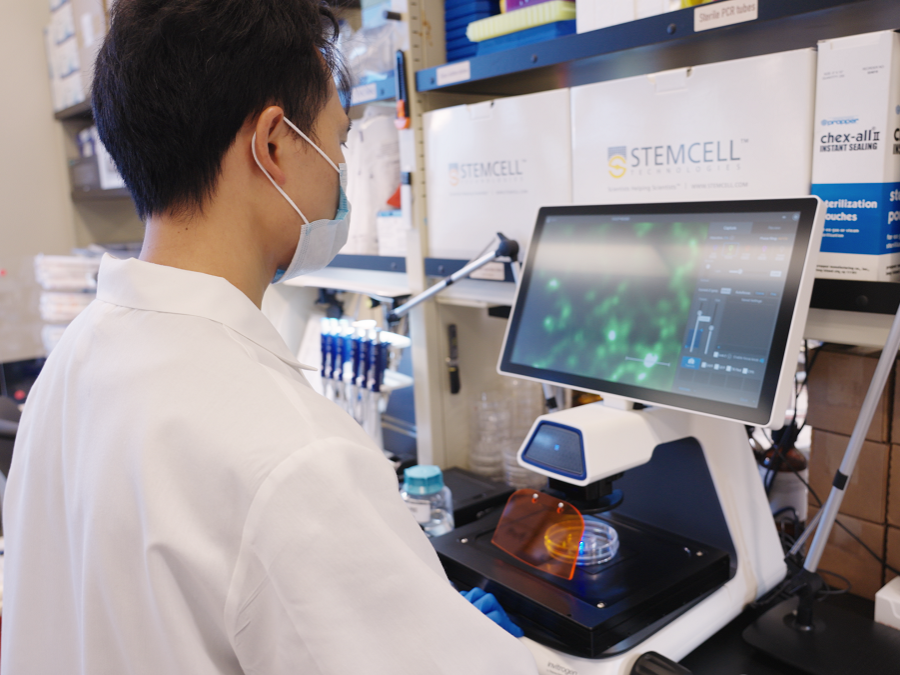
Jiaxing Chen uses fluorescence microscopy to visualize fixed cells on nanopatterns.
Jiaxing Chen uses fluorescence microscopy to visualize fixed cells on nanopatterns.  Credit: Penn State Huck Institutes of the Life Sciences / Penn State

The first protein-based nano-computing agent that functions as a circuit has been created by Penn State researchers. The milestone puts them one step closer to developing next-generation cell-based therapies to treat diseases like diabetes and cancer.

Traditional synthetic biology approaches for cell-based therapies, such as ones that destroy cancer cells or encourage tissue regeneration after injury, rely on the expression or suppression of proteins that produce a desired action within a cell. This approach can take time (for proteins to be expressed and degrade) and cost cellular energy in the process...

Read More

New study provides Novel Insights into the Cosmic Evolution of Amino Acids

image picture
Image by Triff/Shutterstock

Scientists perform computational simulations for biological molecules detected in meteorites to clarify the origin of life on Earth. All biological amino acids on Earth appear exclusively in their left-handed form, but the reason underlying this observation is elusive. Recently, scientists from Japan uncovered new clues about the cosmic origin of this asymmetry. Based on the optical properties of amino acids found on the Murchison meteorite, they conducted physics-based simulations, revealing that the precursors to the biological amino acids may have determined the amino acid chirality during the early phase of galactic evolution.

If you look at your hands, you will notice that they are mirror images of each other...

Read More