Category Biology/Biotechnology

The Feeling of Hunger itself may Slow Aging in Flies

fruitfly hunger refrigerator apple orange

From low-carb to intermittent fasting, surgery to Ozempic — people turn to a seemingly never-ending array of diets, procedures and drugs to lose weight. While it has been long understood that limiting the amount of food eaten can promote healthy aging in a wide range of animals, including humans, a new study from University of Michigan has revealed that the feeling of hunger itself may be enough to slow aging.

Previous research has demonstrated that even the taste and smell of food can reverse the beneficial, life-extending effects of diet restriction, even without its consumption.

These intriguing findings drove first author Kristy Weaver, Ph.D., principal investigator Scott Pletcher, Ph.D...

Read More

American Urological Association: Genomic Urine Test Accurately Predicts Bladder Cancer

AUA: genomic urine test accurately predicts bladder cancer

A new genomic urine test can predict bladder cancer as many as 12 years before clinical signs and symptoms emerge, according to a study presented at the annual meeting of the American Urological Association, held from April 28 to May 1 in Chicago.

Yair Lotan, M.D., from the UT Southwestern Medical Center in Dallas, and colleagues examined the effectiveness of screening for preclinical urinary carcinoma (UC) with a modified UroAmp (Convergent Genomics) genomic profiling test using 10 genes. The analysis included a model evaluation case-control design with 96 controls and 70 UC cases, as well as a nested case-control design within the Golestan Cohort Study (50,045 participants followed for up to 12 years).

The researchers found that the UC screening model was trained to a sensitiv...

Read More

Immune Cells of the Brain are Not All the Same: New research could open Novel Therapeutic Pathways

Immune cells of the brain are not all the same – new research could open novel therapeutic pathways
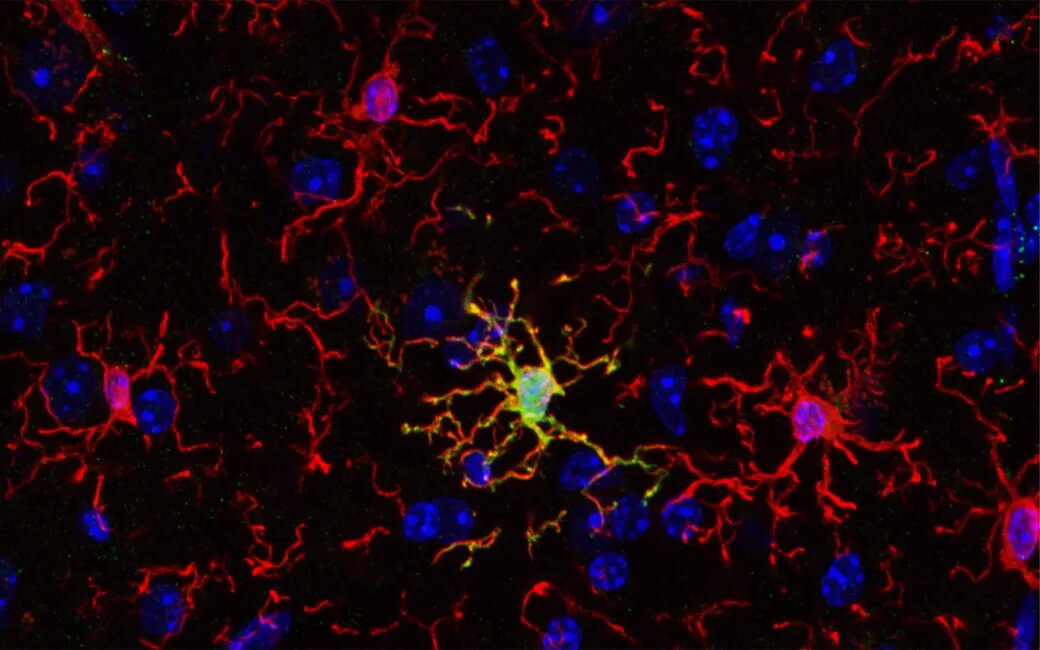
Microglia (in red) surround an ARG1+microglia cell (in yellow) that expresses the enzyme ARG1. Credit: Vassilis Stratoulias

A recent study published in Nature Neuroscience indicates that, contrary to common belief, the immune cells of the brain, known as microglia, are not all the same. Researchers found that a unique microglial subset with unique features and function is important for establishing proper cognitive functions in mice. Evidence for such microglial subsets exists also for the human brain, opening exciting new possibilities for novel therapies.

An international collaboration led by researchers from University of Helsinki, Karolinska Institutet and University of Seville characterized ARG1+ microglia, a subset of microglial cells, that produces the enzyme called arginase-...

Read More

Memories may be stored in the Membranes of your Neurons

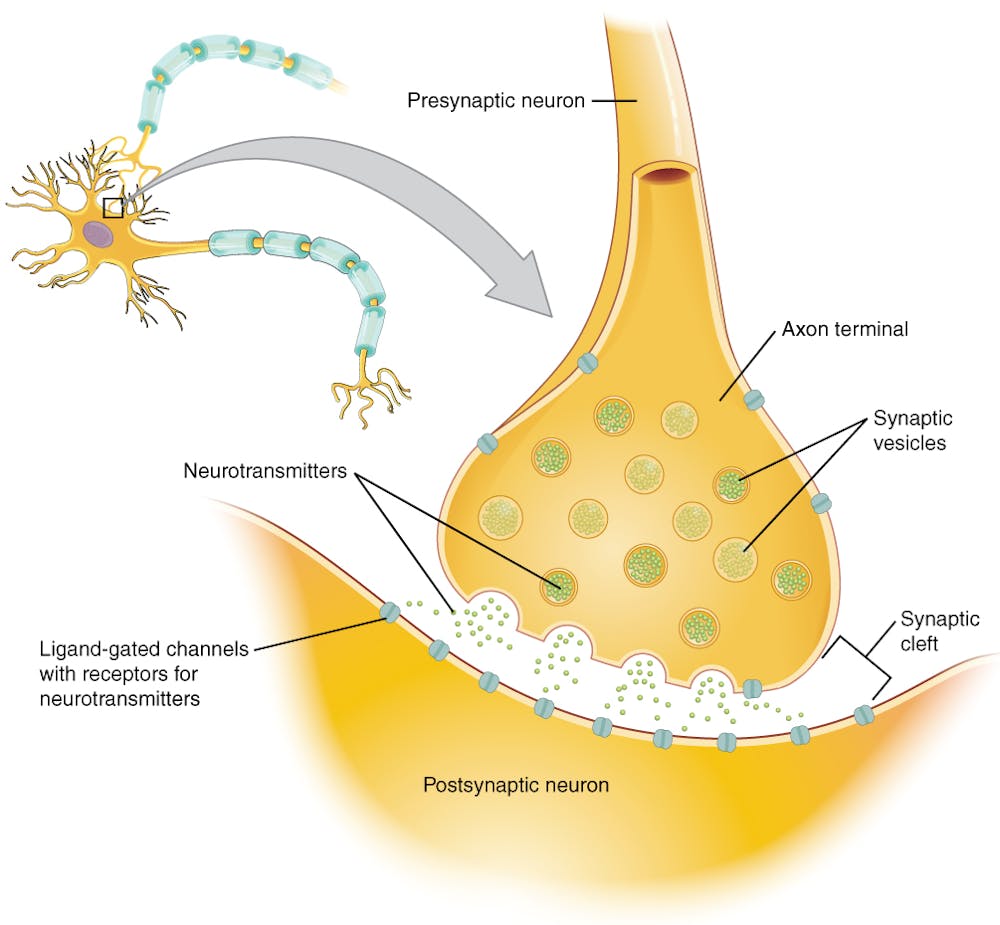
The space between two neurons is called a synapse. OpenStaxCC BY

Your brain is responsible for controlling most of your body’s activities. Its information processing capabilities are what allow you to learn, and it is the central repository of your memories. But how is memory formed, and where is it located in the brain?

Although neuroscientists have identified different regions of the brain where memories are stored, such as the hippocampus in the middle of the brain, the neocortex in the top layer of the brain and the cerebellum at the base of the skull, they have yet to identify the specific molecular structures within those areas involved in memory and learning.

Research from our team of biophysicists, physical chemists and materials scientists suggests that memory might ...

Read More