Category Biology/Biotechnology

The Future of Data Storage Lies in DNA Microcapsules

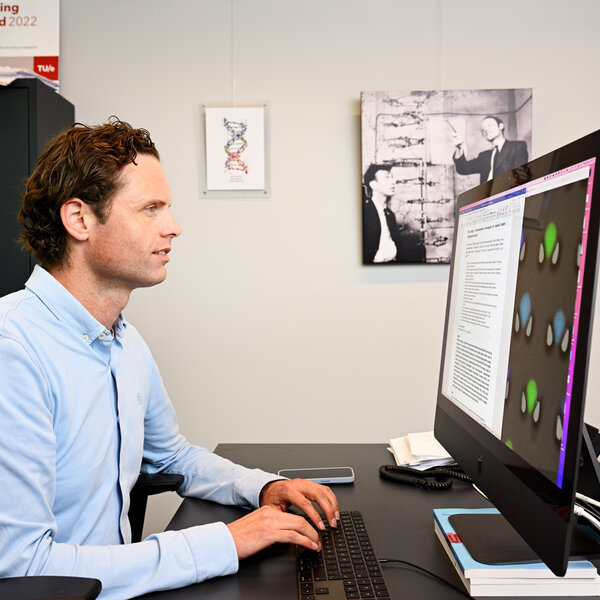
Photo: Bart van Overbeeke

DNA archival storage within reach thanks to new PCR technique. Storing data in DNA sounds like science fiction, yet it lies in the near future. Professor Tom de Greef expects the first DNA data center to be up and running within five to ten years. Data won’t be stored as zeros and ones in a hard drive but in the base pairs that make up DNA: AT and CG. Such a data center would take the form of a lab, many times smaller than the ones today. De Greef can already picture it all. In one part of the building, new files will be encoded via DNA synthesis. Another part will contain large fields of capsules, each capsule packed with a file. A robotic arm will remove a capsule, read its contents and place it back.

We’re talking about synthetic DNA...

Read More
Scientists deliver siRNA Therapy to Lung

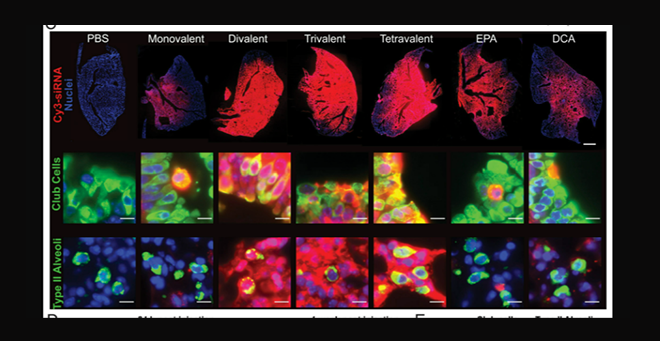
Fluoresce images of lung tissue after treatment (top, red), show local distribution of chemically modified siRNA and robust gene silencing in the lung.

Delivery technology successfully blocks SARS-CoV-2 infection in mice; adaptable for multiple diseases

Scientists at UMass Chan Medical School have developed a technology to deliver gene therapy directly to lung tissue through intranasal administration, a development that could potentially create a new class of treatments for lung disease.

Published in the journal Proceedings of the National Academy of Sciences, the study by a multidisciplinary team of RNA biologists, chemical biologists, immunologists and virologists describes the delivery of siRNA molecules locally to lung tissue...

Read More

Wearable Ultrasound Patch provide Non-Invasive Deep Tissue Monitoring

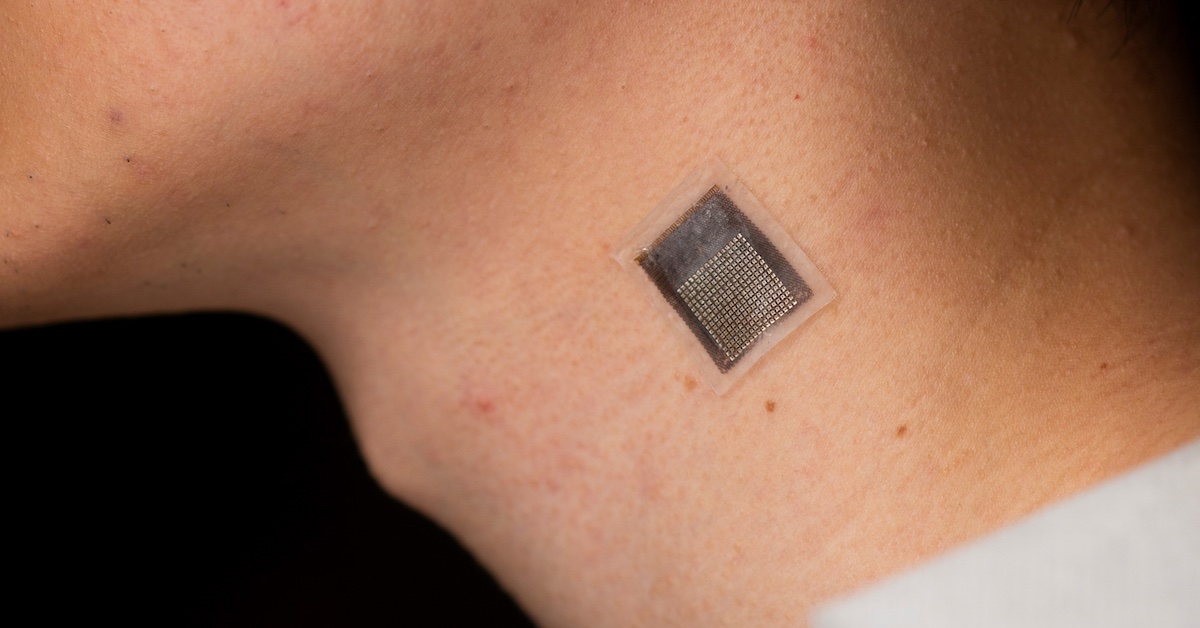
Optical images of the devices when twisted and stretched, showing its mechanical compliance and robustness, and conforming to the lateral shoulder joint and neck for tissue stiffness monitoring. Jacobs School of Engineering, University of California San Diego.

More effectively measuring tissue stiffness could help treat cancer, sports injuries and more. A team of engineers at the University of California San Diego has developed a stretchable ultrasonic array capable of serial, non-invasive, 3D imaging of tissues as deep as four centimeters below the surface of human skin, at a spatial resolution of 0.5 millimeters. This new method provides a non-invasive, longer-term alternative to current methods, with improved penetration depth.

The research emerges from the lab of Sheng Xu, a pro...

Read More

Can Jack-of-all-Trades AI Reshape Medicine?

Computer screen and physician hands

Researchers chart course for the design, testing, and implementation of next-gen AI in medicine.

Most medical AI models in use today are trained to perform one or two specific tasks and have limited utility. Next-generation AI — called generalist medical AI — incorporates various types of data to perform a variety of complex tasks in a range of clinical scenarios. Generalist medical AI can reshape medicine by augmenting clinical decision-making, real-time surgical and bedside support, and more.

The vast majority of AI models used in medicine today are “narrow specialists,” trained to perform one or two tasks, such as scanning mammograms for signs of breast cancer or detecting lung disease on chest X-rays.

But the everyday practice of medicine involves an endless array of clin...

Read More