Category Biology/Biotechnology

Scientists Slow Aging by Engineering Longevity in Cells

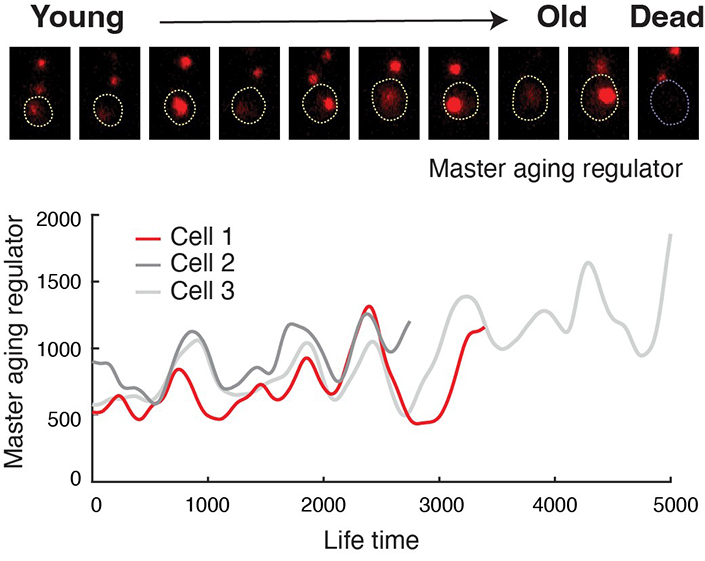
Image of engineered cells showing oscillating abundance of a master aging regulator.
Engineered cells show oscillating abundance of a master aging regulator. Credit: Hao Lab, UC San Diego

Human lifespan is related to the aging of our individual cells. Three years ago a group of University of California San Diego researchers deciphered essential mechanisms behind the aging process. After identifying two distinct directions that cells follow during aging, the researchers genetically manipulated these processes to extend the lifespan of cells.

As described in a new article published April 27, 2023, in Science, the team has now extended this research using synthetic biology to engineer a solution that keeps cells from reaching their normal levels of deterioration associated with aging.

Cells, including those of yeast, plants, animals and humans, all contain gene regu...

Read More

Major Depressive Disorder linked to interplay of Gut Microbiome and Blood Metabolome

gut
Credit: Pixabay/CC0 Public Domain

An international team of medical researchers has found a link between major depressive disorder (MDD) and an interplay between the gut microbiome and the blood metabolome. For their study, reported in the journal JAMA Psychiatry, the group analyzed data in the UK Biobank.

Some prior research has suggested there may be a link between MDD and conditions surrounding the gut biome, but little work has been done to prove a connection, and existing studies were too small to show any true connections. In this new effort, the researchers attempted to conduct a far more broad study of any such connections by studying data in the UK Biobank—a massive database of health and genetic information for nearly a half-million patients in the U.K.

The researchers...

Read More

Team discovers Near-Universal T cell Immunity towards a Broad Range of Bacteria

Neutralizing the bacterially derived cytotoxic bomb: the pneumococci lie in the background, an array of macrophages and dendritic cells are arranged around the central image of a T cell. Rows of TCRs interacting with the identified pneumolysin epitope bound to HLA (white) cross the length and breadth of the artwork, emphasising their centrality in the immune response. Artwork by Dr. Erica Tandori.

Typically T cells of the immune system respond to a specific feature (antigen) of a microbe, thereby generating protective immunity. As reported in the journal Immunity, an international team of scientists have discovered an exception to this rule...

Read More

Researchers discover how Long-lasting Memories Form in the Brain

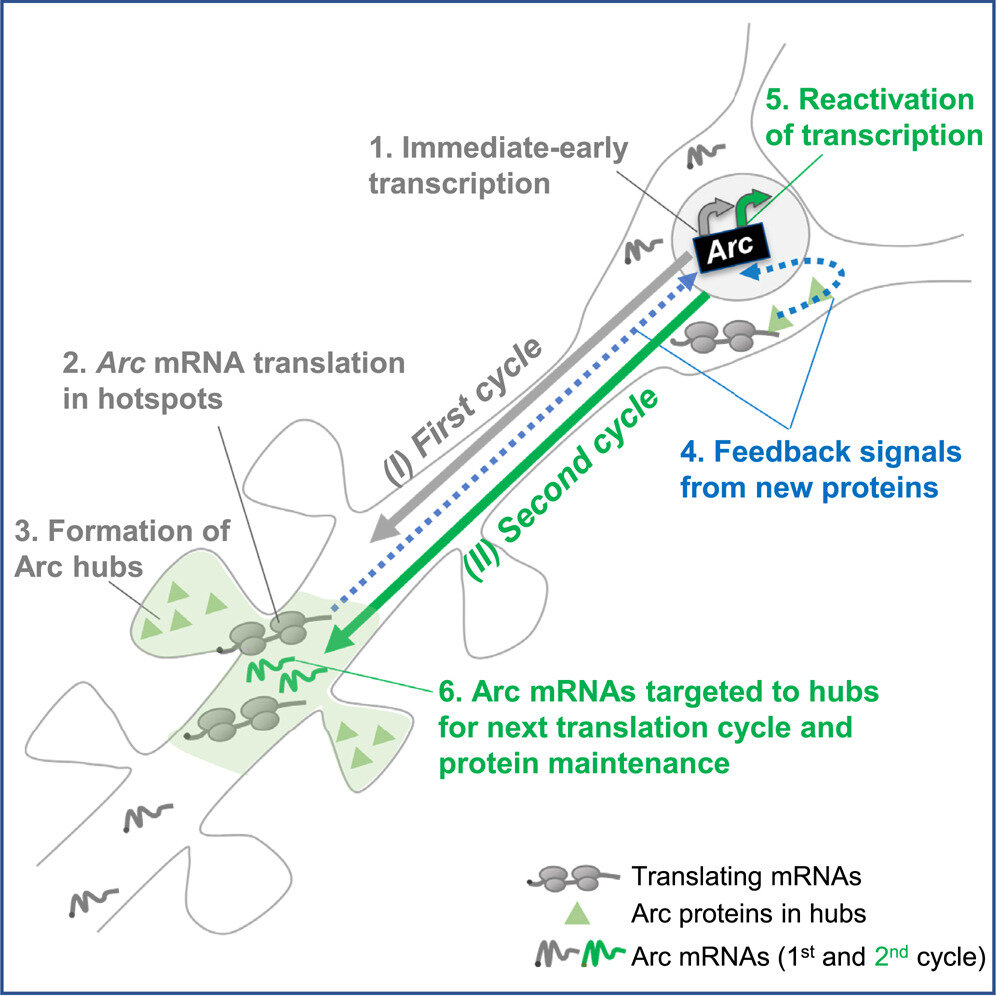
Researchers discover how long-lasting memories form in the brain
Graphical abstract. Credit: Neuron (2023). DOI: 10.1016/j.neuron.2023.04.005

Helping your mother make pancakes when you were three…riding your bike without training wheels…your first romantic kiss: How do we retain vivid memories of long-ago events? As described in a paper published in Neuron, researchers at Albert Einstein College of Medicine have found the explanation.

“The ability to learn new information and store it for long periods is one of the brain’s most remarkable features,” said Robert H. Singer, Ph.D., a co-corresponding author of the paper. “We’ve made a startling discovery in mice regarding the molecular basis for making those long-term memories.” Dr. Singer is professor of cell biology and in the Dominick P...

Read More