Category Biology/Biotechnology

How the Brain tells the Liver to start Recycling after Fasting

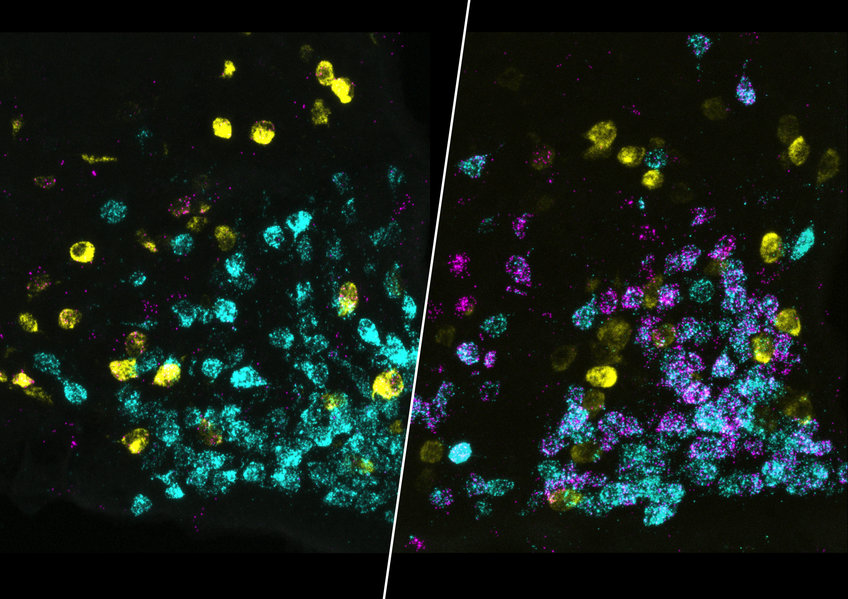
The picture is divided into two halves and shows a colourful staining of cells under the microscope. On the right, the pink staining is much stronger.
AgRP neurons in the brain are activated by fasting. The images show immunostaining of neurons from mice that fast for four hours (right) and mice that do not fast (left). Stained are AgRP neurons (Cyan), POMC neurons (Yellow) and a marker for synaptic activity (cFOS, Magenta).
© Weiyi Chen/ Max Planck Institute for Metabolism Research

Fasting triggers autophagy in our body. The body switches on the waste disposal system in the cells and gains new energy. Researchers at the Max Planck Institute for Metabolism Research in Cologne have now shown in mice that the brain plays a decisive role in this process.

Even after a short period of fasting, the brain triggers the release of the hormone corticosterone and thus initiates autophagy in the liver...

Read More

Graphene ‘Tattoo’ treats Cardiac Arrhythmia with Light

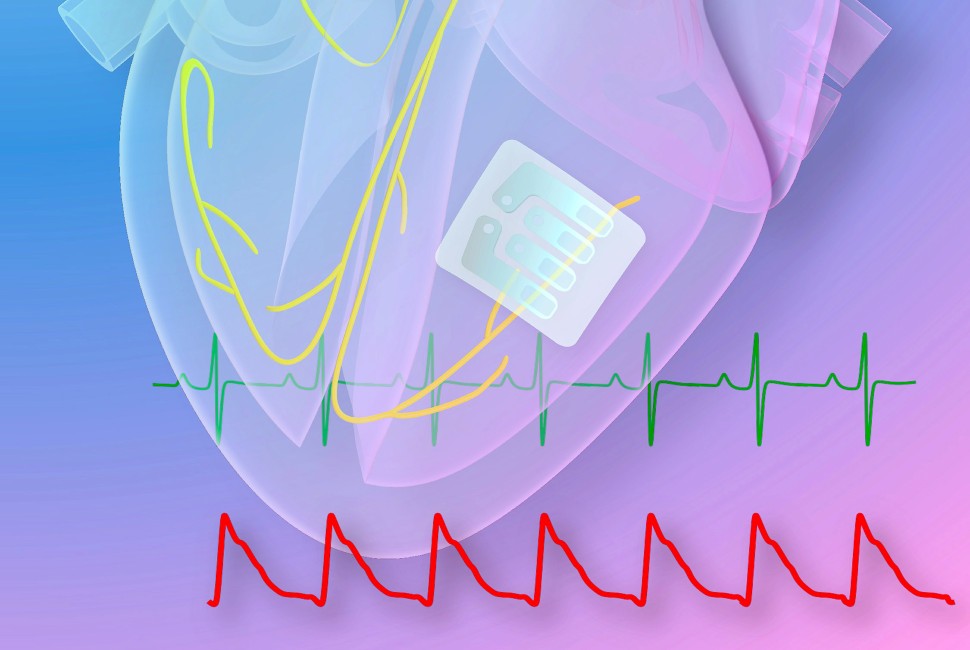
Graphene implant on tattoo paper

Researchers led by Northwestern University and the University of Texas at Austin (UT) have developed the first cardiac implant made from graphene, a two-dimensional super material with ultra-strong, lightweight and conductive properties.

Similar in appearance to a child’s temporary tattoo, the new graphene “tattoo” implant is thinner than a single strand of hair, yet still functions like a classical pacemaker. But unlike current pacemakers and implanted defibrillators, which require hard, rigid materials that are mechanically incompatible with the body, the new device softly merges with the heart to simultaneously sense and treat irregular heartbeats...

Read More

Two Brain Networks are Activated while Reading, study finds

The neural activity of these patients was measured while reading three forms of sentences: regular sentences; “Jabberwocky” sentences (based on Lewis Carroll’s “Jabberwocky” poem), which use correct grammar and syntax but contain nonsense words, making them meaningless; and lists of words or nonsense words. Image is in the public domain

When a person reads a sentence, two distinct networks in the brain are activated, working together to integrate the meanings of the individual words to obtain more complex, higher-order meaning, according to a study at UTHealth Houston.

The study, led by Oscar Woolnough, Ph.D., postdoctoral research fellow in the Vivian L...

Read More

Composition of Joint Lubricant potential Culprit behind Osteoarthritis

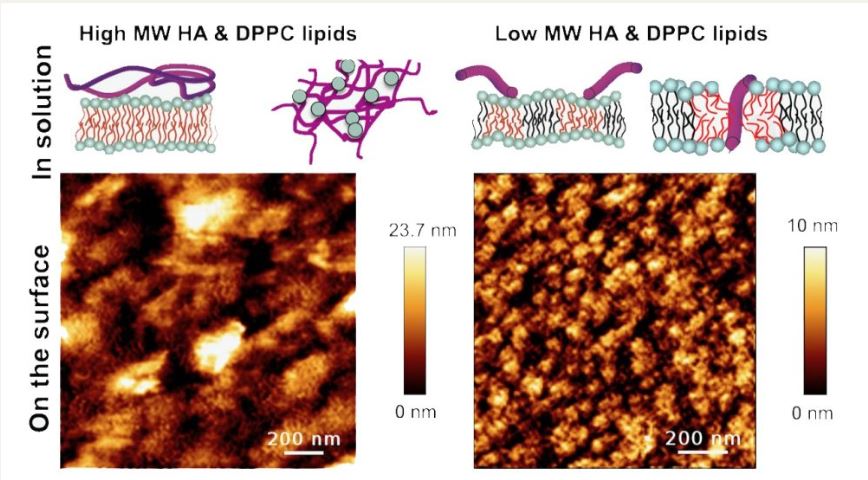
The complex interplay between phospholipid and hyaluronic acid self-assembly in solution, and the molecular weight of hyaluronic acid, determine surface affinity and the formation of a protective film on cartilage. Credit: Kangdi Sun, Tooba Shoaib, Mark W. Rutland, Changwoo Do, and Rosa M. Espinosa-Marzal

Neutron and light scattering, along with atomic force microscopy and quartz crystal microbalance, illuminate a mechanism explaining the ‘vicious circle’ of osteoarthritis.

The exact mechanism of cartilage breakdown in osteoarthritis is unknown, but damage from mechanical stress with insufficient self-repair is believed to be the main culprit...

Read More