
Category Biology/Biotechnology

Synthetic neurons that mimic human processes could lead to smarter robotics

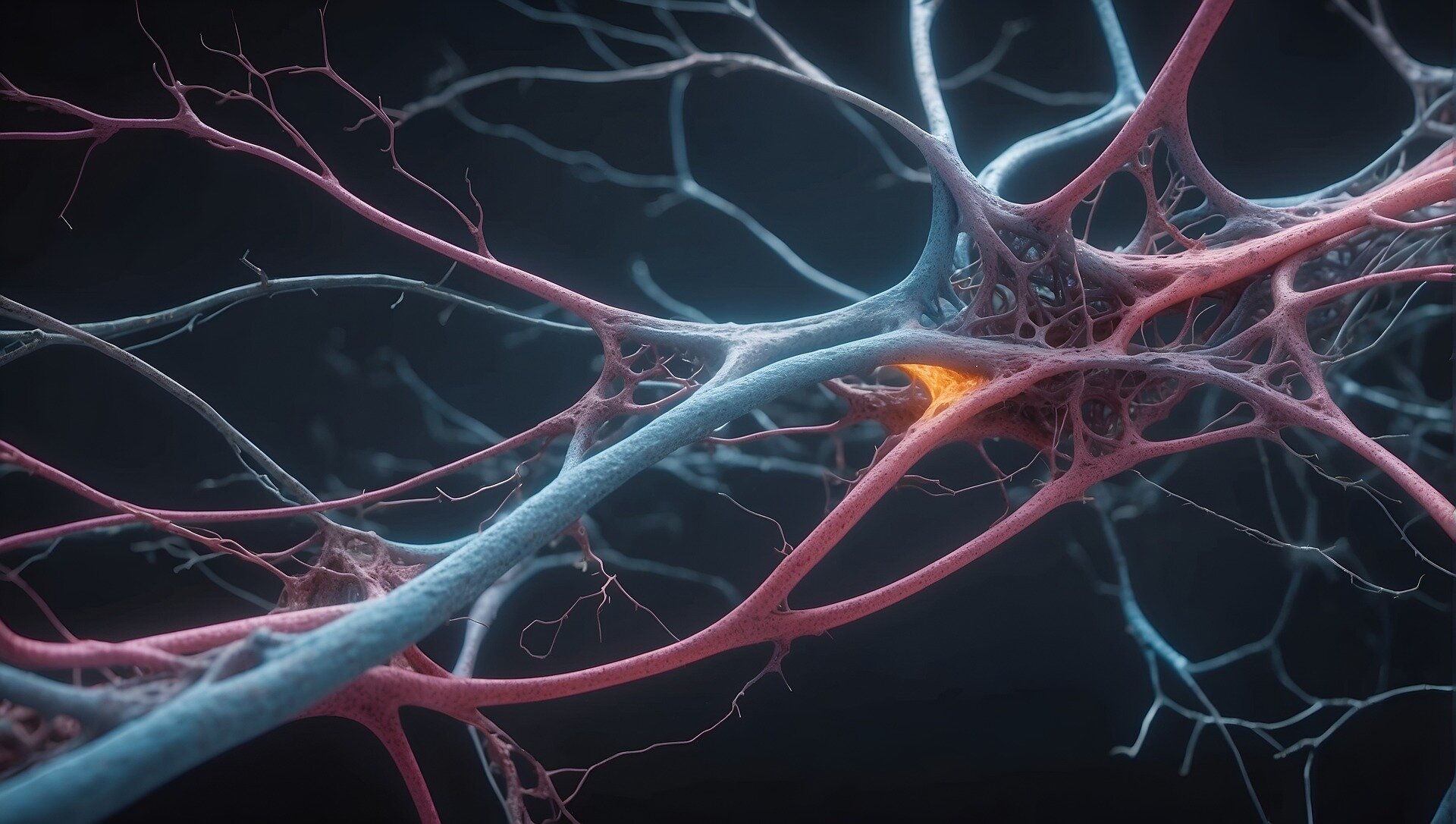
Scientists 'mimic real biological processes' using synthetic neurons
Credit: Proceedings of the National Academy of Sciences (2025). DOI: 10.1073/pnas.2414879122

Artificially engineered biological processes, such as perception systems, remain an elusive target for organic electronics experts due to the reliance of human senses on an adaptive network of sensory neurons, which communicate by firing in response to environmental stimuli.

A new collaboration between Northwestern University and Georgia Tech has unlocked new potential for the field by creating a novel high-performance organic electrochemical neuron (OECN) that responds within the frequency range of human neurons...

Read More
Innovative one-minute video game boasts 80% success rate in diagnosing autism

child viewed from behind as they copy the movements of a video avatar on a screen in front of them
The kids were asked to watch and copy dance-like movements performed by a video game character on the screen in front of them. 
Image courtesy of Nottingham Trent University

A new one-minute video game is able to accurately and efficiently identify children with autism from those who have ADHD or are neurotypical.

Developed by researchers at Kennedy Krieger Institute and Nottingham Trent University, the tool, called the Computerized Assessment of Motor Imitation (CAMI), uses motion-tracking technology to detect differences in motor imitation skills. The research is published in The British Journal of Psychiatry.

In the study, 183 children, ages 7–13, were asked to copy the dance-like movements of a video avatar for one minute, while their imitation performance was measured using ...

Read More

Experimental Drug Speeds up Myelin Repair, Restoring Vision in Mice

neuron
Credit: Pixabay/CC0 Public Domain

Researchers at the University of Colorado Anschutz Medical Campus have found a promising drug candidate that could help restore vision in individuals with multiple sclerosis (MS) and other neurological conditions that damage neurons.

The study was published this week in the journal Nature Communications.

The drug, LL-341070, enhances the brain’s ability to repair damaged myelin— the protective sheath around nerve fibers. Damage to myelin is a hallmark of diseases like MS, as well as a natural consequence of aging, often resulting in vision loss, loss of motor skills, and cognitive decline.

The research, focused on vision, demonstrated that while the brain has some ability to repair itself when myelin is damaged, the process can be slow and i...

Read More

Light-activated Ink Developed to Remotely Control Cardiac Tissue to Repair the Heart

Light-activated ink developed to remotely control cardiac tissue to repair the heart
Optoelectronically active bioink composition and printing. (A) Schematic of bioprinting combining μ-solar cells and GelMA and then seeding with CMs. (B) Photographs of the bioprinting process (i, ii, and iii) of the optoelectronic heart (atria and ventricles) along with a side view. Inset shows the model heart with the printed portion in blue and the remainder of the heart in gray. (C) Example of in vivo implantation of a printed optoelectronically active tissue and correction of arrhythmic beating. Credit: Science Advances (2025). DOI: 10.1126/sciadv.adt7210

Researchers from Mass General Brigham and collaborating institutions have developed a non-invasive approach to manipulate cardiac tissue activity by using light to stimulate an innovative ink incorporated into bioprinted tissue...

Read More
