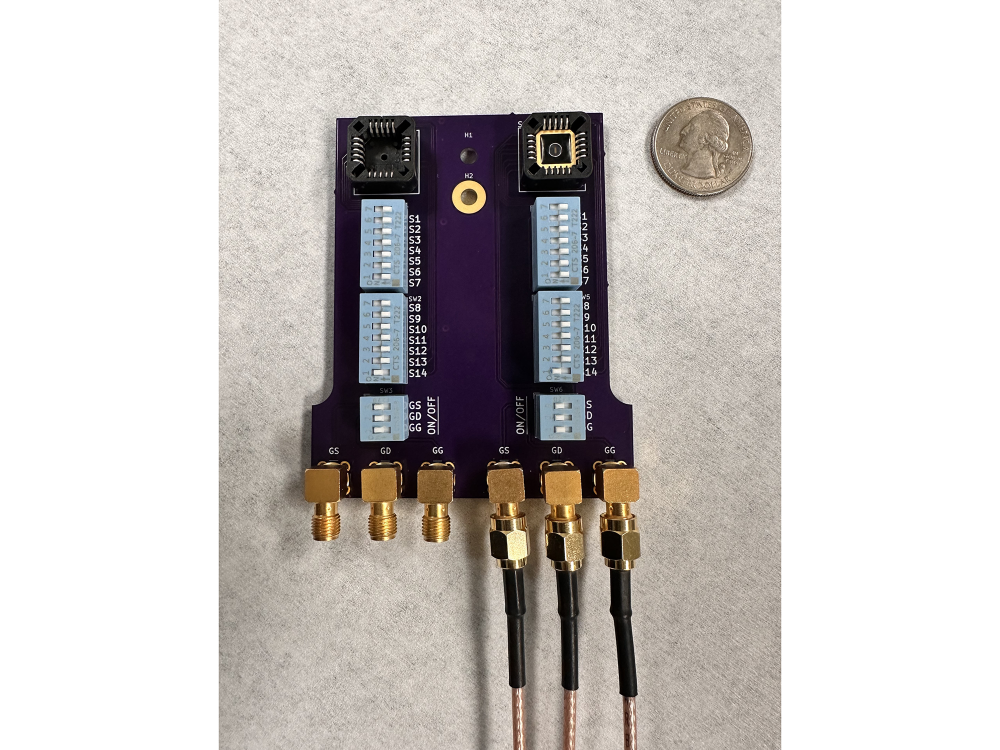
The electronic tongue comprises a graphene-based ion-sensitive field-effect transistor, or a conductive device that can detect chemical ions, linked to an artificial neural network, trained on various datasets. This is located in the top right of the device. Credit: Provided by the Das Lab. All Rights Reserved.
A recently developed electronic tongue is capable of identifying differences in similar liquids, such as milk with varying water content; diverse products, including soda types and coffee blends; signs of spoilage in fruit juices; and instances of food safety concerns...
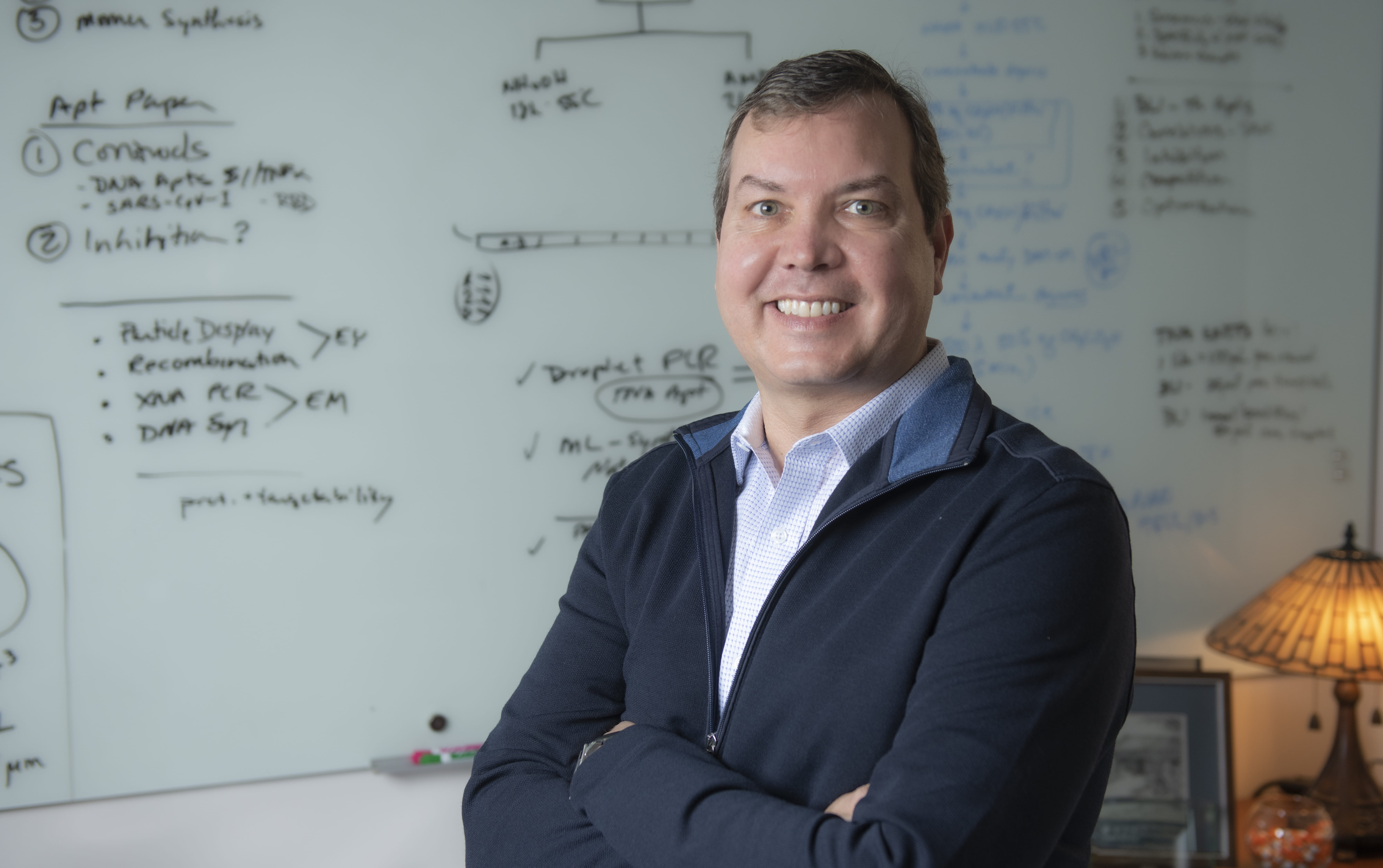
“This is just the beginning,” says John Chaput, UC Irvine professor of pharmaceutical sciences. “We’re not just improving on existing drugs. We’re developing a whole new platform for creating therapies that aren’t possible with current technology.” Steve Zylius / UC Irvine
Discovery advances development of new therapeutic options for cancer and other diseases. A research team led by the University of California, Irvine has engineered an efficient new enzyme that can produce a synthetic genetic material called threose nucleic acid. The ability to synthesize artificial chains of TNA, which is inherently more stable than DNA, advances the discovery of potentially more powerful, precise therapeutic options to treat cancer and autoimmune, metabolic and infectious diseases.
A peptide (shown in mesh) with attached phosphate tags (red and orange spheres) blocks the active site of CK1δ. Tagging the tail end of CK1δ, a process known as auto-phosphorylation, makes the protein less active, and with that less able to fine-tune the body’s internal clocks. // Credit: Jon Philpott, Rajesh Narasimamurthy and David Virshup
Scientists from Duke-NUS Medical School and the University of California, Santa Cruz, have discovered the secret to regulating our internal clock. They identified that this regulator sits right at the tail end of Casein Kinase 1 delta (CK1δ), a protein which acts as a pacesetter for our internal biological clock or the natural 24-hour cycles that control sleep-wake patterns and other daily functions, known as circadian rhythm.
An estimated one in five Americans live with chronic pain and current treatment options leave much to be desired. Feixiong Cheng, Ph.D., Director of Cleveland Clinic’s Genome Center, and IBM are using artificial intelligence (AI) for drug discovery in advanced pain management. The team’s deep-learning framework identified multiple gut microbiome-derived metabolites and FDA-approved drugs that can be repurposed to select non-addictive, non-opioid options to treat chronic pain.
The findings, published in Cell Press, represent one of many ways the organizations’ Discovery Accelerator partnership is helping to advance research in healthcare and life sciences.
Treating chronic pain with opioids is still a challenge due to the risk of severe side eff...




-with-attached-phosphate-tags-(red-and-orange-spheres)-blocks-the-active-site-of-ck1%CE%B4.png?sfvrsn=d7704e60_2)



Recent Comments