
Category Biology/Biotechnology

Brain Molecule Reverses Movement Deficits of Parkinson’s, offering New Therapeutic Target

brain
Credit: Pixabay/CC0 Public Domain

A research team from the University of California, Irvine is the first to reveal that a molecule in the brain—ophthalmic acid—unexpectedly acts like a neurotransmitter similar to dopamine in regulating motor function, offering a new therapeutic target for Parkinson’s and other movement diseases.

In the study, published in the October issue of the journal Brain, researchers observed that ophthalmic acid binds to and activates calcium-sensing receptors in the brain, reversing the movement impairments of Parkinson’s mouse models for more than 20 hours.

The disabling neurogenerative disease affects millions of people worldwide over the age of 50...

Read More
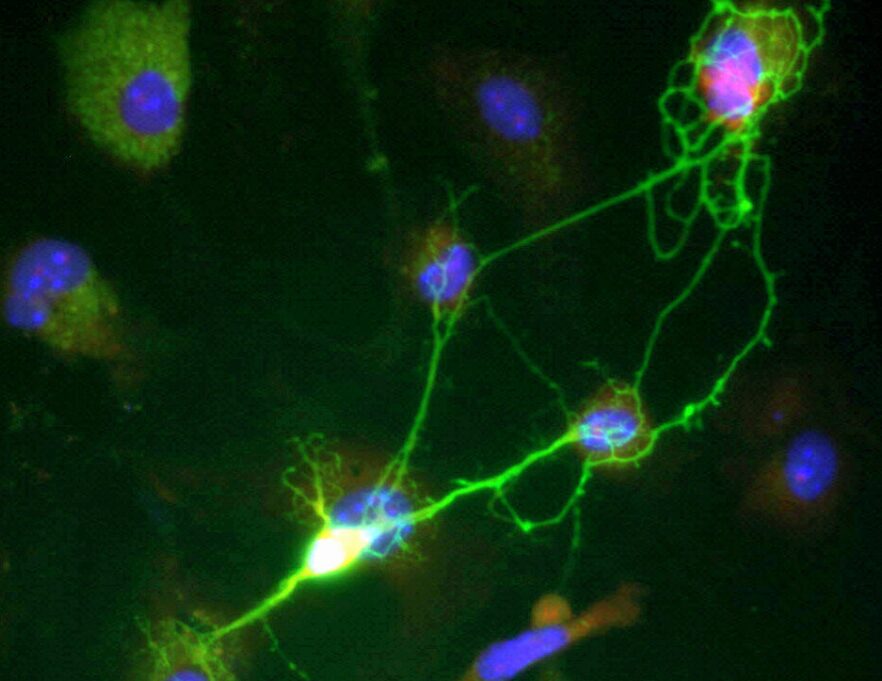
Researchers Discover Mechanism by which Estrogen can Trigger Fast Neuronal Responses

Estrogen, the major female ovarian hormone, can trigger nerve impulses within milliseconds to regulate a variety of physiological processes. At Baylor College of Medicine, Louisiana State University and collaborating institutions, researchers discovered that estrogen’s fast actions are mediated by the coupling of the estrogen receptor-alpha (ER-alpha) with an ion channel protein called Clic1.

Clic1 controls the fast flux of electrically charged chloride ions through the cell membrane, which neurons use for receiving, conducting and transmitting signals. The researchers propose that interacting with the ER-alpha-Clic1 complex enables estrogen to trigger fast neuronal responses through Clic1 ion currents. The study appears in Science Advances.

“Estrogen can act in the brain to reg...

Read More

Researchers Discover New Bacterium that Causes Gut Immunodeficiency

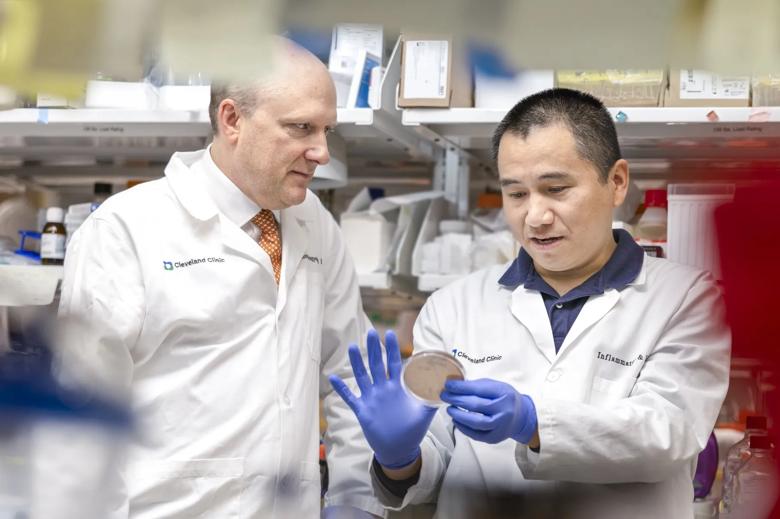
Thaddeus Stappenbeck, M.D., Ph.D., (left) and Qiuhe Lu, Ph.D., in the lab.

Cleveland Clinic researchers have discovered a new bacterium that weakens the immune system in the gut, potentially contributing to certain inflammatory and infectious gut diseases.

The team identified the bacterium, Tomasiella immunophila (T. immunophila), which plays a key role in breaking down a crucial immune component of the gut’s multi-faceted protective immune barrier.

Identifying this bacterium is the first step to developing new treatments for a variety of inflammatory and infectious gut diseases...

Read More

Circadian Disruption, Gut Microbiome Changes linked to Colorectal Cancer Progression

Circadian disruption, gut microbiome changes linked to colorectal cancer progression
Clock disruption and cancer alter microbial structure. Credit: Science Advances (2024). DOI: 10.1126/sciadv.ado1458

Research from the University of California, Irvine has revealed how disruption of the circadian clock, the body’s internal, 24-hour biological pacemaker, may accelerate the progression of colorectal cancer by affecting the gut microbiome and intestinal barrier function. This discovery offers new avenues for prevention and treatment strategies.

The study, published online today in the journal Science Advances, offers a more comprehensive understanding of how important changes occur in the function and composition of the gut microbiome when the circadian clock is disturbed in the presence of colorectal cancer.

“There is an alarming rise in early-onset colorectal can...

Read More
