
Category Health/Medical

Gene Links Exercise Endurance, Cold Tolerance, and Cellular Maintenance in Flies

flies moving sled in snow with person
Jacob Dwyer, Michigan Medicine

The gene, dubbed Iditarod, seems responsible for exercise’s ability to clean up damaged cells. As the days get shorter and chillier in the northern hemisphere, those who choose to work out in the mornings might find it harder to get up and running. A new study in PNAS identifies a protein that, when missing, makes exercising in the cold that much harder – that is, at least in fruit flies.

A team from University of Michigan Medical School and Wayne State University School of Medicine discovered the protein in flies, which they named Iditarod after the famous long distance dog sled across Alaska, while studying metabolism and the effect of stress on the body.

They were particularly interested in a physiological process called autophagy wherein damaged...

Read More

Parker Probe observes Powerful Coronal Mass Ejection ‘Vacuum up’ Interplanetary Dust

In black and white, a cloud from a CME pushes the bright speckles of dust out of the way, leaving a screen of near darkness.
Parker Solar Probe’s Wide Field Imagery for Solar Probe (WISPR) camera observes as the spacecraft passes through a massive coronal mass ejection on Sept. 5, 2022. Coronal mass ejections are immense eruptions of plasma and energy from the Sun’s corona that drive space weather.
Credit: NASA/Johns Hopkins APL/Naval Research Lab

On Sept. 5, 2022, NASA’s Parker Solar Probe soared gracefully through one of the most powerful coronal mass ejections (CMEs) ever recorded—not only an impressive feat of engineering, but a huge boon for the scientific community. Parker’s journey through the CME is helping to prove a 20-year-old theory about the interaction of CMEs with interplanetary dust, with implications for space weather predictions...
Read More

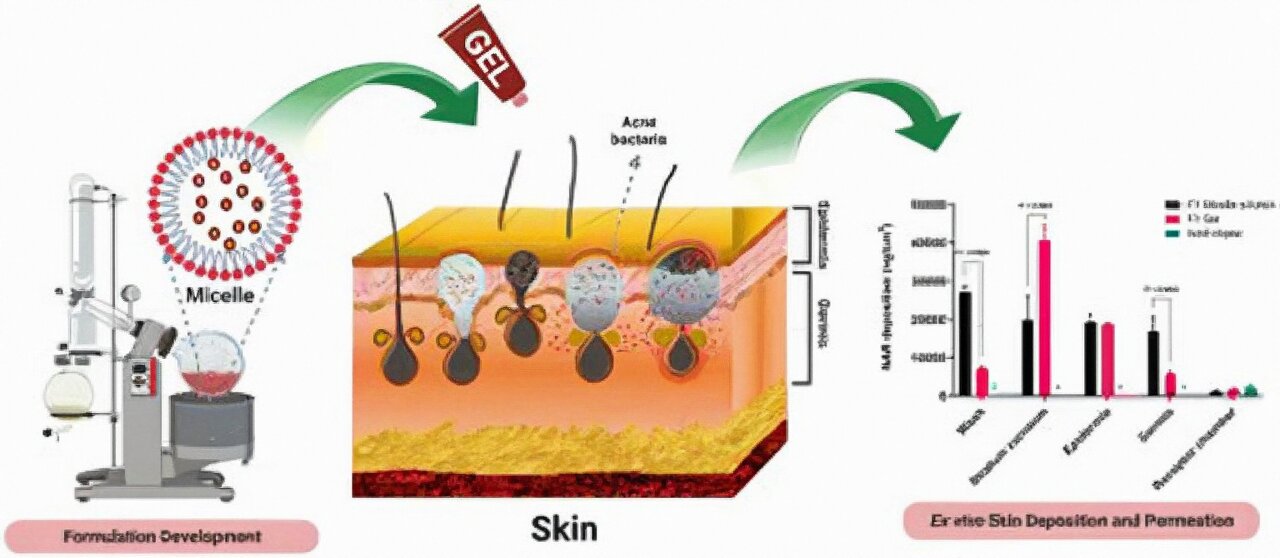
Tiny Nanocarriers could prove the Magic Bullet for Acne Sufferers

Tiny nanocarriers could prove to be the magic bullet for acne sufferers
Credit: Nanoscale (2023). DOI: 10.1039/D3NR01789C

It’s a skin disorder that makes life miserable for around 800 million teenagers and adults worldwide, but Australian scientists may have found an effective treatment for acne, delivered via tiny nanoparticles.

In a study led by the University of South Australia (UniSA), a new antibacterial compound known as Narasin was encased in tiny, soft nanoparticles 1000 times smaller than a single strand of human hair and applied in a gel form to targeted acne sites.

The drug — more commonly used in the livestock industry — proved successful against drug-resistant acne bacteria and delivered via nanocarriers achieved a 100-fold increase in absorption than simply taken with water.

The findings have been published in the journal Nanoscale...

Read More

How the Respiratory Tract Microbiome influences the Severity of Bacterial Pneumonia

Pneumonia is an infection of the lung alveoli caused by bacteria, viruses or fungi. It is one of the leading causes of morbidity and mortality worldwide, representing a clinical and economic burden and a global public health problem. The microbial ecosystem (or microbiome) of the human respiratory tract colonizes different niches. The respiratory tract microbiome is of interest to scientists as it contributes to human health by stimulating the immune system and protecting against infection by pathogens. Scientists from the Institut Pasteur and the CNRS have demonstrated that the microbiome composition, pathogen load and clinical interventions influence the severity of bacterial pneumonia caused by Legionella pneumophila...

Read More