Category Health/Medical

Researchers explain Plant’s Medicinal Power against COVID and Glioblastoma

UTSA researchers explain plant’s medicinal power against COVID and glioblastoma

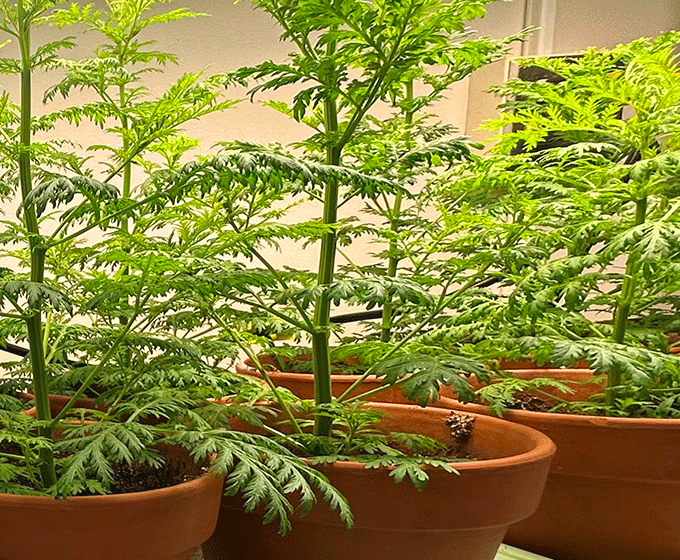
Vibrant green leaves sprout from tall fragrant plants sitting neatly in two rows of terracotta pots in Valerie Sponsel’s UTSA biology laboratory. One floor just above her is the chemistry lab of Francis Yoshimoto, who is extracting the plant’s leaves for medicinal compounds. Soon, the researchers will meet with UTSA researcher Annie Lin, who will test the extracted compounds on cancer cells.

The plant is Artemisia annua, or Sweet Annie, and it contains medicinal compounds. UTSA researchers are studying the plant to understand the bioactive properties of one of these compounds, Arteannuin B, in cancer cells and COVID, the disease caused by the virus, SARS-CoV-2.

“Around 50% of prescription drugs are derived from natural products. They’re made by plants, fungi or bacteria...

Read More
Nutrients drive Cellular Reprogramming in the Intestine

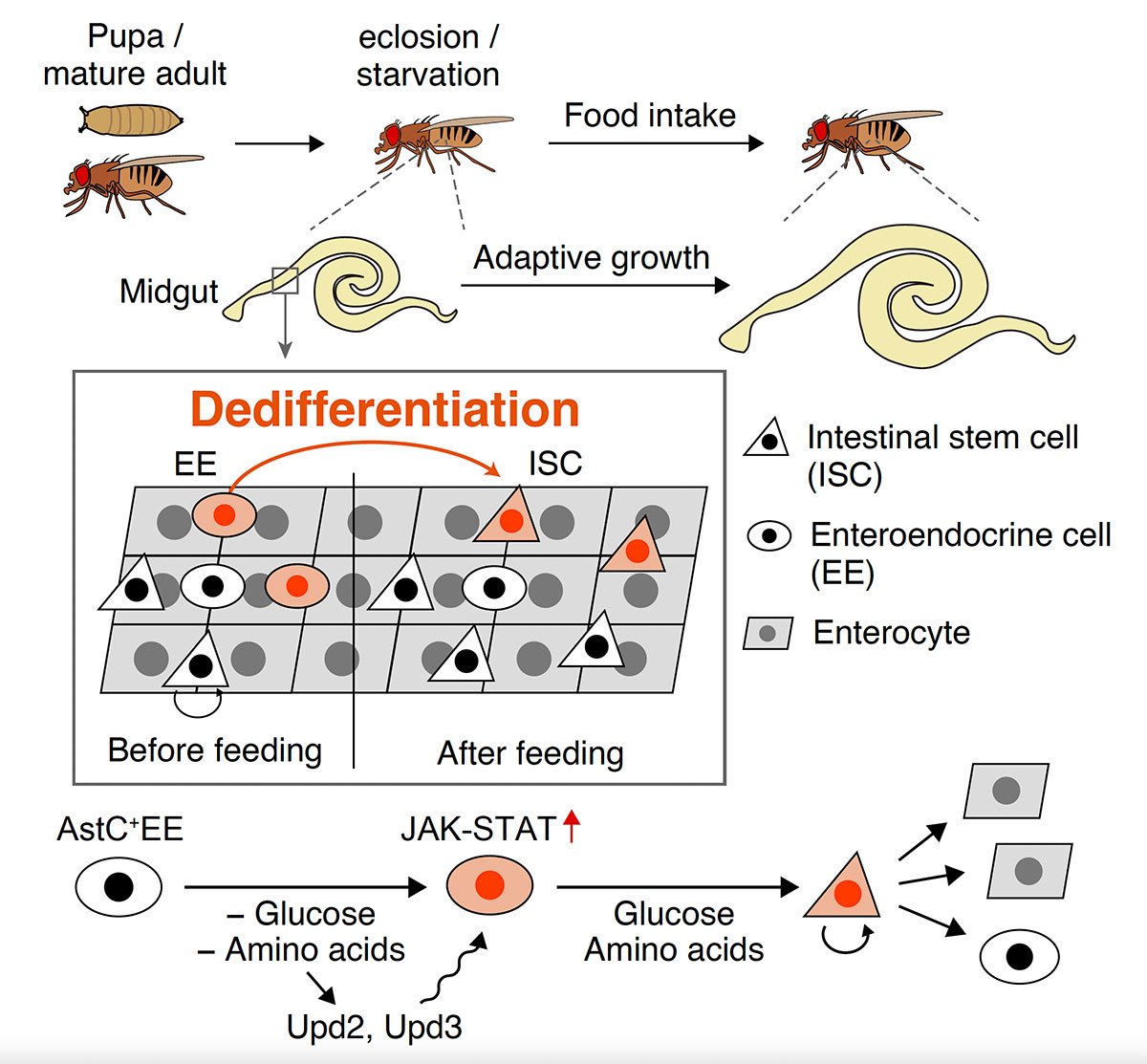
A detailed summary of this study: the Drosophila adult midgut rapidly grows in size upon the first food intake after eclosion or upon refeeding after starvation. ©Hiroki Nagai et al.

Researchers have unveiled an intriguing phenomenon of cellular reprogramming in mature adult organs, shedding light on a novel mechanism of adaptive growth. The study, which was conducted on fruit flies (Drosophila), provides further insights into dedifferentiation — where specialized cells that have specific functions transform into less specialized, undifferentiated cells like stem cells.

Until now, dedifferentiation has primarily been associated with severe injuries or stressful conditions, observed during tissue regeneration and diseases like tumorigenesis...

Read More

Exercise-induced Hormone Irisin may Reduce Alzheimer’s Disease Plaque and Tangle Pathology in the Brain

Reconstitution of amyloid plaques and NFT pathlogy. (Dooyeon Kim/Massachusetts General Hospital)

Medical researchers have used a 3D human neural cell culture model to show that the exercise-induced muscle hormone, irisin, reduces the level of amyloid beta deposits associated with Alzheimer’s disease.

Researchers who previously developed the first 3D human cell culture models of Alzheimer’s disease (AD) that displays two major hallmarks of the condition — the generation of amyloid beta deposits followed by tau tangles — have now used their model to investigate whether the exercise-induced muscle hormone irisin affects amyloid beta pathology.

As reported in the journal Neuron, the Massachusetts General Hospital (MGH)-led team has uncovered promising results suggesting that irisin-b...

Read More

New Genes and Natural Toxins offer hope for Cancer Patients Unresponsive to Chemotherapy

Credit: istock.com/vitanovski

Scientists from Queen Mary University of London have discovered two new genes that cause head and neck cancer patients to be resistant to chemotherapy, and that silencing either gene can make cancer cells previously unresponsive to chemotherapy subsequently respond to it.

The two genes discovered actively ‘work’ in most human cancer types, meaning the findings could potentially extend to other cancers with elevated levels of the genes.

The researchers also looked through a chemical library, commonly used for drug discovery, and found two substances that could target the two genes specifically and make resistant cancer cells almost 30 times more sensitive to a common chemotherapy drug called cisplatin...

Read More